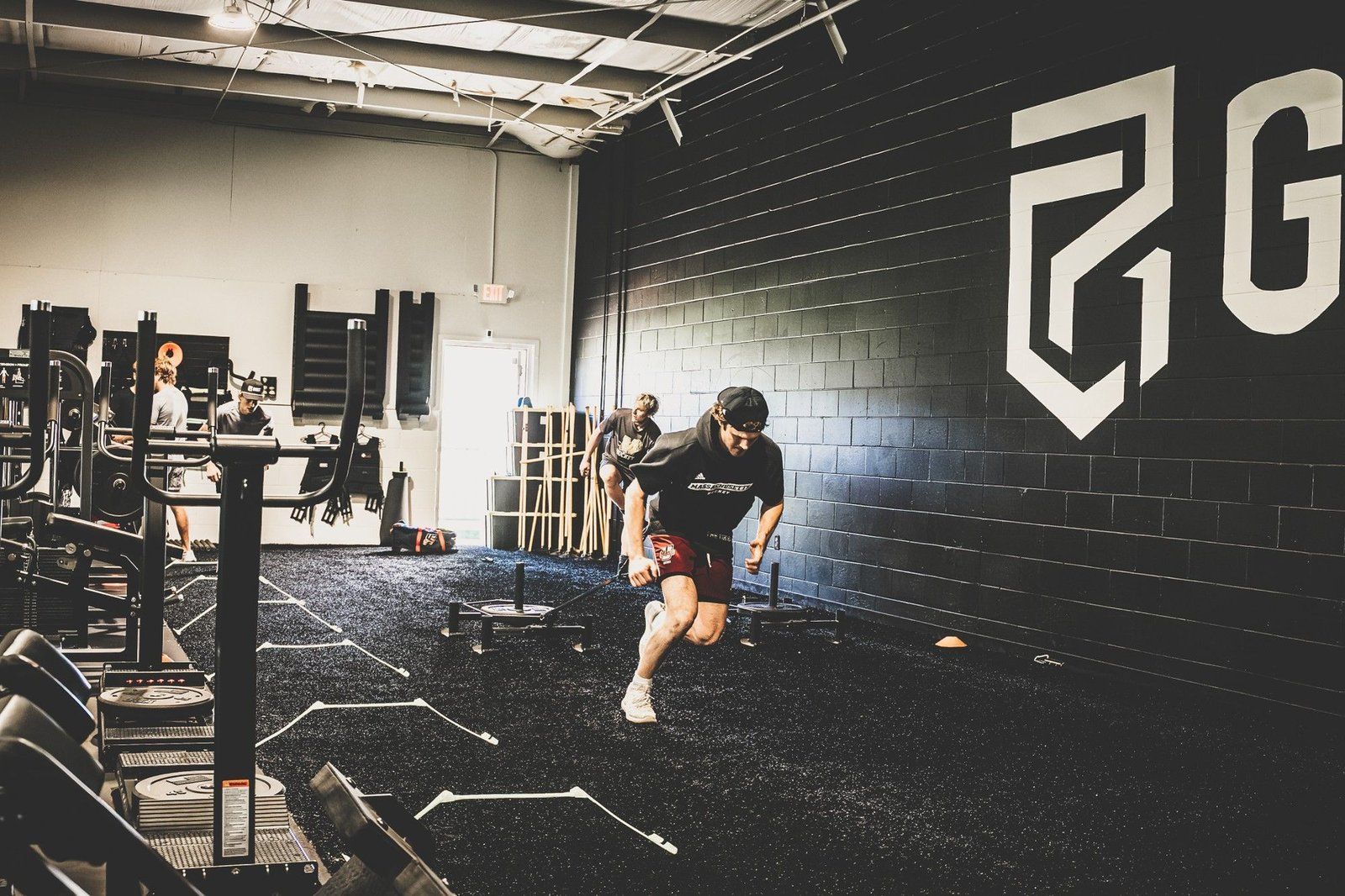
By Dr. Jamie Phillips, DPT, CSCS
Nobody shows you the inside of a training session before you pay for one. You get a photo of a squat rack, a price, and a promise that your kid will get faster.
So here is the whole thing. What a Ghost Athletica session actually looks like on the floor in Byron Center, in order, with the reason behind every block. No mystery, no sales fog.
Read it before you sign your player up anywhere, ours included. A good session has a shape you can see, and once you know the shape you can spot a bad one from the parking lot.
What a Ghost Session Is, in One Paragraph
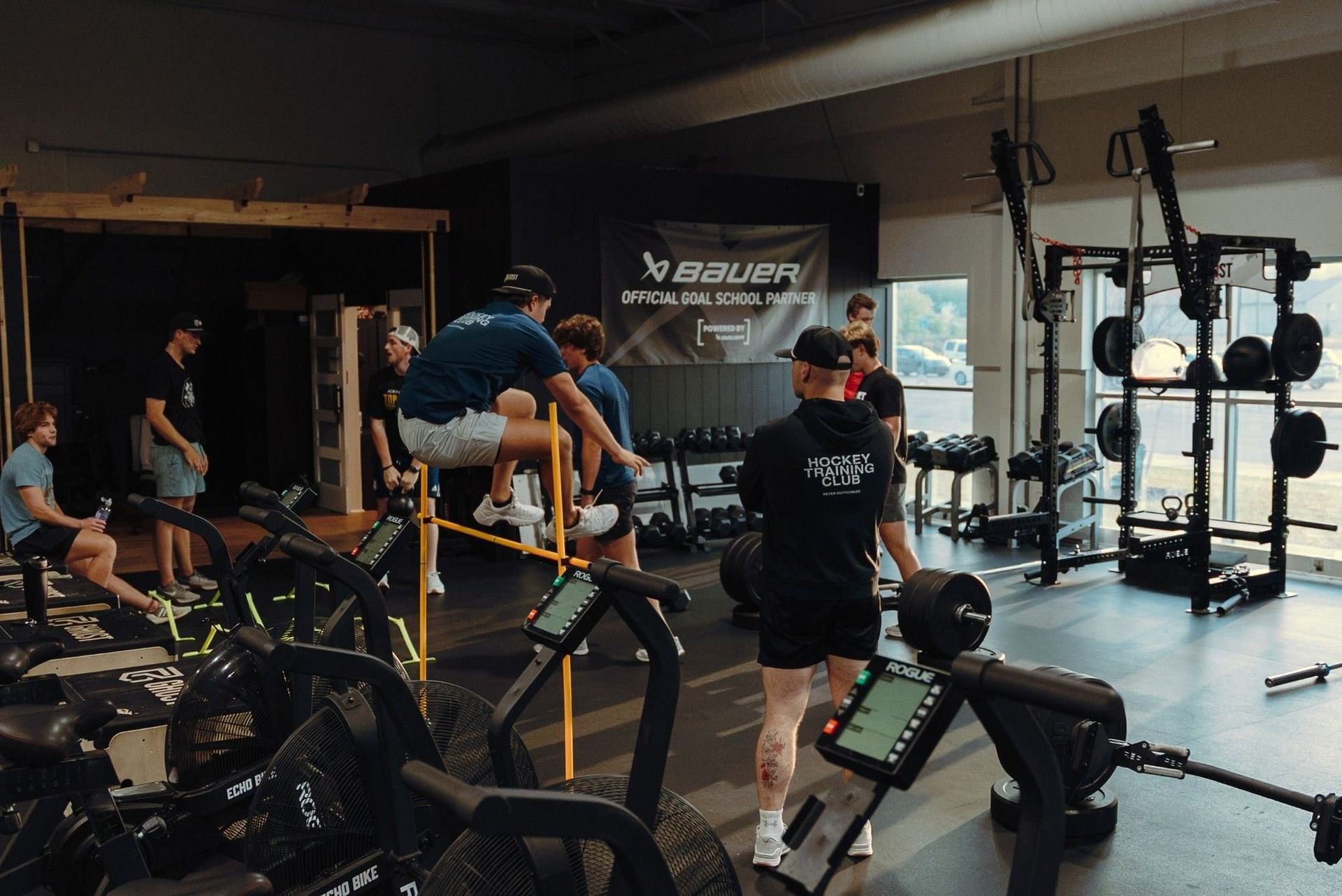
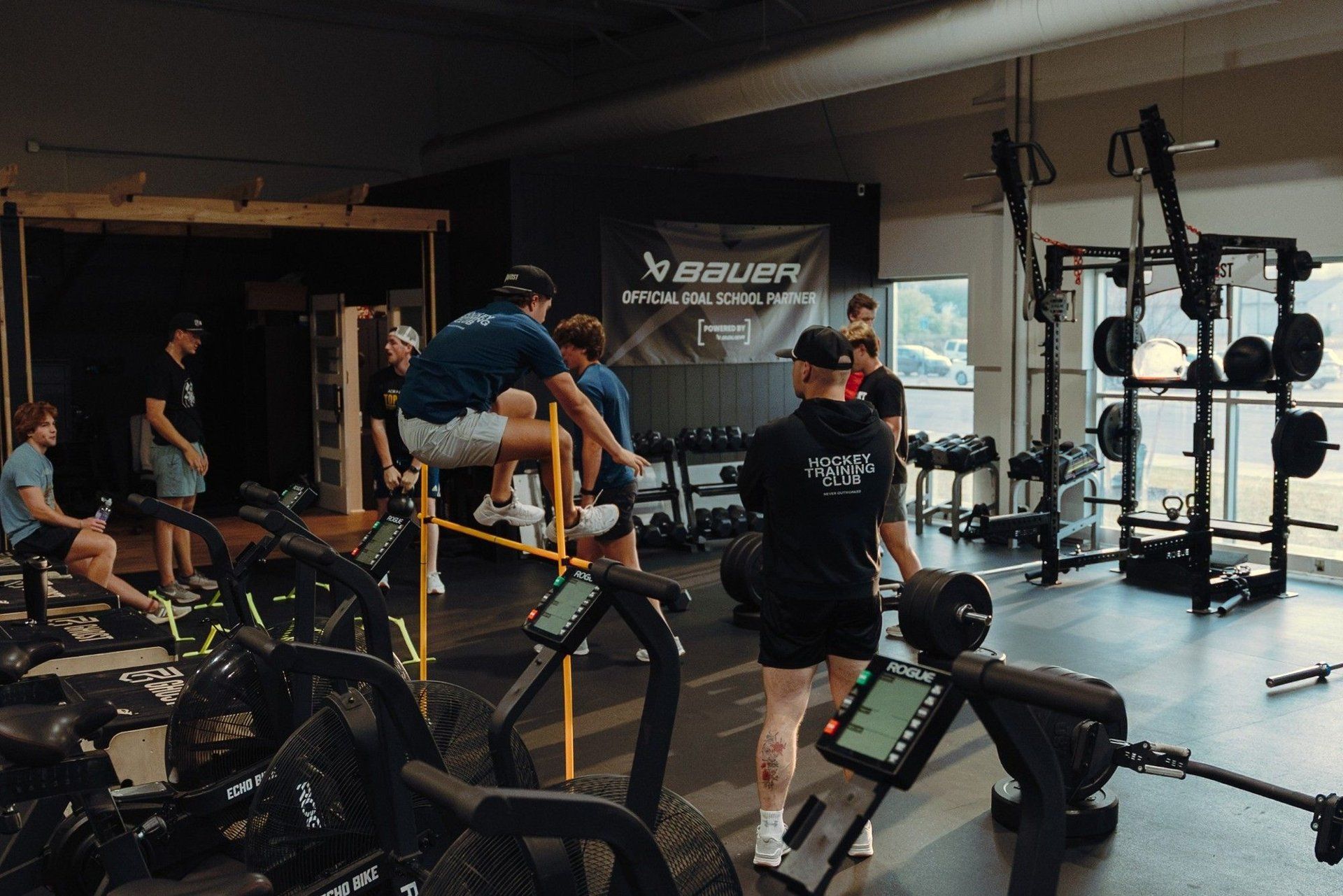
A Ghost Athletica performance session is coached small-group training on the Speed Lab floor: 45 minutes, Monday to Friday, after school and into the evening, by appointment only. Every session runs through the same four blocks in the same order, the warm-up that prepares the hips and ankles, the speed and power work while the athlete is fresh, the strength work that builds the base under it, and the finisher that ties the week together. The load changes from athlete to athlete. The order never does.
That is the entire product. Coached reps, in a fixed sequence, with the numbers written down and tested again later. It is not complicated. It is just rarely done properly.
If you want the commercial version, it is in-person hockey training: $30 to drop in, or $125 a month for unlimited sessions. Keep reading if you want to know what you are buying.
Before the First Session: Nobody Starts Blind
The first visit is not a workout. It is a baseline. We put the athlete through a short battery of tests and write the numbers down, because a training program without a starting point is just exercise with good lighting.
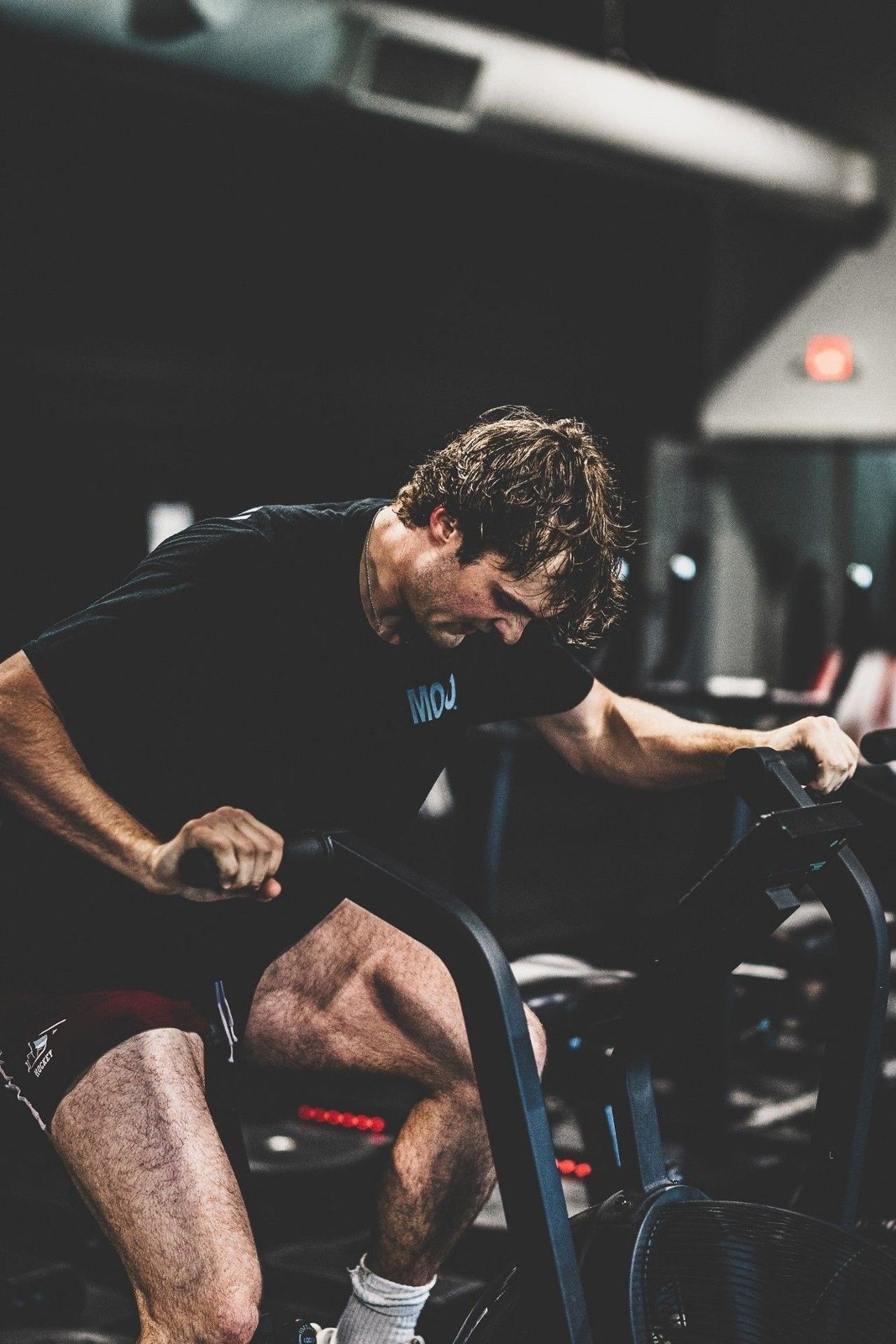
The tests are deliberately boring and repeatable: a standing long jump for raw lower-body power, a single-leg broad jump on each side, a short sprint, and a bike effort for the ability to repeat hard work. Four numbers, twenty minutes, done.
The single-leg jumps are the ones that change decisions. Roughly a third of the players we test show more than a 10 percent gap between their left and right side, which is the threshold we treat as an action item. That gap is invisible in a game. It shows up as one strong first step and one that arrives late, and it is exactly the kind of thing a parent cannot see from the glass. The full explanation of the tests and what the numbers mean is in hockey fitness testing, and the side-to-side problem gets its own breakdown in single-leg strength.
Every athlete walks out of that first visit with a baseline, a plan, and a date to retest. If a facility cannot tell you what they will measure and when they will measure it again, you have learned something useful about the facility.
Block One: The Warm-Up Nobody Is Allowed to Skip
Ten minutes, and it is not a lap and some static stretching. The warm-up is a rehearsal of the positions the session is about to load: hips opening and closing, ankles getting range, glutes firing, trunk bracing.
- Hip mobility work with intent, because a player who loads a cold hip into end range is borrowing from next month.
- Ankle and foot prep, because every edge the player owns starts at the ankle.
- A movement primer, a few low-level jumps or skips, so the nervous system knows what is coming.
- Band work at the hips and shoulders, done slowly, before anything gets fast.
This block is also where we spot the athlete who came in wrecked from a late game or a bad night of sleep. That information changes the session. It does not get ignored because the program said so.
Block Two: Speed and Power, While the Tank Is Full
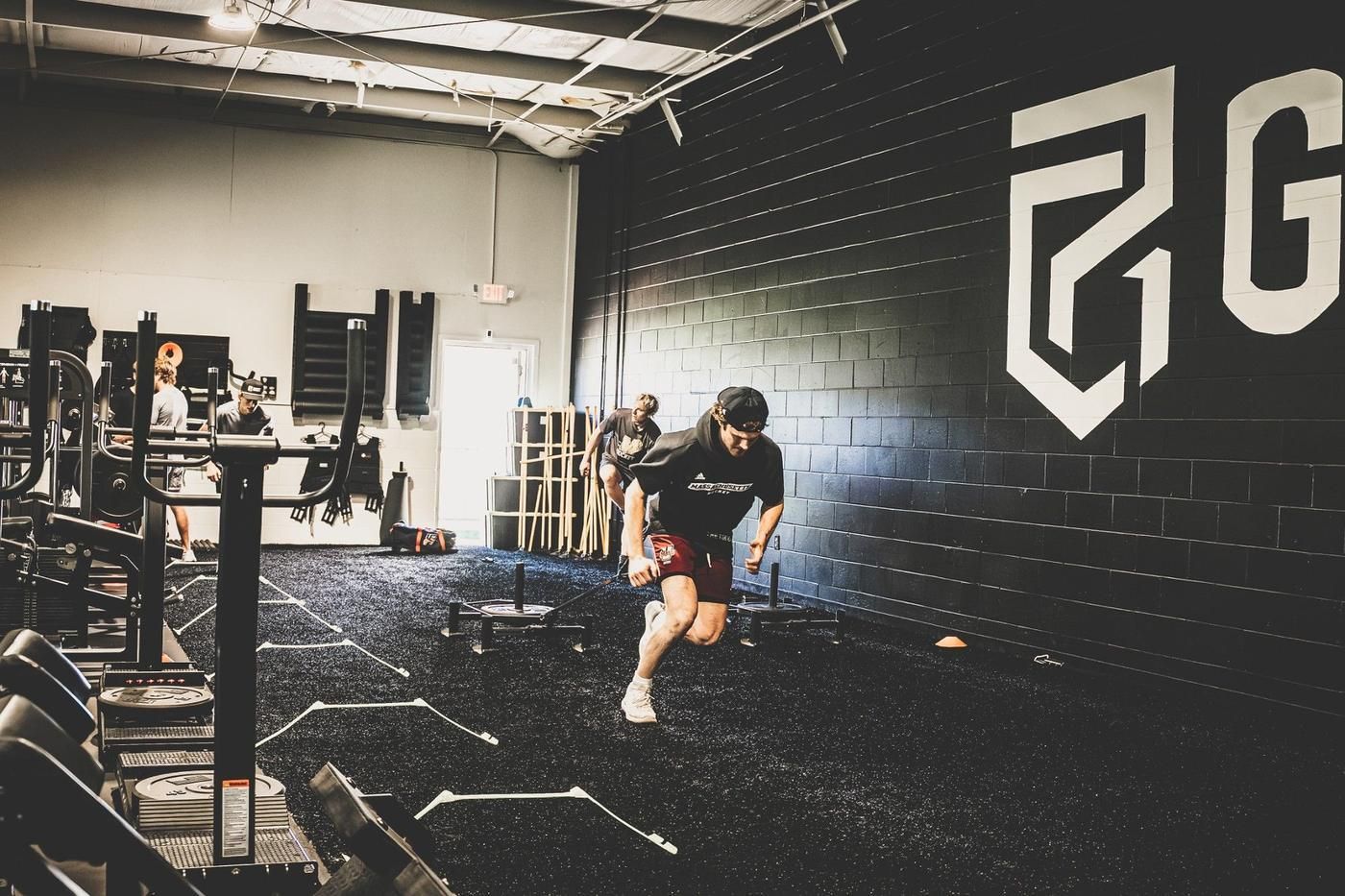
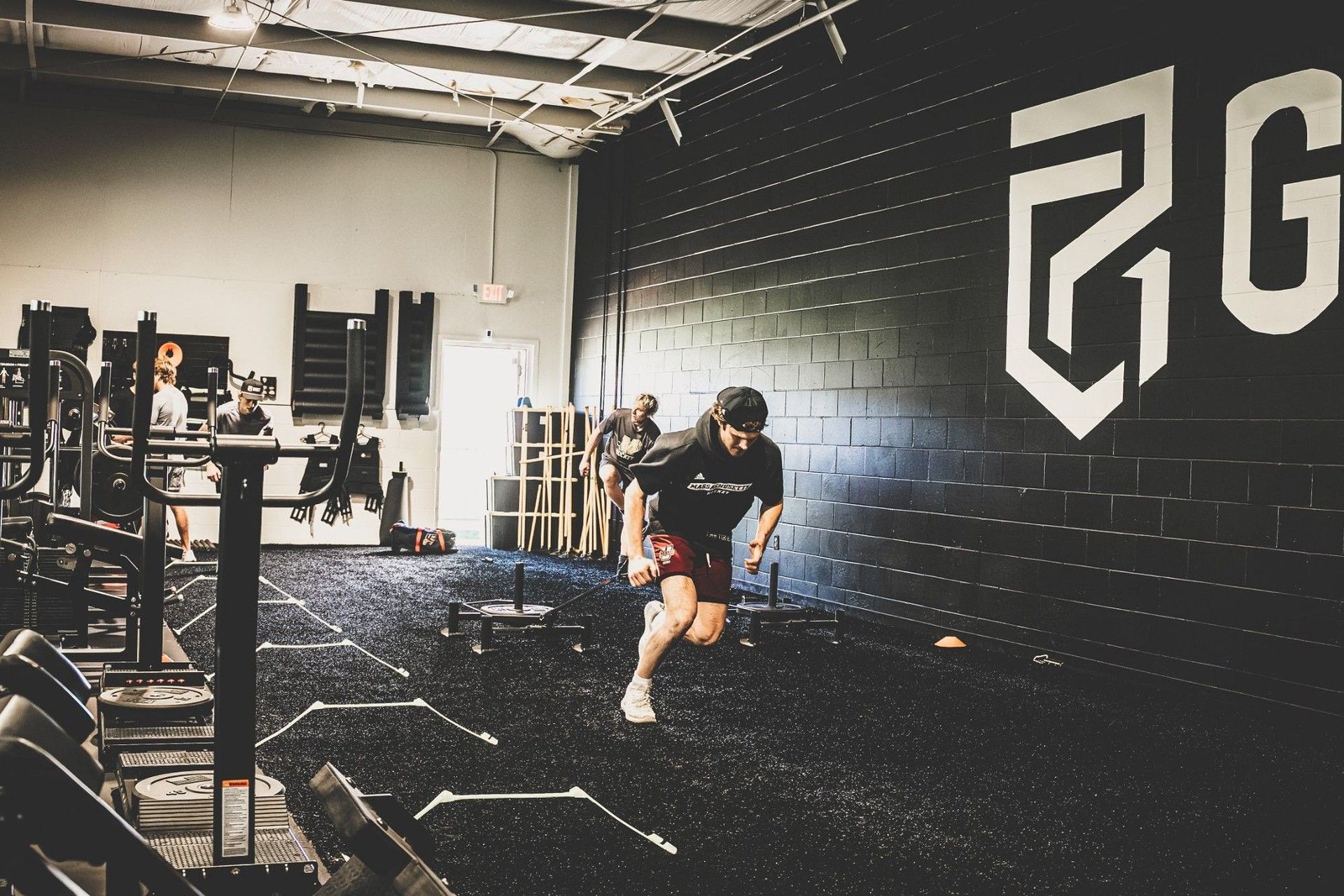
The fast work goes early, always. Jumps, bounds, med ball throws, short accelerations, all of it before fatigue turns speed work into conditioning with worse technique.
You will see things like a trap bar jump, a lateral bound, a single-leg hop for distance, and a rotational throw. Low reps, full recovery, and a coach watching the landing on every rep. The landing is where the injury risk lives, so the landing is coached as hard as the jump.
This is the block that separates a performance facility from a gym with a hockey poster in it. If your player's training session has no jumping, no sprinting, and no throwing, they are lifting weights and hoping it turns into speed. Sometimes it does. It is a slow, unreliable way to get there.
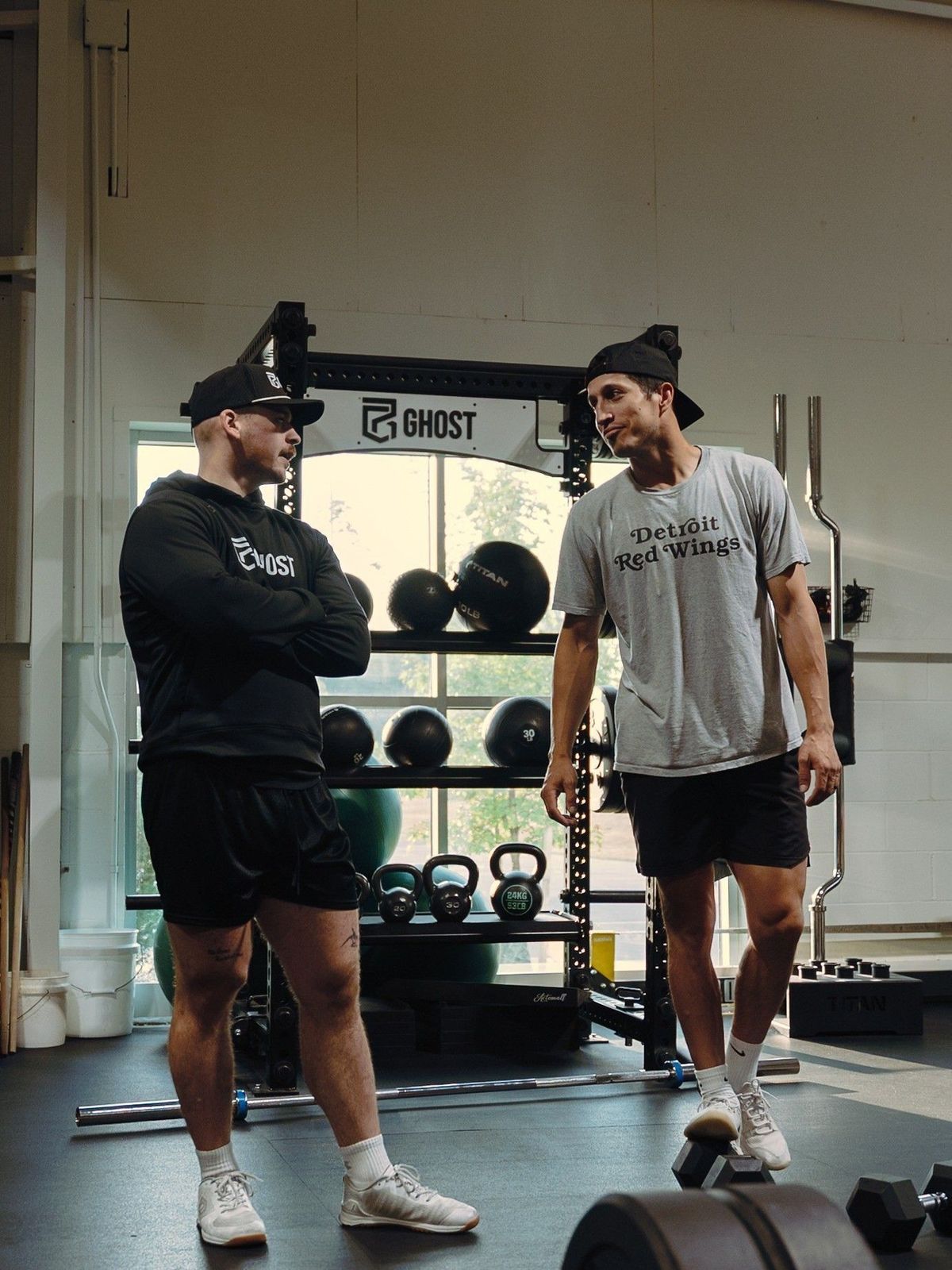
A coach on the floor, every rep. That is the difference between counting reps and correcting them.
Block Three: Strength That Has to Show Up on the Ice
Squat, hinge, push, pull, and a unilateral movement, in some version, every week. Front squat or a safety squat bar. Trap bar deadlift or a Romanian deadlift. A split squat or a step-up. Pressing and rowing for the shoulders and the stick.
Three sets of six, four sets of three, a heavy single at the end of a block. The exact numbers come off the baseline and get adjusted session by session. What does not change is that the load goes up over time. If the weight, the reps, or the speed of the work has not moved in eight weeks, nothing is being trained, and a coach who cannot show you that progression is not coaching.
Skaters and goalies run the same program with small tweaks, not separate ones. Goalies carry more hip and groin capacity work, more split-stance loading, and lighter total volume in season, which is covered in goalie training and in goalie strength training. Same standards, different dosage. That is the whole difference.
The strength block is also the reason a session only takes 45 minutes. Small groups, by appointment, a coach on the floor, and no waiting in line for a rack behind a guy doing curls.
Block Four: The Finisher, and the Part Parents Think Is Optional
The last few minutes are the easiest to cut and the first thing a serious program protects. A short conditioning piece, some trunk work, and a deliberate cool-down that brings the athlete back down before they get in the car.
The finisher also carries the conditioning load in season, which is on purpose. Once games and practices are running, the gym's job is to keep the player fast and durable, not to add another engine-building session on top of a schedule that is already full. The sequencing logic is in the in-season training plan, and the broader framework for what belongs off the ice is in the complete off-ice training guide.
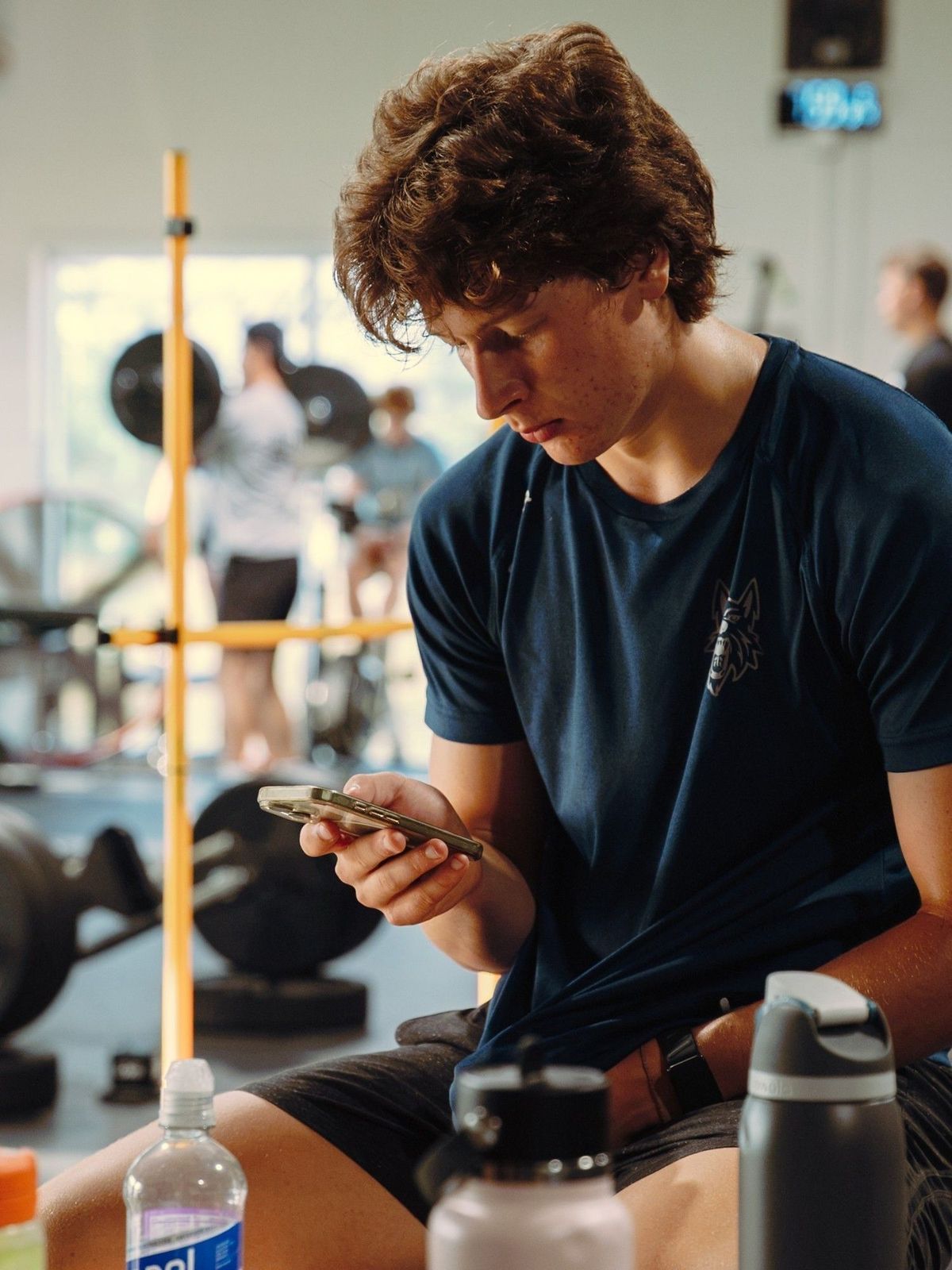
The numbers get written down. That is how a player knows week eight looks different from week one.
What a Bad Session Looks Like
Contrast is how you learn to see this. Here is the other version, the one your player has probably already been through.
- A warm-up that is jogging and static stretching, run by whoever showed up first.
- Nobody wrote down a single number, so nobody can tell you whether anything changed.
- Every athlete does the same sets and reps regardless of age, training age, or last game.
- Dozens of athletes in a room, one coach, and no eyes on the technique.
- No jumping, no sprinting, no throwing, and one hour of circuit work that leaves everyone sore and no one faster.
- A program that resets every eight weeks instead of progressing, so the athlete trains hard for a year and tests the same in June.
None of that is a character flaw in the coach. It is what happens when a session has no structure, no testing, and no individual plan. Your player can train hard in that room for two seasons. Hard is not the same as productive.
What Else Is Under the Same Roof
This is the part that makes the building unusual, and the part most families do not ask about until something goes wrong.
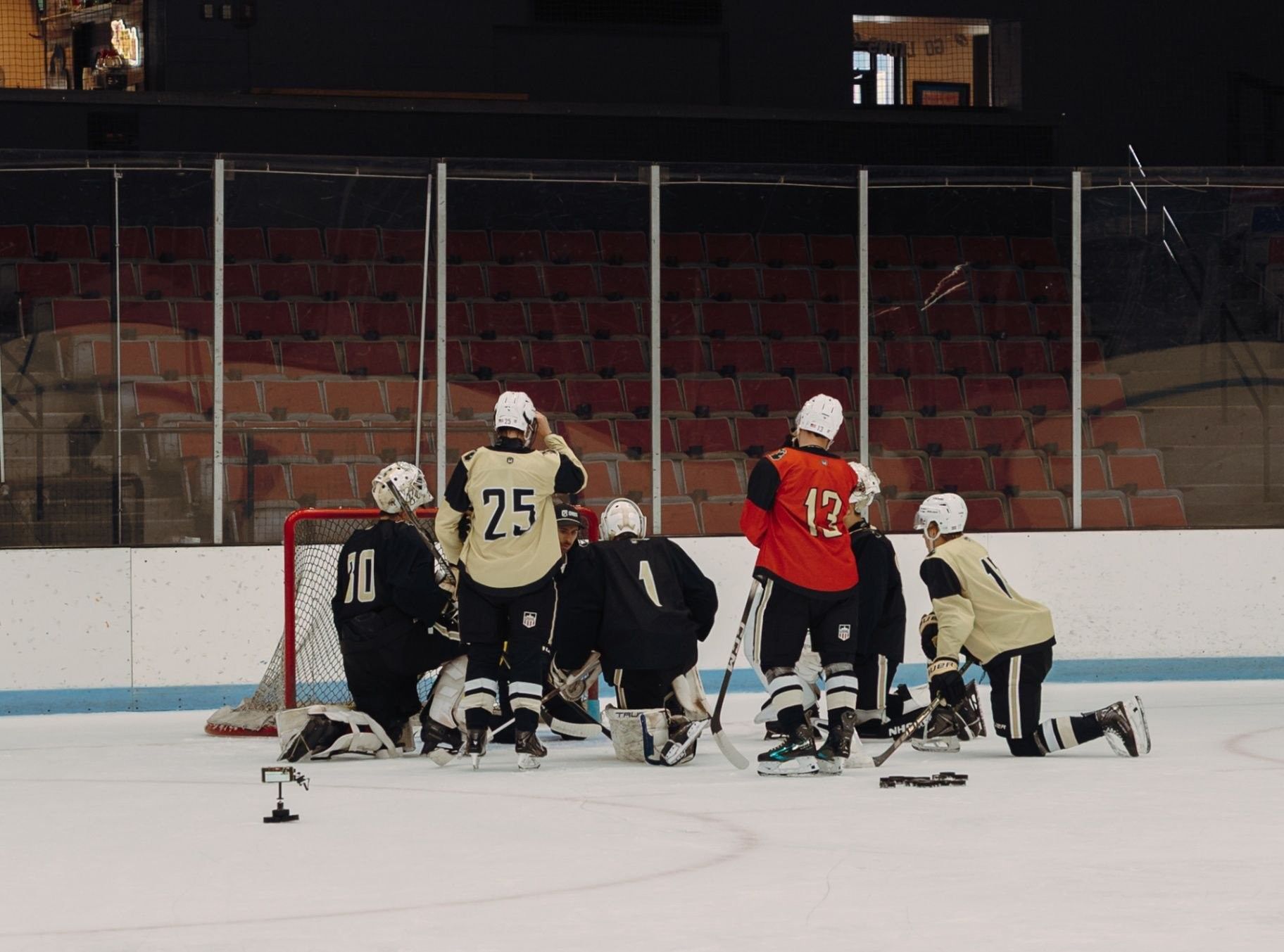
- Goalie coaching on the ice with a former pro goalie, including private and semi-private sessions and U12 groups.
- Ghost Rehab: cash-pay physical therapy for the hip, knee, shoulder, and back problems that show up mid-season.
- Nutrition coaching with a registered dietitian, for the player who is dragging in the third period and cannot explain why.
- Mindset coaching for the player whose game falls apart after one bad shift.
- Hockey vision training for reads, tracking, and reaction speed.
- Testing days for whole teams, so a club can see its roster change instead of guessing, through team training.
A player who is slow because of a hip that will not rotate, a player who is slow because they are under-fuelled, and a player who is slow because they freeze under pressure are three different problems. One building that can diagnose all three beats three buildings that each assume the answer.
Seven Questions to Ask Any Program in West Michigan
Use these on us. Use them on anyone. The answers tell you more than any tour.
- What do you test, and when do you retest?
- Can I see my player's numbers, not just a progress email?
- How many athletes are on the floor per coach?
- Who writes the program, and what are their credentials?
- What changes in the plan when my player has a game that night?
- What do you do when my player gets hurt?
- What does my player do in week eight that they could not do in week one?
If a program cannot answer the last one with specifics, the rest do not matter much.
Who This Is For, and Who It Is Not For
This works for players who want to be measurably better: youth players building their first real base, travel and high school players chasing a step, junior and college players protecting what they have built, and serious adults who still want to play fast. Parents who want a plan they can see progress against fit here. Players who want to show up, sweat, and go home without being coached do not, and that is fine. There are cheaper ways to sweat.
Our athletes range from youth hockey through junior, NCAA, and the pro ranks, and they train in the same room with the same standards. That is deliberate. A 12-year-old watching a junior player load a bar properly learns more in ten seconds than a lecture teaches in an hour. If you are still choosing between programs for a younger player, youth hockey training in Grand Rapids covers how to evaluate them, and the ADM guide for parents covers what is age-appropriate in the first place.
Hockey Training Session FAQ
How long is a session, and how often should my player train?
Sessions run 45 minutes on the Speed Lab floor, Monday through Friday after school and into the evening. In season, two coached sessions a week is a realistic target for most players once practices and games are on the calendar. Off-season is where the volume goes up.
Do parents stay and watch?
You are welcome to. We would rather you did, at least once, so you can see the coaching instead of taking our word for it. You will see the difference between a coach counting reps and a coach correcting them.
Is this the same for goalies?
Same program, small tweaks. Goalies get more hip and groin capacity work, more single-leg and split-stance volume, less skating-style conditioning, and more rotational trunk control. They train in the same room with the same standards. The position does not get a separate sport.
What if my player is behind on strength or coming off an injury?
That is what the baseline is for. The plan starts where the athlete actually is, not where the group is. If the issue is a joint that is not ready, Ghost Rehab handles the clinical side and the training gets built around it.
Can my player train remotely instead?
Yes. Remote athletes get the same programming and testing structure through the app, delivered to their phone wherever they live. The Complete Hockey Program covers the remote option if you are outside West Michigan. Use find your program if you want help picking.
Come Watch One
You do not have to take a blog post's word for any of this. Book a free consult, walk into the building on 100th Street in Byron Center, and watch a session run. Look for the four blocks. Listen for the coaching. Ask the seven questions.
Then decide. Our athletes train by appointment, so the floor is never a crowd, and the coach knows every name on it. That is the entire pitch. Start with our training programs or find your program, and if you want something to do before the first session, put your player on the free 30 in 30 series. Thirty days, one habit at a time, no cost.
Dr. Jamie Phillips, DPT, CSCS
Ghost Athletica LLC | Hockey Performance Training | Grand Rapids, MI