By Dr. Jamie Phillips, DPT, CSCS
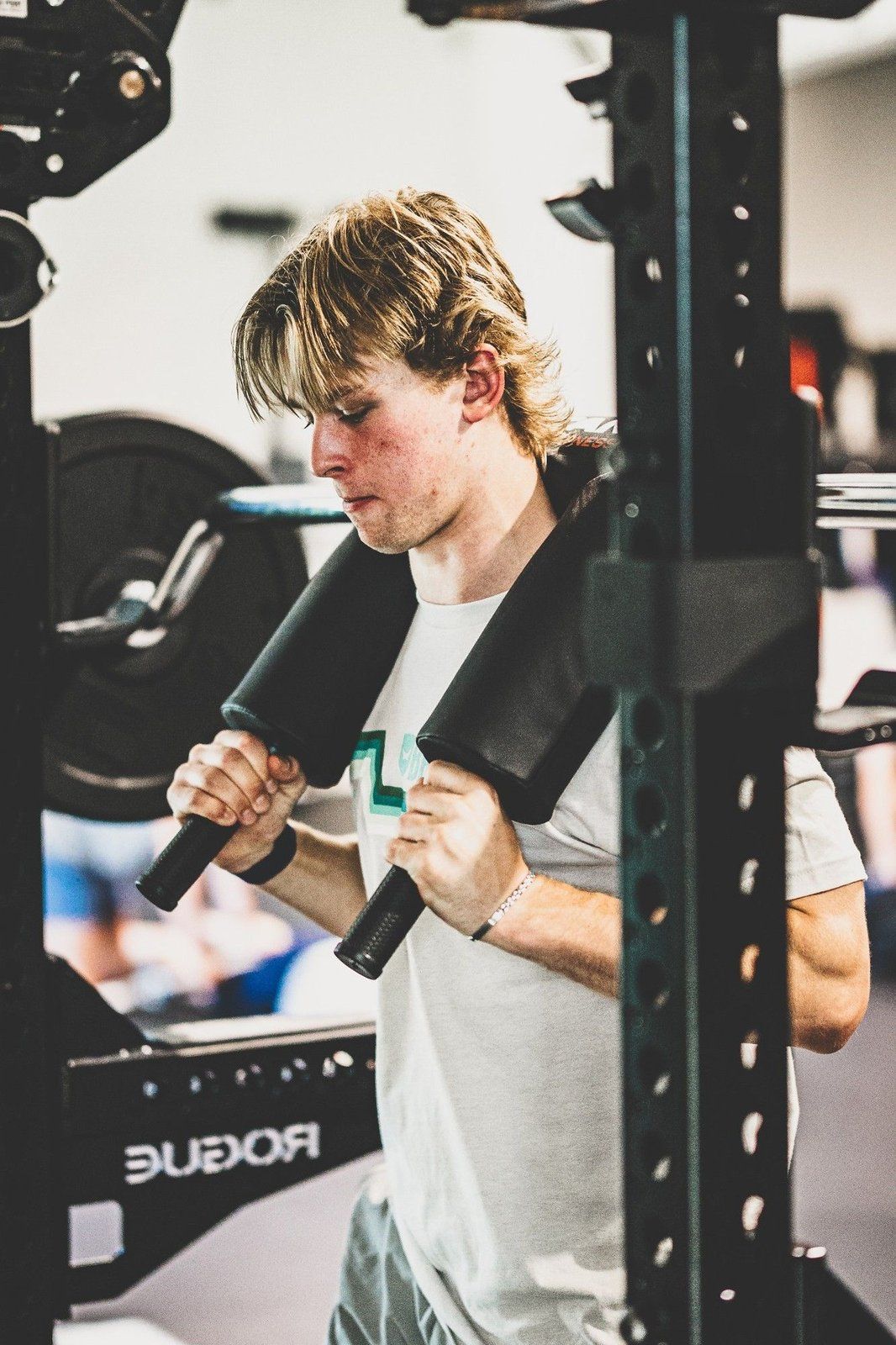
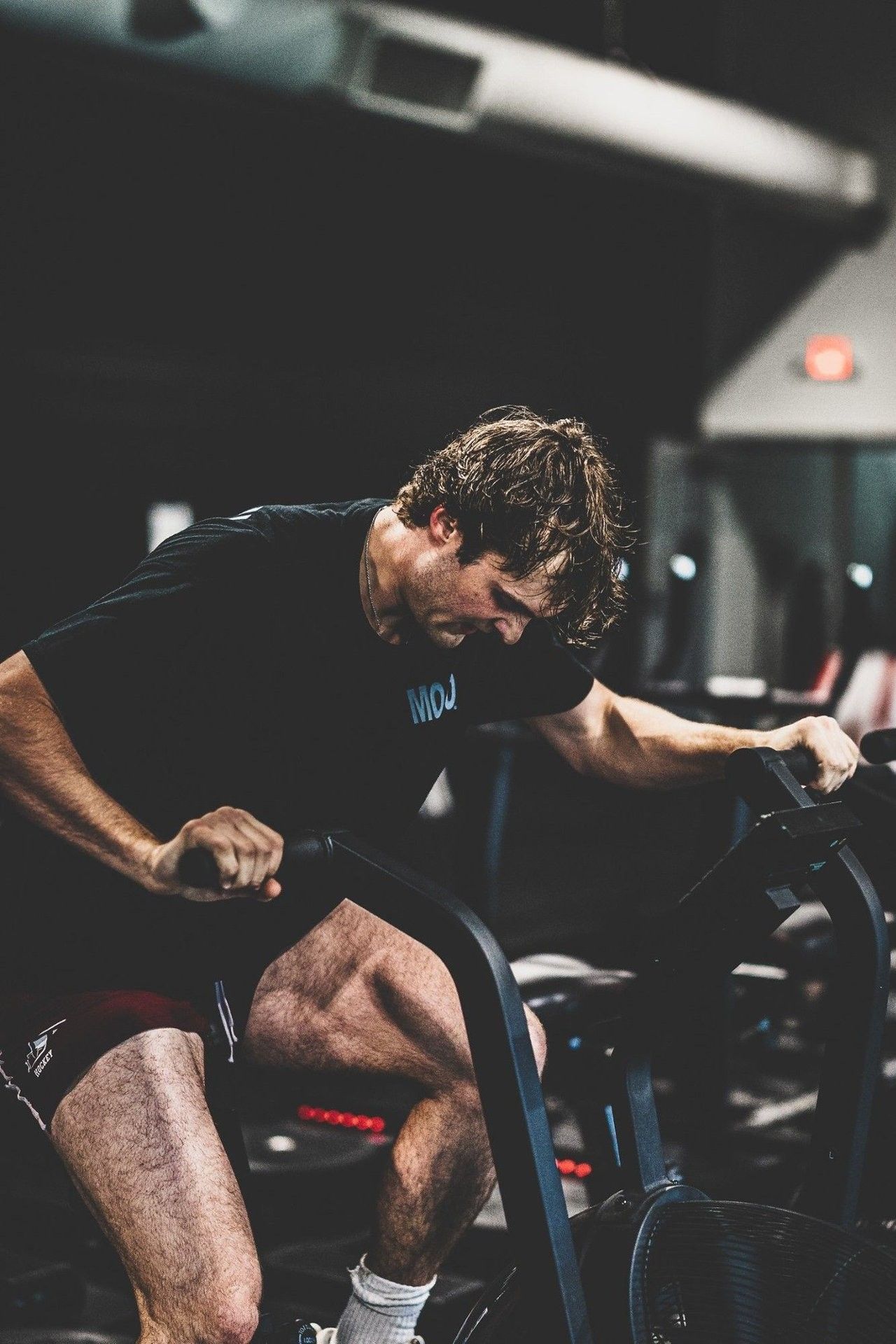
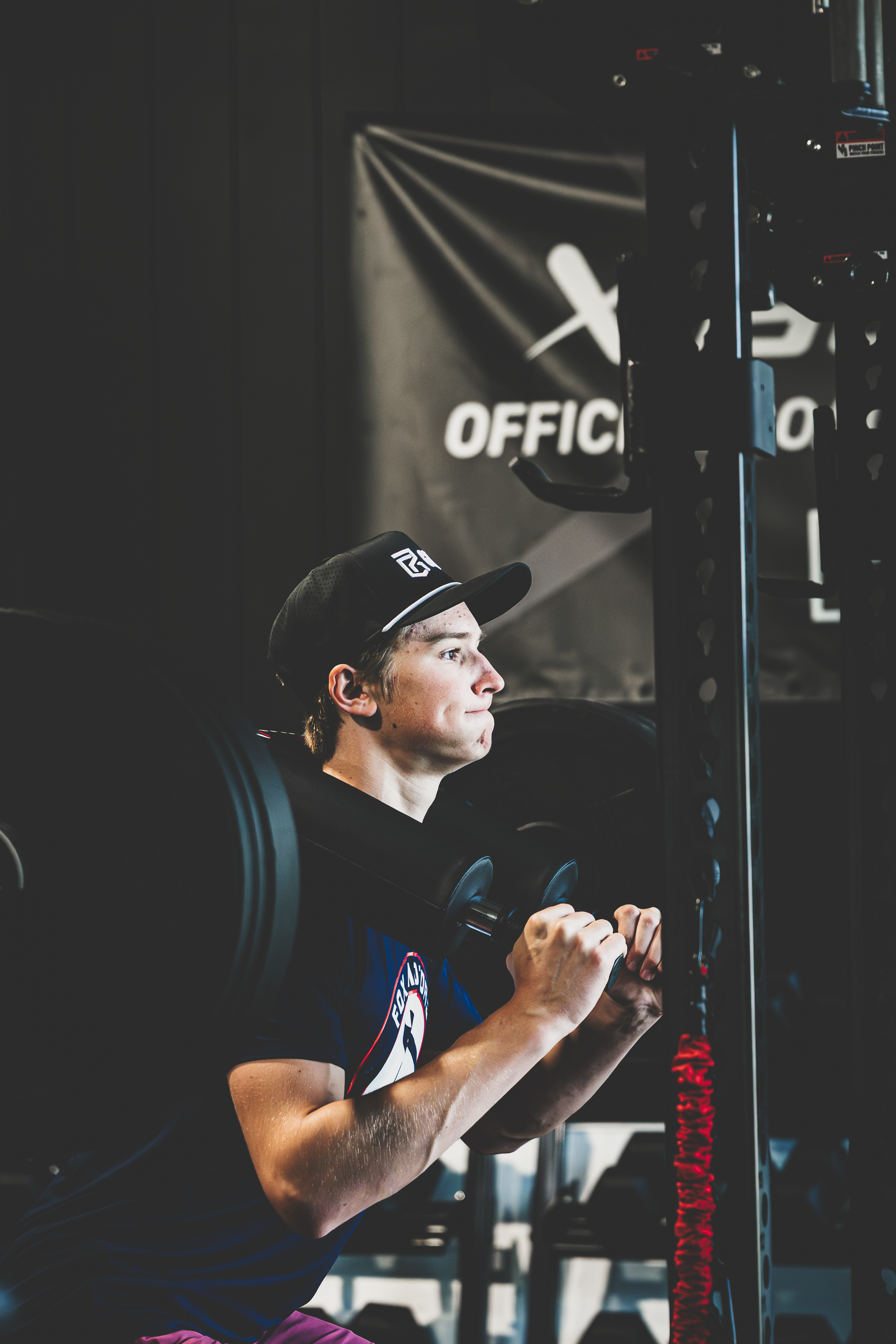
Youth hockey athlete completing strength training in a focused, dark gym environment
You are paying for hockey training because you want your player to improve.
Not just sweat. Not just collect another session on the calendar. You want to see better skating, stronger puck protection, faster decisions, more confidence, and more impact when the game gets difficult.
But many families in Grand Rapids and West Michigan spend heavily on training that never shows up in games.
The player attends sessions. The drills look intense. Everyone leaves tired. Then the same skating problems, strength gaps, decision-making issues, and confidence struggles show up the following weekend.
That is not development. That is activity without direction.
Before you invest in another hockey training program, use this six-point framework. Ask direct questions. Demand clear answers. Choose a process that creates progress, not just more ice time.
Start With the Outcome You Actually Want
A strong youth hockey training program connects every session to what your player needs in games.
That means combining:
- On-ice skill development
- Skating mechanics, edge work, speed, and acceleration
- Off-ice strength and power
- Recovery and mobility
- Nutrition and fueling habits
- Mindset and confidence
- Hockey vision and decision-making
- Injury prevention and rehabilitation when needed
When a family buys only one piece, the player usually hits a ceiling.
Skill work without strength limits speed and puck protection. Strength work without skating creates force the player cannot use efficiently. Extra ice time without feedback reinforces the same habits. Hard training without recovery creates fatigue, soreness, and inconsistent performance.
Your player does not need more random work.
Your player needs the right work in the right order.
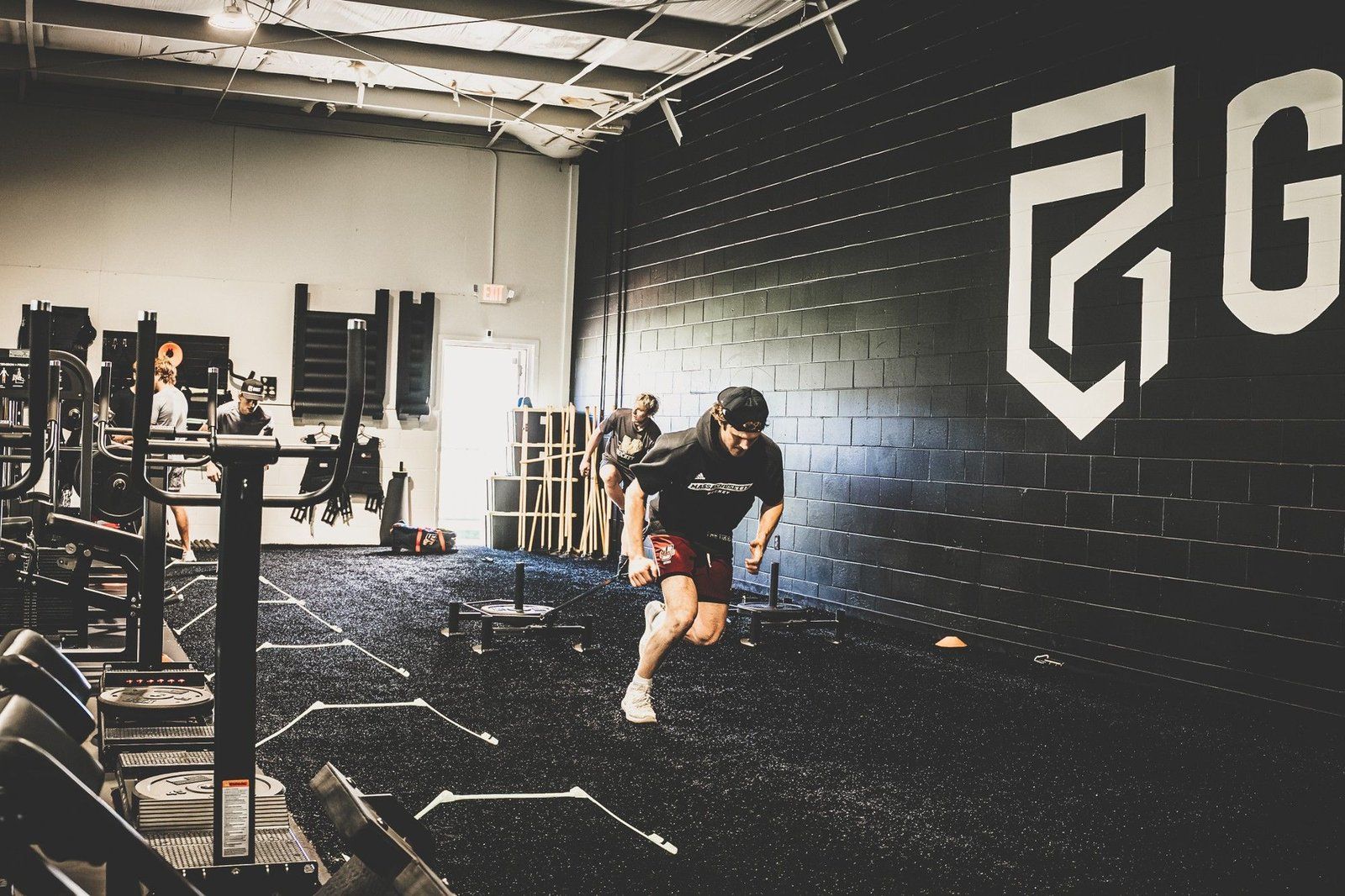
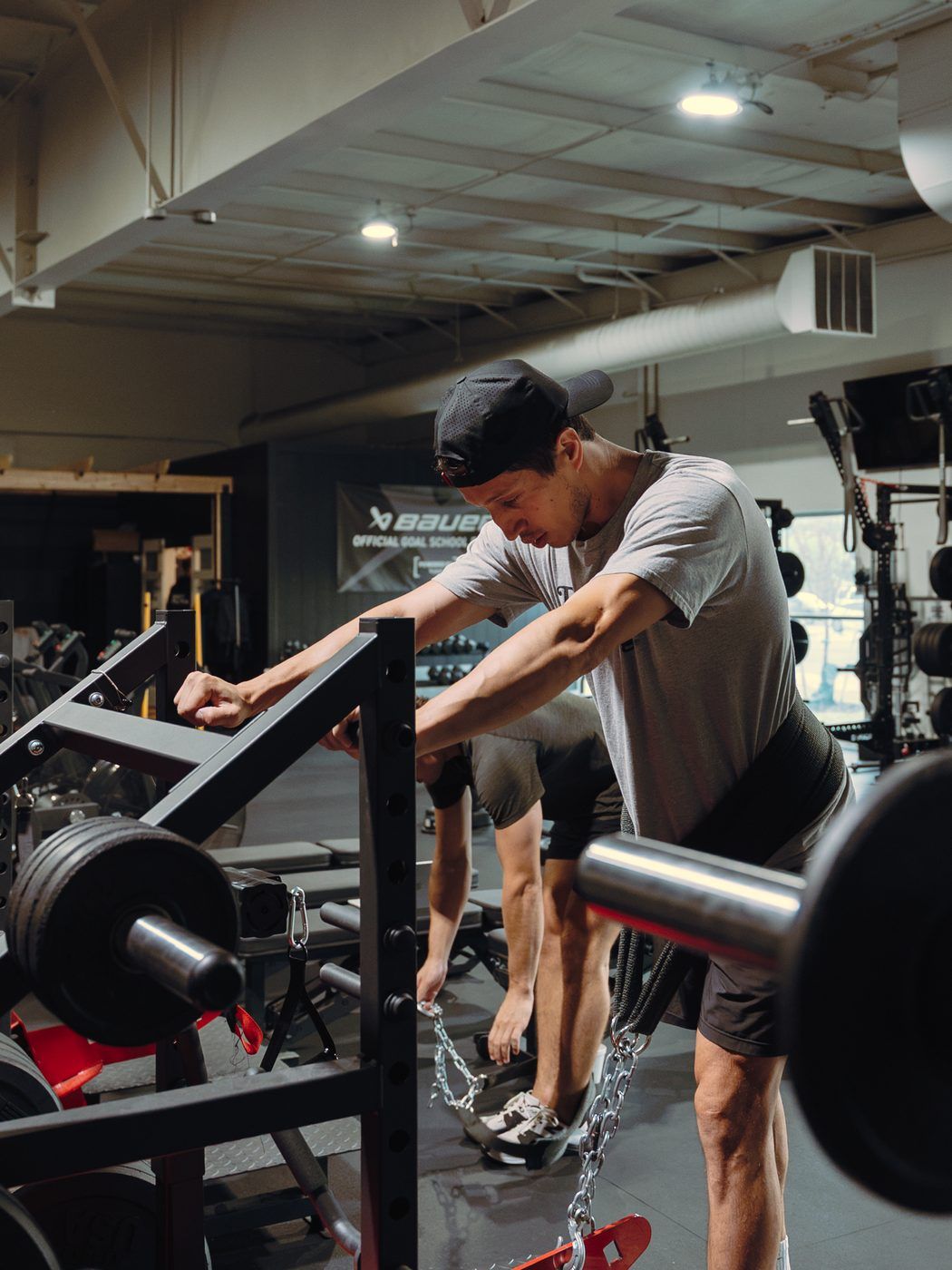
Hockey athlete performing an explosive sled pull inside the Ghost Athletica training facility
Use This 6-Point Program Evaluation Framework
Take these questions to any rink, gym, coach, or hockey development provider in West Michigan.
1. "How do you assess my player before training begins?"
A real answer includes an assessment of the player's age, development level, position, injury history, movement quality, skating needs, goals, schedule, and current team workload.
You should hear how the coach identifies priorities before prescribing training.
A vague answer sounds like:
- "We work with everyone the same way."
- "Your player just needs more reps."
- "We will figure it out once they get started."
No assessment means no clear starting point. Without a starting point, you cannot tell whether the program is correcting a problem or simply repeating activity.
2. "What is the progression over the season?"
A real answer explains what your player will work on first, what comes next, and how training changes during the season.
Youth hockey development should not look identical in September, December, and March. Training must account for practices, games, tournaments, school, growth, fatigue, and recovery.
Ask:
- What are the first three development priorities?
- How does the program progress?
- How does the plan change in-season?
- What happens during the off-season?
A vague answer is a list of drills with no sequence.
If every session feels random, your family is paying for exercise, not a development system.
3. "How much individual feedback does my player receive?"
A real answer explains the coach-to-player ratio and how feedback is delivered.
Your player should receive specific corrections:
- "Your first three steps are too upright."
- "You are losing your edge when changing direction."
- "Your hands are late because your posture is collapsing."
- "You need to scan before receiving the puck."
That is useful feedback.
"Work harder" is not.
"Good job" is not enough.
Watch a session if possible. Look for active repetitions, coach observation, immediate correction, and game-relevant decisions. A good program keeps players moving, but it also makes sure they are moving correctly.
4. "How do you measure progress?"
A real answer identifies what will be observed, tested, tracked, or reviewed.
That may include:
- Skating and movement quality
- Acceleration and change of direction
- Strength and power development
- Puck control and shooting mechanics
- Decision-making and scanning
- Attendance and training consistency
- Recovery habits and readiness
The exact measurement depends on the player's age and goals. The important point is that the program has a way to determine whether the plan is working.
A vague answer relies on promises:
- "Your player will become elite."
- "This is the same training pros use."
- "You will see results quickly."
Ask how progress is communicated to you as the parent. You should not have to guess whether your investment is producing anything.
5. "How do you coordinate training with hockey, school, and recovery?"
A real answer considers the total workload.
Your player may already have team practices, games, shooting sessions, skating lessons, school demands, travel, and other sports. Adding more high-intensity work without a plan can reduce performance instead of improving it.
Ask:
- How many sessions should my player complete each week?
- What happens during tournament weekends?
- How do you modify training when the player is tired or sore?
- What recovery work is included?
- Do you communicate with the athlete and family about workload?
A vague answer treats every week as if it is the same.
It is not.
Good youth hockey training builds capacity without burying the athlete in fatigue.
6. "Who is accountable for my player's development?"
A real answer identifies the coach responsible for the plan, the communication process, and the next adjustment.
Rotating coaches are not automatically a problem. The problem is rotating coaches with no consistent system and no one taking ownership.
Ask:
- Who reviews the player's progress?
- Who updates the plan?
- Who communicates with our family?
- Who addresses a plateau, injury, or confidence issue?
- What happens if the player needs a different level of challenge?
A vague answer sends you from coach to coach with no clear owner.
Your player needs continuity. You need accountability.
Recognize the Red Flags Before You Pay
Reject a program when you see these warning signs:
- No assessment: Every player receives the same plan regardless of age, position, ability, or injury history.
- No progression: Sessions are a collection of drills with no clear next step.
- No communication: Parents do not know what the player is working on or how progress is being evaluated.
- No off-ice plan: The program focuses only on ice time and ignores strength, power, mobility, recovery, and physical preparation.
- Rotating coaches with no accountability: Different coaches appear each week, but no one owns the development plan.
- Training that is really just ice time: Players spend most of the session skating around, waiting in lines, or repeating drills without meaningful correction.
A full rink, new equipment, and an impressive marketing page do not guarantee development.
The process matters more.
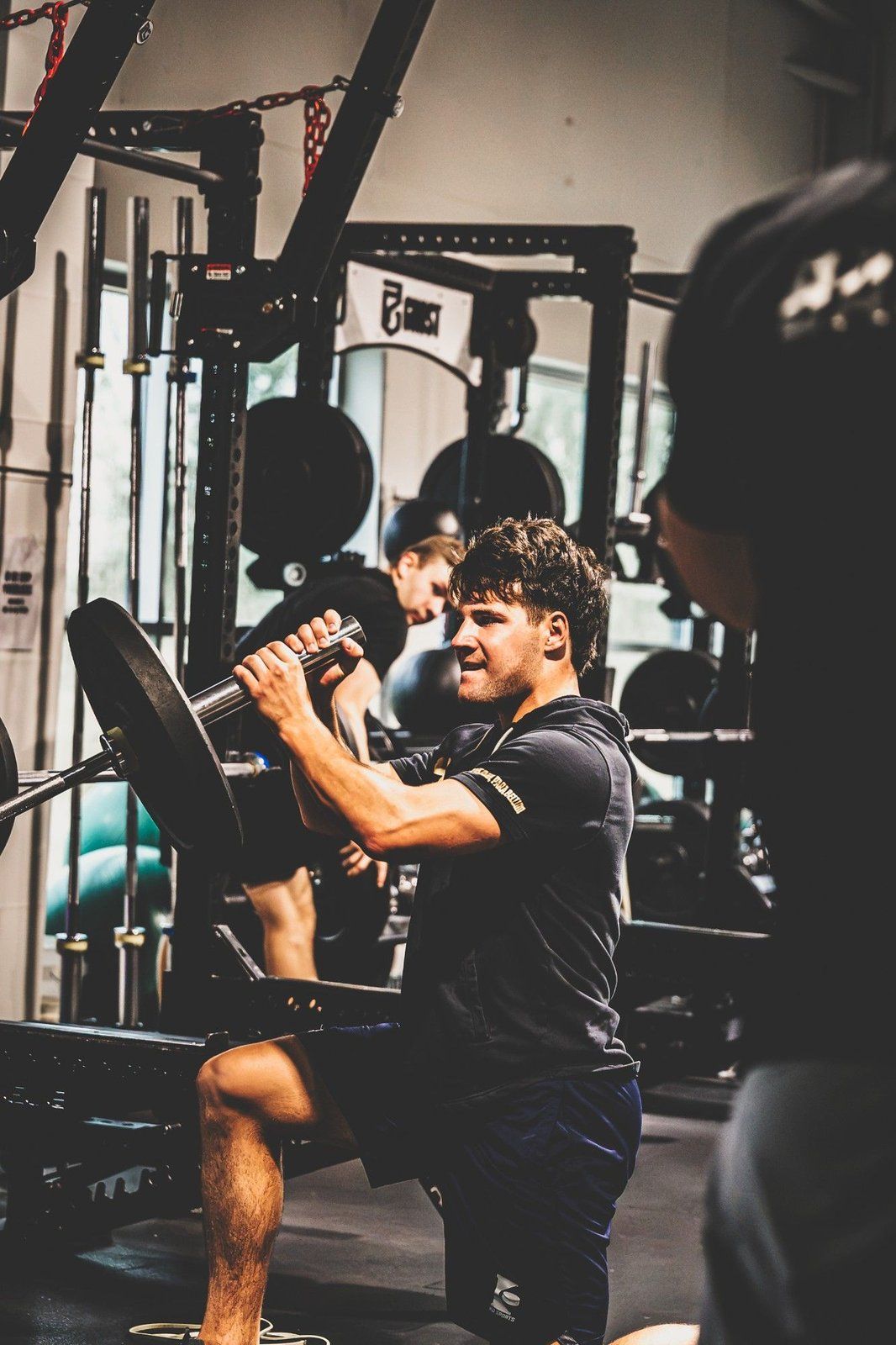
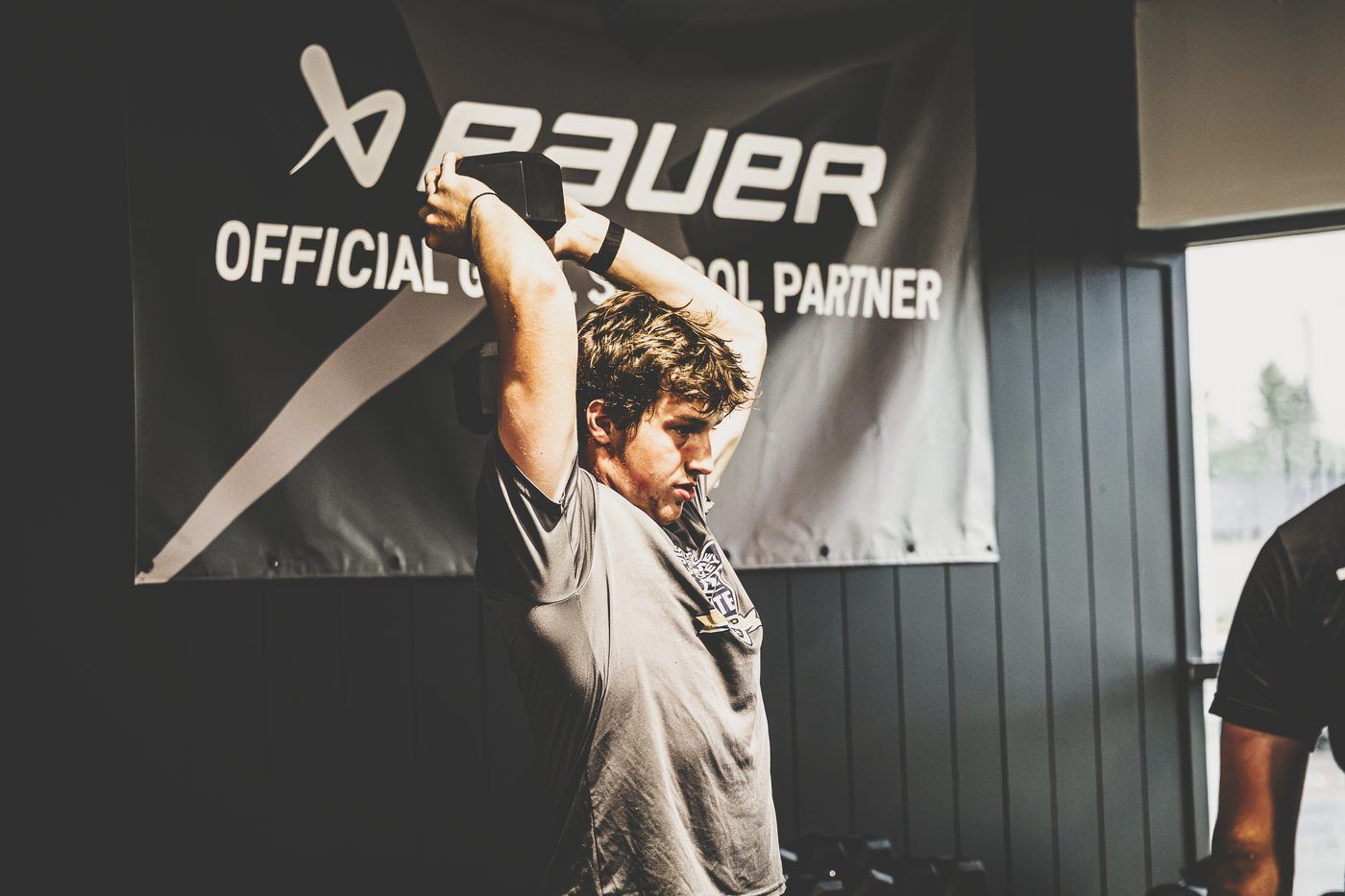
Focused hockey athlete performing a controlled strength exercise with a barbell in the Ghost Athletica gym
Know What Real Development Looks Like in West Michigan
Grand Rapids and West Michigan offer strong hockey communities. Players train at multiple rinks, travel for tournaments, participate in camps, and work with different coaches throughout the year.
That creates opportunity. It also creates confusion.
Families often assemble disconnected services:
- One coach for shooting
- Another provider for skating
- A separate gym for strength
- A camp for summer development
- Online videos for mobility
- No clear plan for nutrition or recovery
Each service may be useful. But if no one connects the pieces, your player becomes responsible for building the system alone.
Ghost Athletica is based in Byron Center and brings those pieces into one hockey training ecosystem. The system includes in-person and remote performance training, player skill development, power skating, hockey vision training, nutrition, mindset coaching, physical therapy and rehabilitation, and specialized goalie development.
It is one ecosystem, not one isolated service.
Programs are built for youth and developing players and scale through junior, collegiate, and professional levels. The goal is clear: build stronger, healthier, more confident, more complete athletes.
Goalies do not need a completely separate foundation. They need small, targeted tweaks inside the same system: more emphasis on hip mobility, lateral power, reaction demands, visual tracking, recovery, and position-specific movement. The foundation remains strength, skating, athleticism, skill, recovery, nutrition, and mindset.
That is how development stays connected to the game.
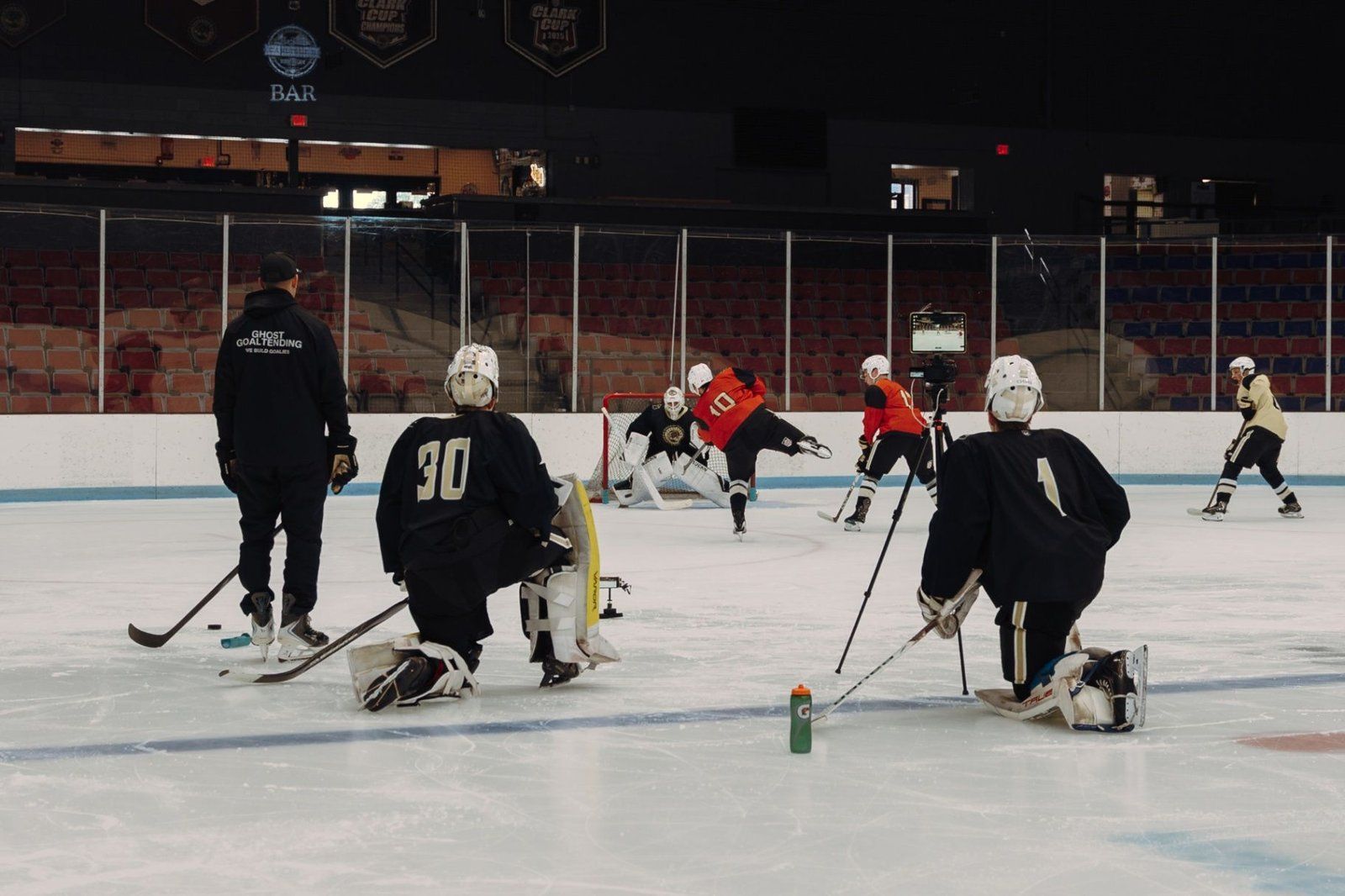
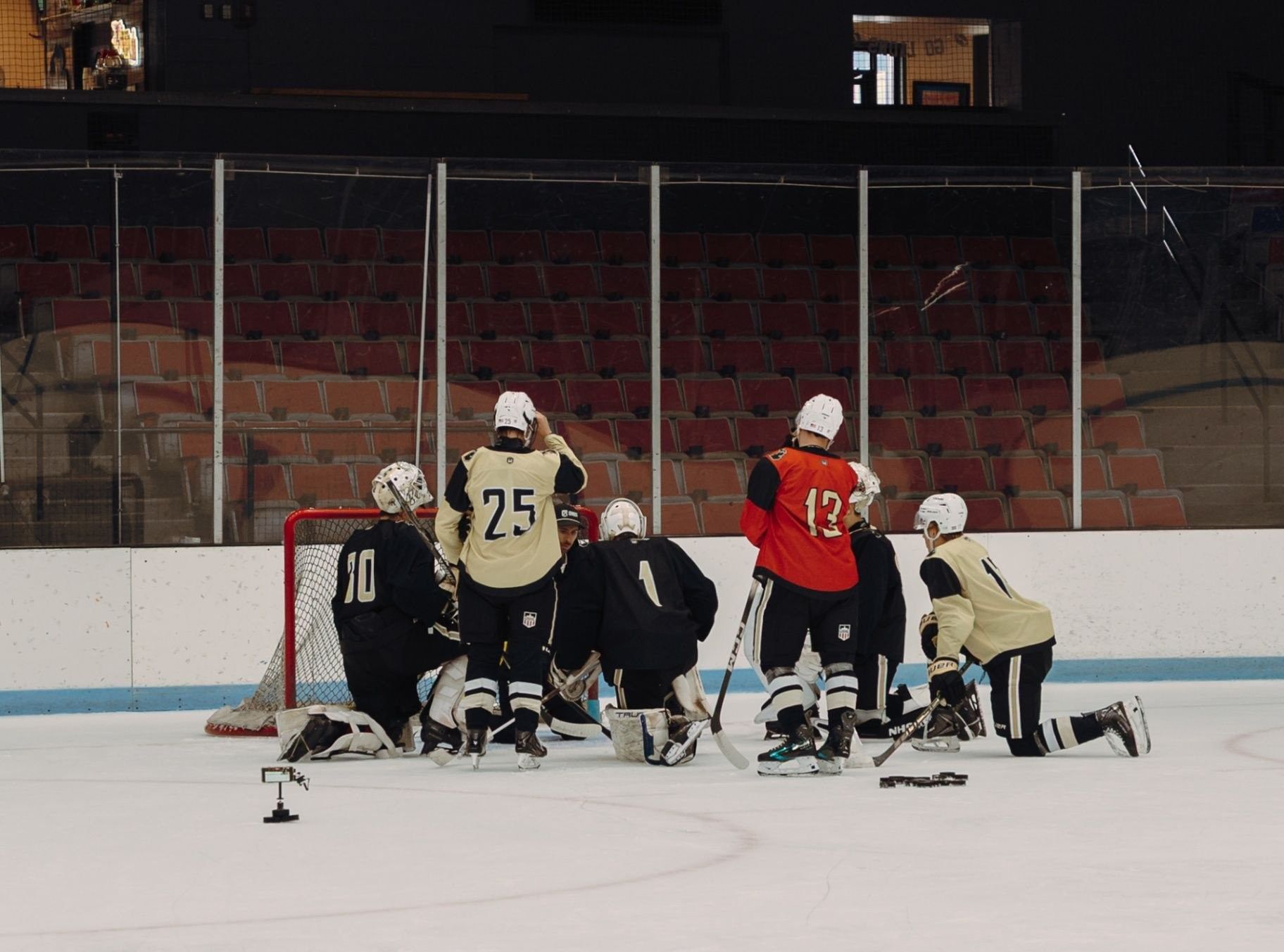
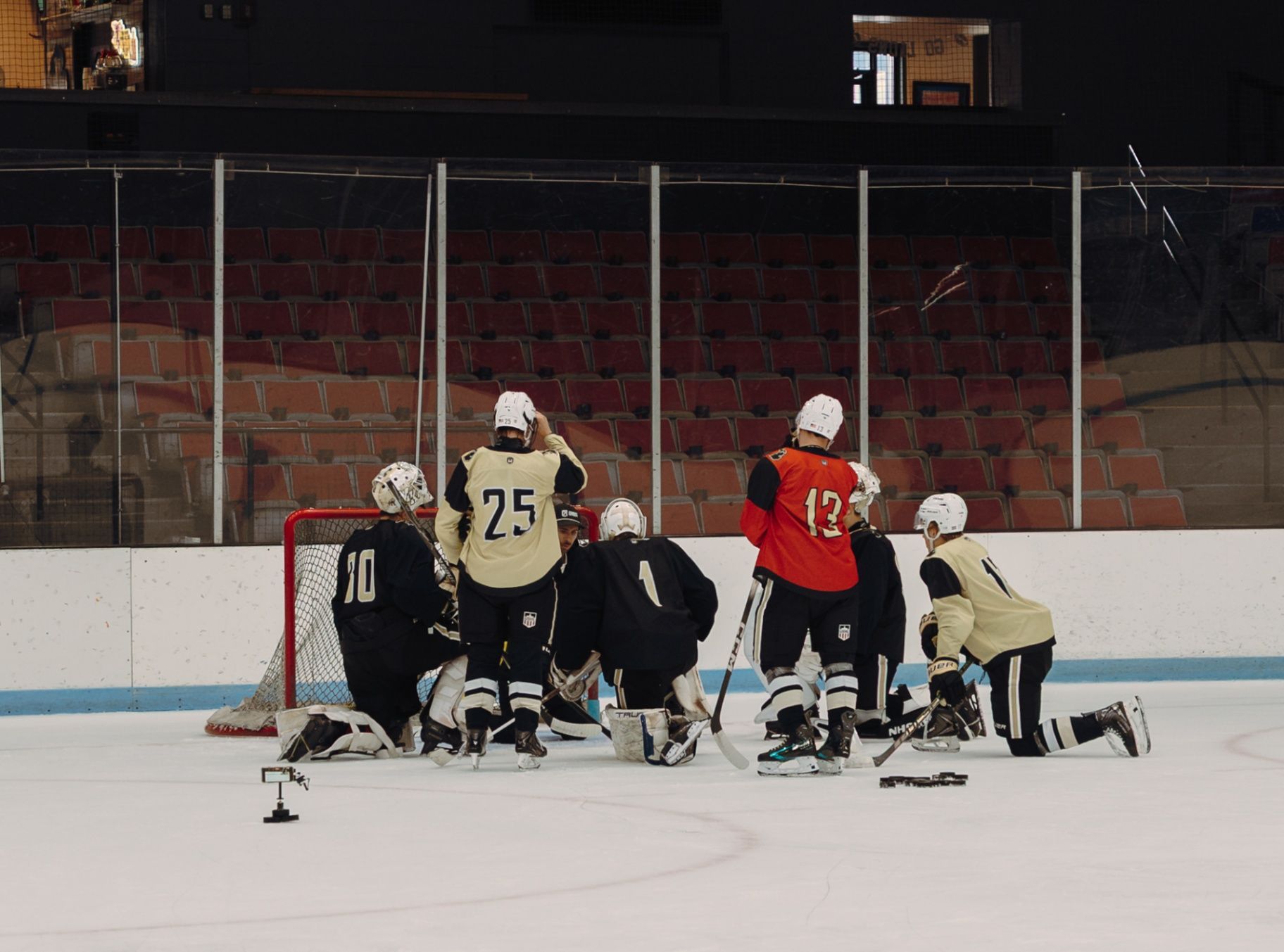
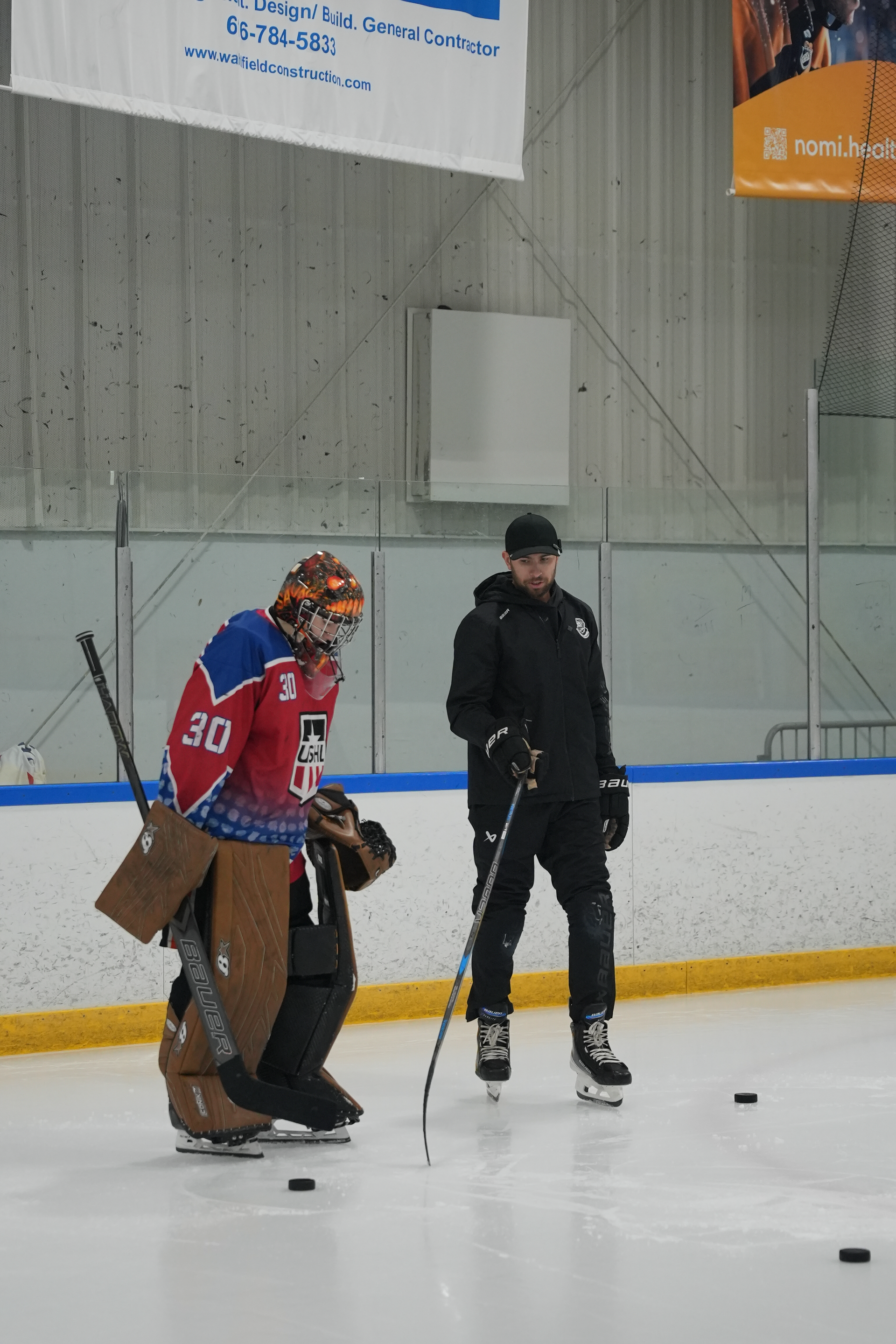
Hockey goalies and skaters receiving instruction during an on-ice training session
Look for a System That Can Grow With Your Player
Your child's needs will change.
A younger player may need movement skills, coordination, balance, skating confidence, and basic strength. An older player may need power, speed, conditioning, mobility, vision training, recovery planning, and position-specific performance work.
The best hockey training programs do not force every athlete into the same template. They maintain the same foundation while adjusting the challenge.
Ghost Athletica's approach is led by Dr. Jamie Phillips, a former professional goalie and Winnipeg Jets draft pick who played Division I hockey at Michigan Tech. Jamie is also a Doctor of Physical Therapy and Certified Strength and Conditioning Specialist. He and the team have trained more than 200 players, including NCAA, professional, and NHL athletes.
The credentials matter because they support the process. But the real question is simpler:
Can the program identify what your player needs, explain why it matters, and give your family a clear plan to implement?
That is the standard.
FAQ: Questions Grand Rapids Hockey Parents Actually Ask
When should my child start youth hockey training?
Start when your player needs more structure, feedback, or physical preparation than team practices can provide.
You do not need to wait until high school or junior hockey. Younger athletes benefit from age-appropriate movement, skating, coordination, skill repetition, and athletic development. The plan should scale to the player, not force a young athlete into adult training.
How much off-ice training is too much?
Too much is not defined by one universal number. It depends on age, maturity, team schedule, school demands, sleep, soreness, and the intensity of the work.
The right program tracks total workload and adjusts when your player is carrying fatigue. Off-ice training should improve readiness, not make the player slower and exhausted for practice.
Should my player train in-season or only during the off-season?
Both, but the goal changes.
Off-season training can build strength, power, speed, mobility, and conditioning. In-season training should maintain those qualities, support recovery, and keep the player fresh for games.
A strong program changes volume and intensity instead of repeating the same workout all year.
How can I tell if youth hockey training is working?
Look for specific changes:
- Better skating posture and edge control
- Faster first steps
- More balance through contact
- Stronger puck protection
- Improved decision-making
- More consistent effort late in games
- Better recovery between sessions
- Greater confidence in situations that previously caused hesitation
Ask the coach for direct feedback. Review video when appropriate. Track the process over time. Do not judge development from one game or one test.
Should we choose one program or several?
Choose one clear system first.
Adding multiple disconnected services often creates overlap, fatigue, and confusion. If you use more than one provider, make sure the work is coordinated and that someone understands the full training picture.
The right ecosystem can connect performance, skills, skating, recovery, nutrition, mindset, vision, and rehab without forcing your family to manage separate plans.
Stop Paying for Random Work. Choose a Clear Plan.
Your player does not need another vague promise.
You need to know what is being assessed, what is being trained, how the work progresses, and how the results are communicated.
Ghost Athletica helps families across Grand Rapids and West Michigan build that plan from one Byron Center-based performance ecosystem.
Review the available training options, explore the Complete Performance Program, learn how goalie development fits into the same foundation, and see how rehab connects to long-term performance. Review current options through pricing and program information, then book a conversation or start a session through ghostathletica.com.
Stop guessing. Ask better questions. Choose targeted development. Start now.
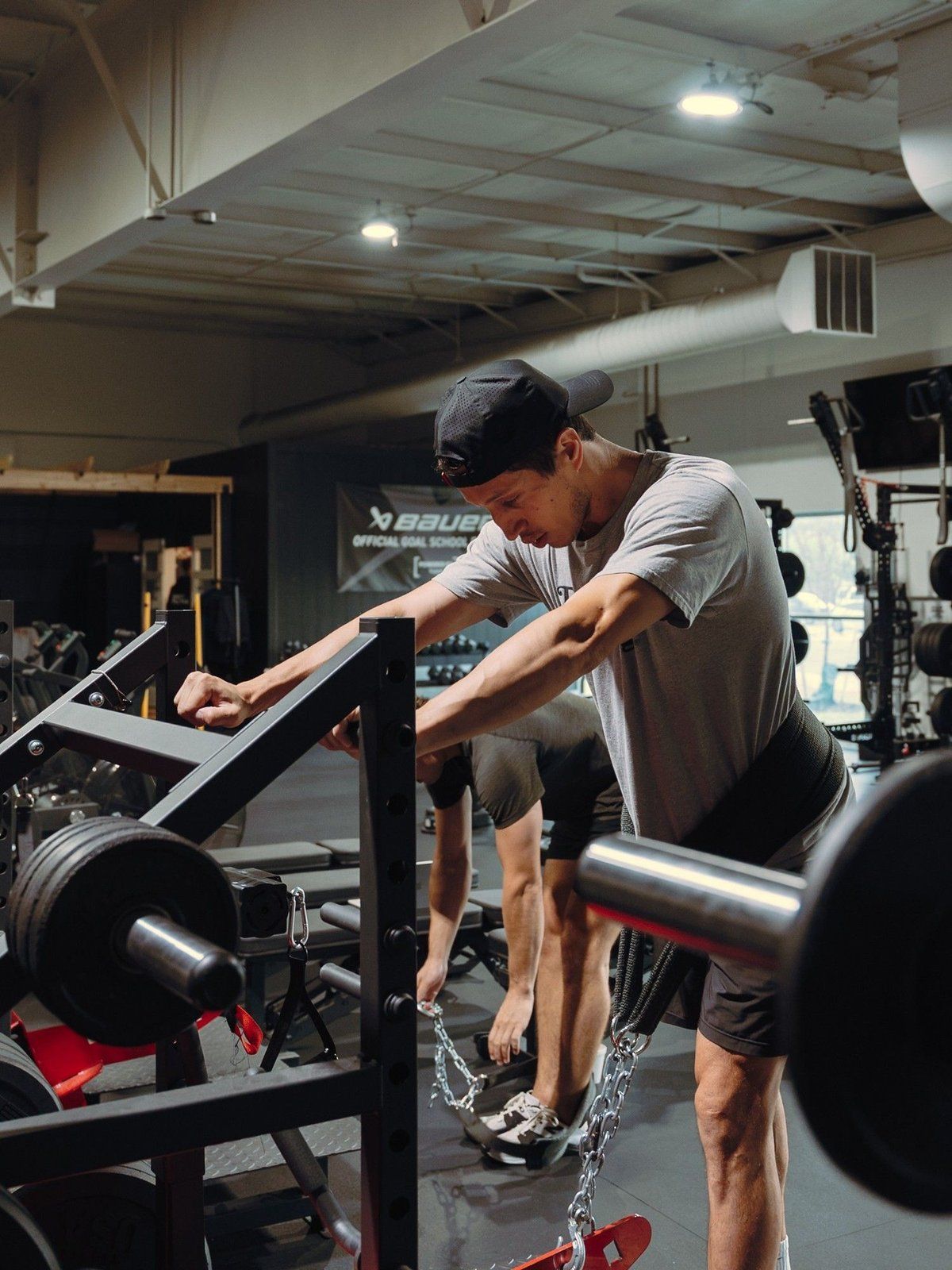
Hockey athlete completing a focused lower-body strength movement during supervised performance training