Grand Rapids Goalie Training: What Separates Goalies Who Actually Get Better

Share this article

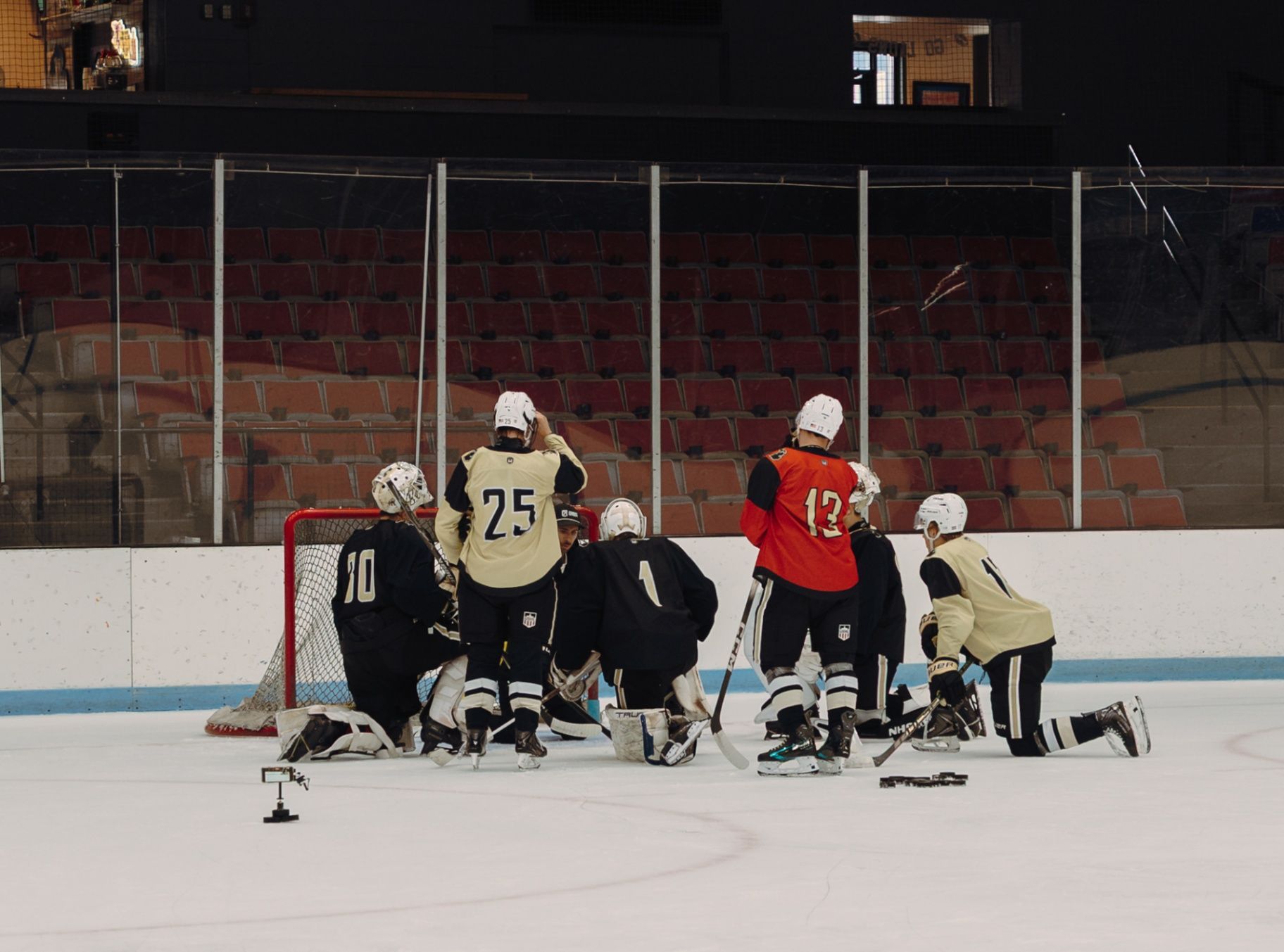
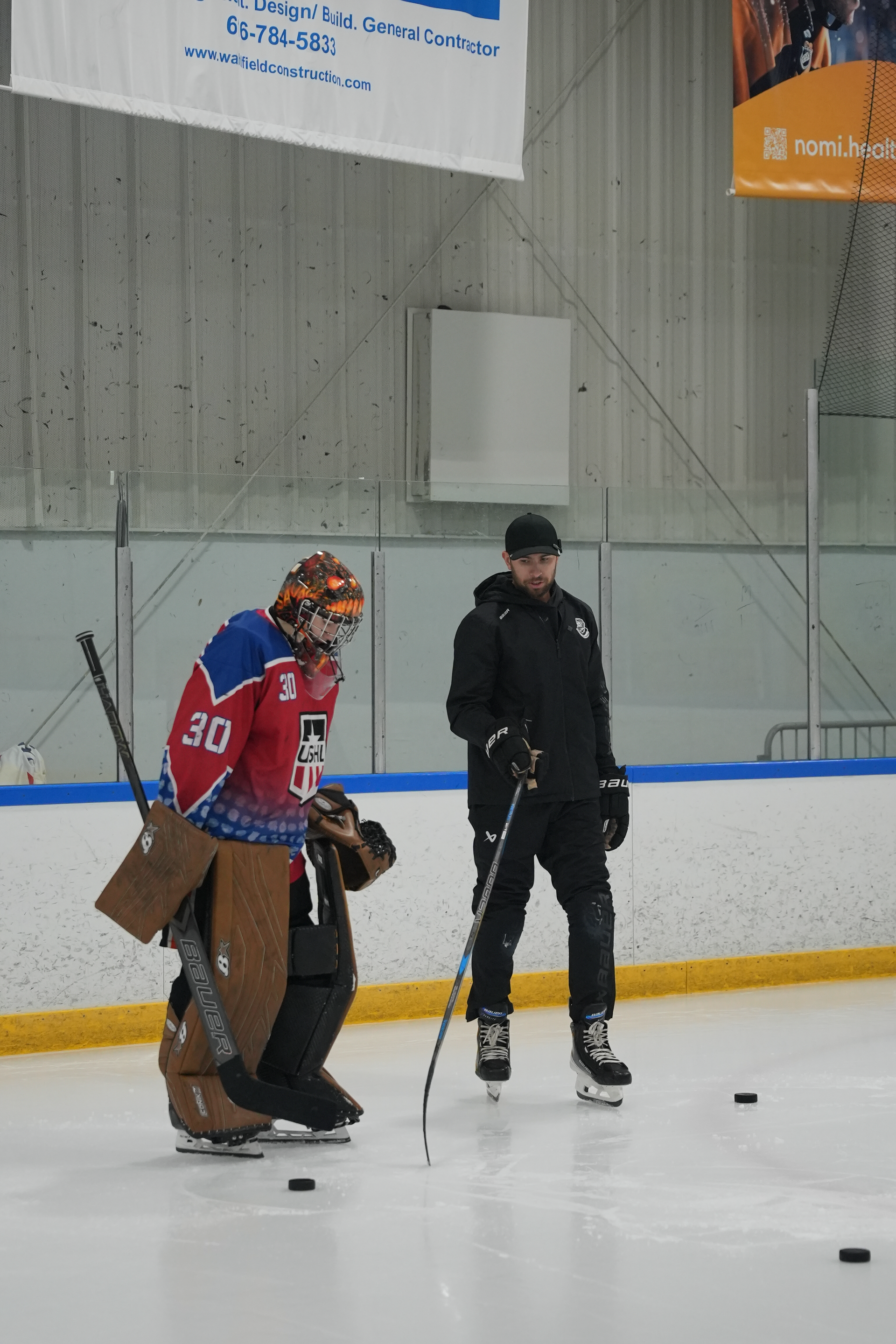
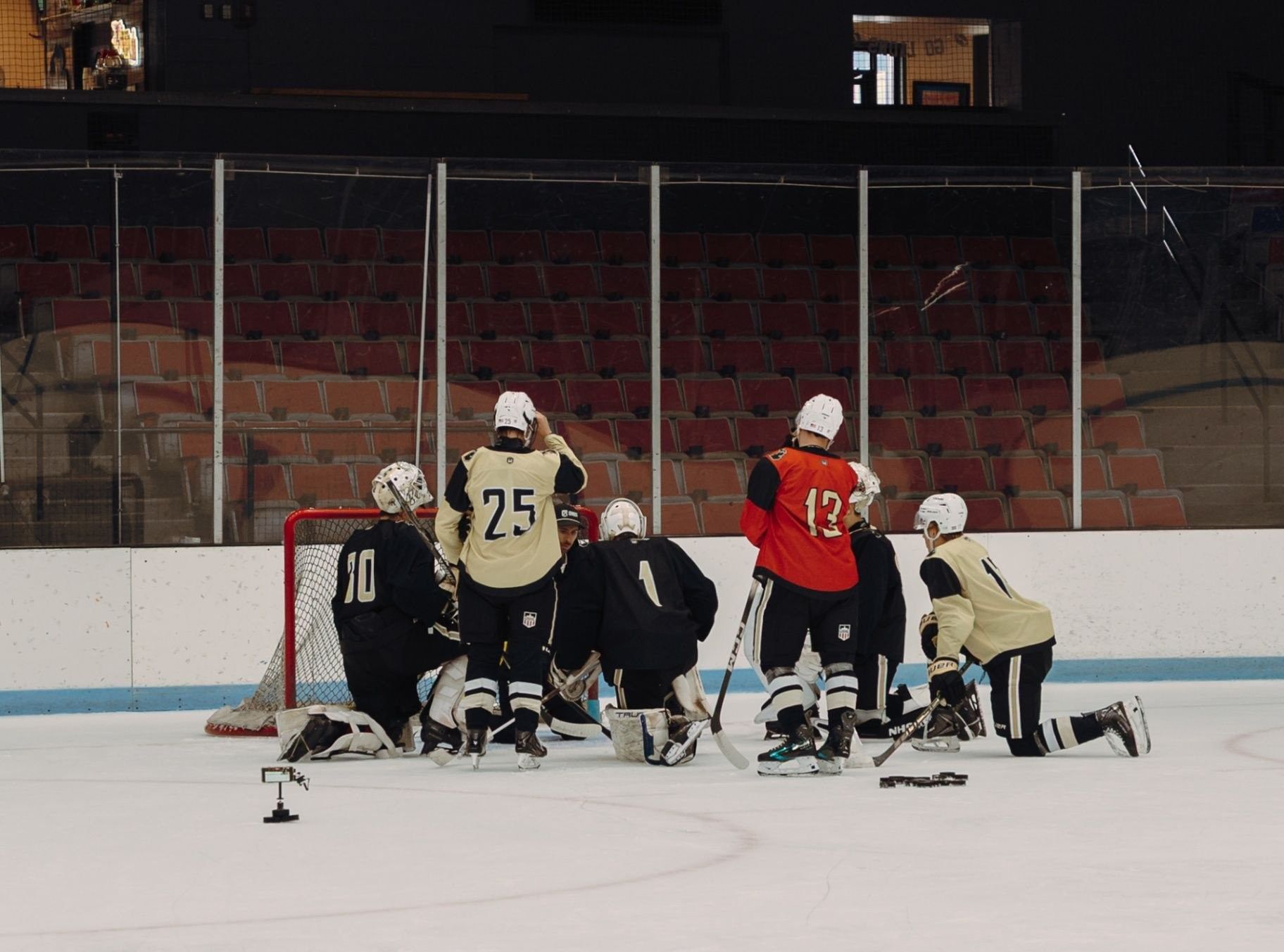
Ghost Athletica goaltenders gathered around their coach during an on-ice goalie training session

Ghost Athletica goaltenders gathered around their coach during an on-ice goalie training session

By Dr. Jamie Phillips, DPT, CSCS

If your goalie is putting in the hours but repeating the same mistakes, more random reps are not the answer. Better development starts with a clear plan: build athletic qualities, correct the movement that limits performance, and connect the work to what happens in the crease.

That's what to look for in Grand Rapids goalie training. Not a promise of a shortcut. Not a completely separate workout plan for goalies. A clear progression, adjusted to the athlete, with specific work that transfers to the ice.

Get Clear on What Your Goalie Needs

Goalie training is the planned development of an athlete's physical qualities and position-specific skills so they can move, recover, track the puck, and make decisions effectively in games.

A useful program looks beyond the save itself. It asks: Can your goalie move laterally with control? Arrive balanced? Recover efficiently? Stay composed through repeated efforts? Can they use what they practice when the shot, screen, or rebound changes?

In Ghost Athletica's coaching approach, goalies follow the same performance plan as skaters, with small tweaks, not a completely separate program. The foundation stays the same: strength, power, movement quality, mobility, and conditioning. Adjustments account for a goalie's demands, such as hip and ankle mobility, lateral power, vision at standing height, and position-specific conditioning.

For the overall approach to off-ice development, start with the complete off-ice training guide for hockey players. For goalie-specific context, see the complete hockey goalie training guide and what elite goalies do between games.

Build the Athlete Before Chasing More Reps

Effective goalie workouts develop qualities that support the position. That does not mean every exercise needs to look like a save. It means each choice has a reason.

  • Strength and control: Build single-leg strength, trunk control, and the ability to absorb and redirect force.
  • Lateral power: Train the ability to push, stop, and move again without losing posture.
  • Mobility you can control: Work on useful hip, ankle, and upper-back motion, then build strength and control through those positions.
  • Game-fit conditioning: Prepare for repeated bursts of effort and recovery, not just exhaustion.
  • On-ice transfer: Connect off-ice qualities to goalie movement, tracking, recovery, and decisions.
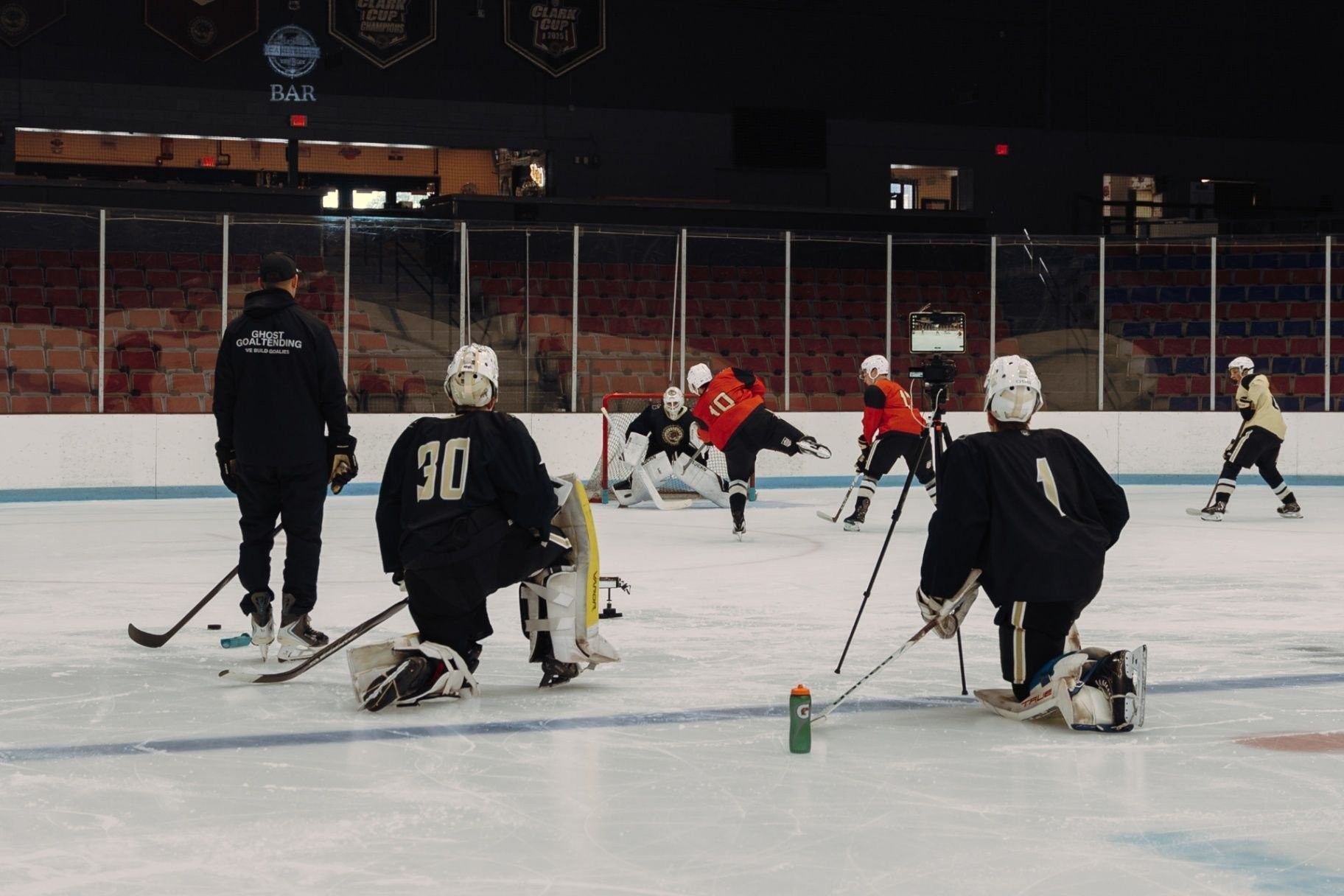
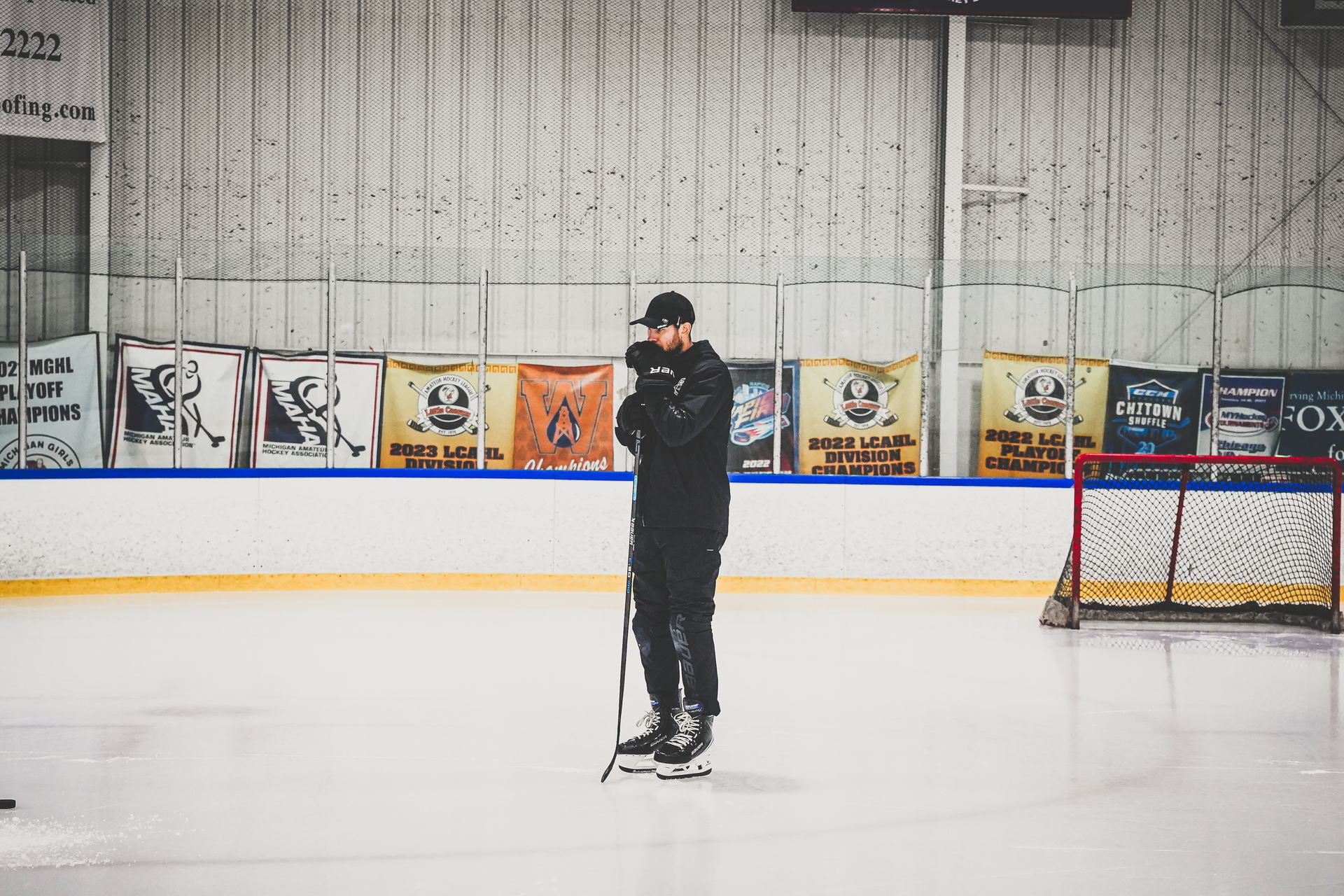
Goalie training session at Ghost Athletica: shooters, goaltenders, and tablet video review on the ice

Goalie training session at Ghost Athletica: shooters, goaltenders, and tablet video review on the ice

Here's a practical example. If your goalie's lateral movement becomes uncontrolled as they fatigue, adding more high-speed repetitions may reinforce the problem. A coach can first identify what is limiting the movement (strength, balance, mobility, or recovery) then scale the exercise and progress it as control improves.

The target is good movement repeated with purpose, not a high count of sloppy reps. USA Hockey's dryland training guidance is a useful reference for age-appropriate athletic development. The right plan still needs to fit your athlete's experience, team schedule, and current needs.

For more on movement coaching, read our goalie movement drills post.

Make Mobility Useful, and Keep Conditioning Specific

Mobility work should help your goalie reach and control the positions their game requires. Stretching by itself does not teach an athlete to move well under pressure. Pair mobility with strength, balance, and movement practice.
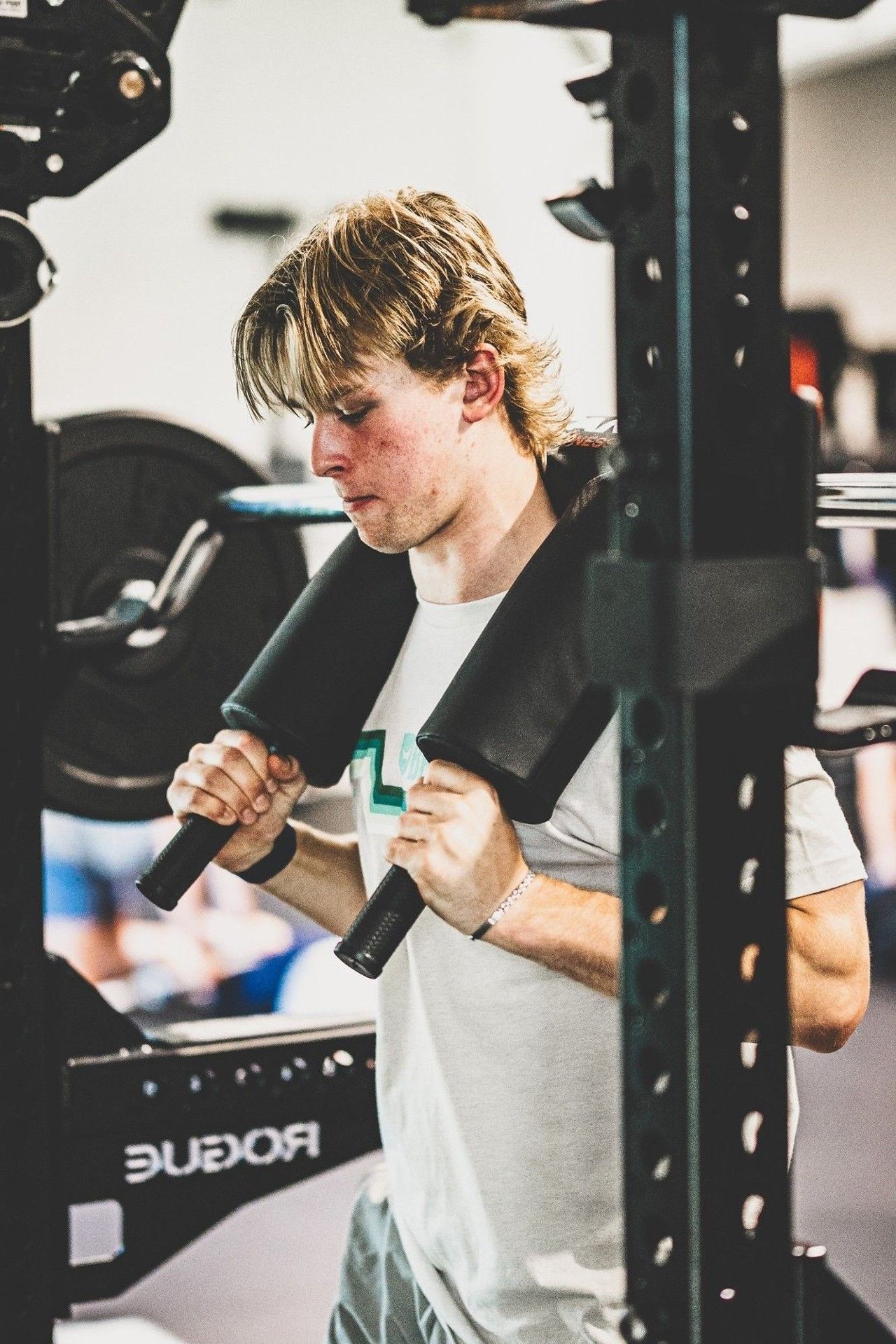
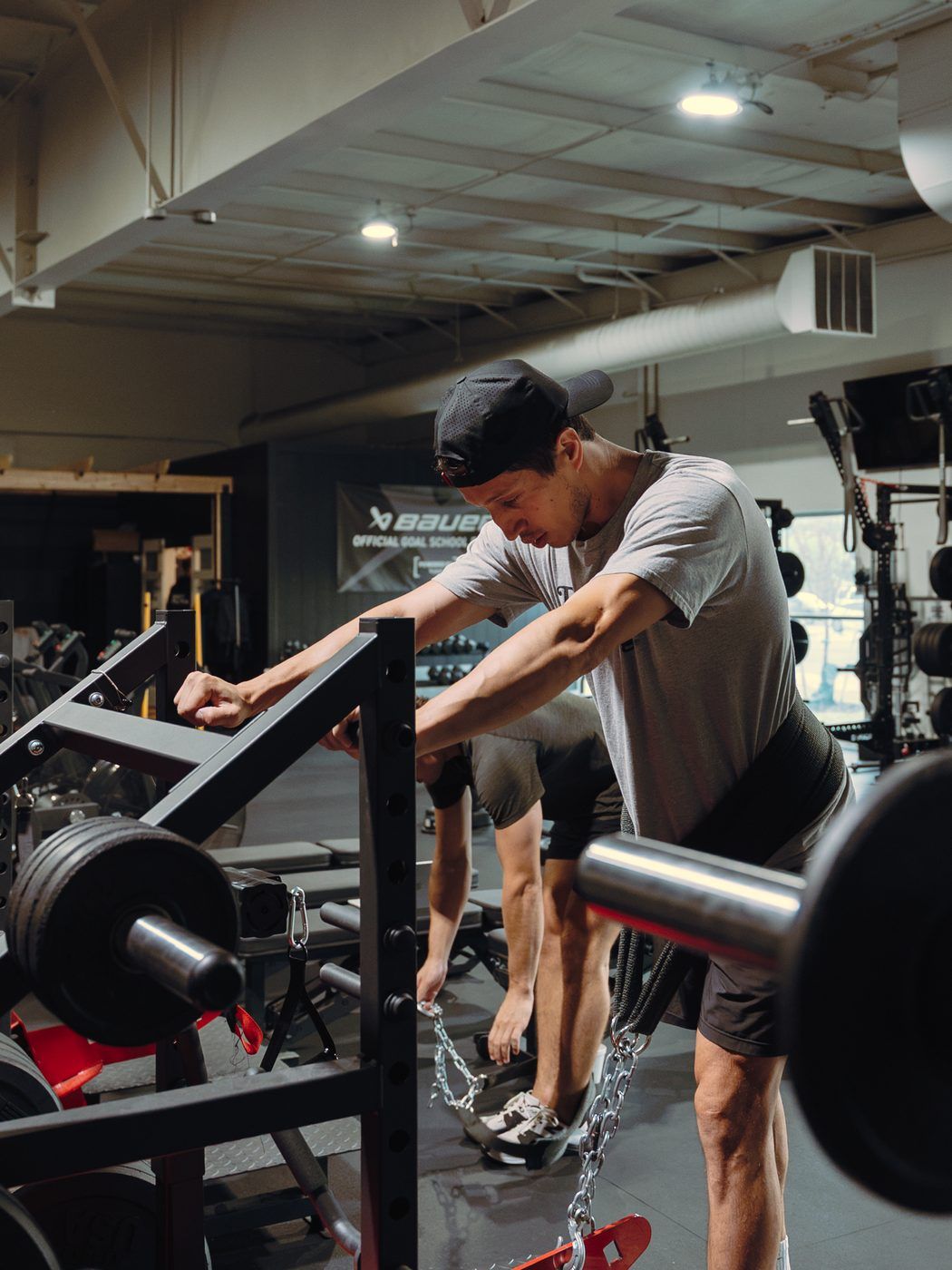
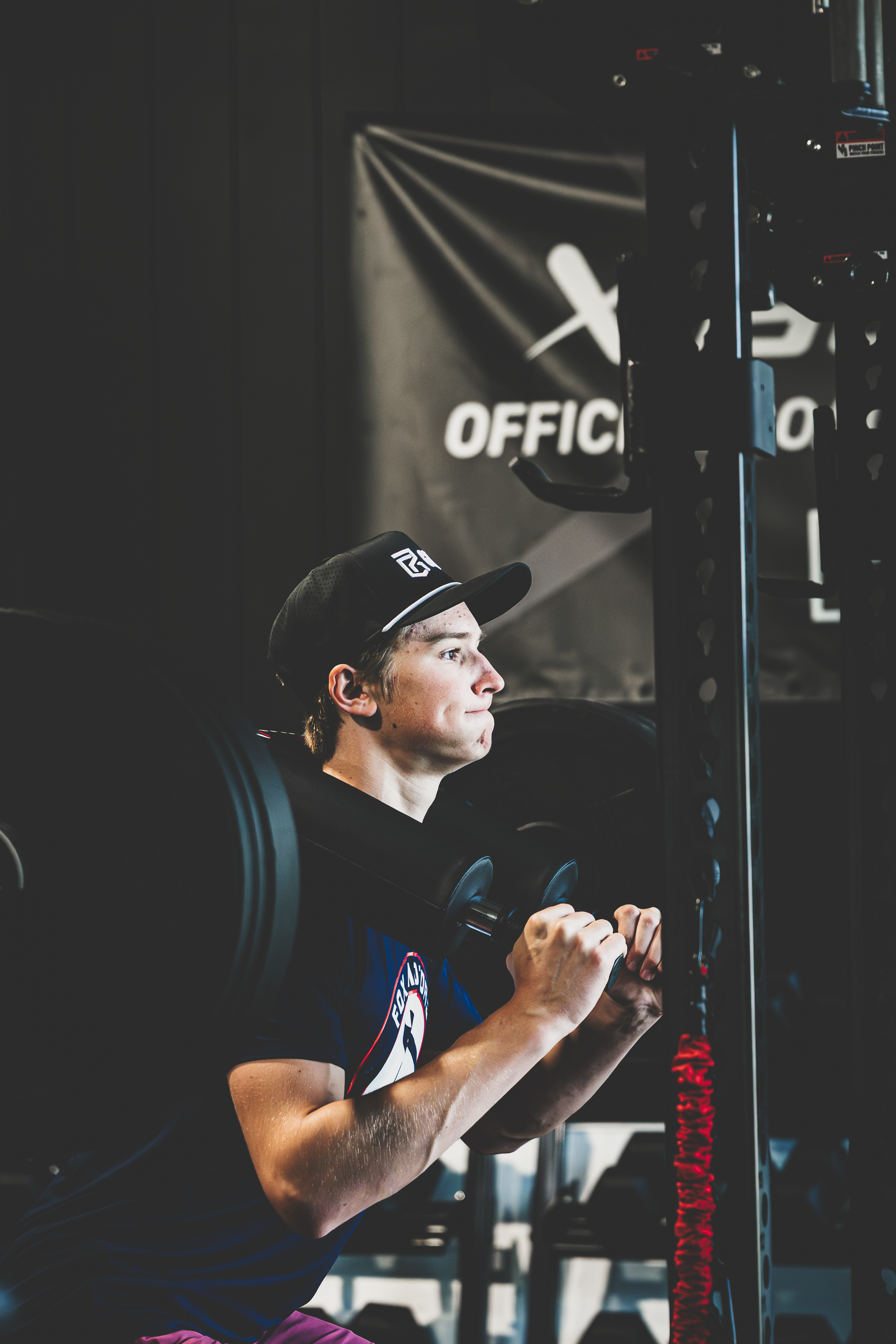
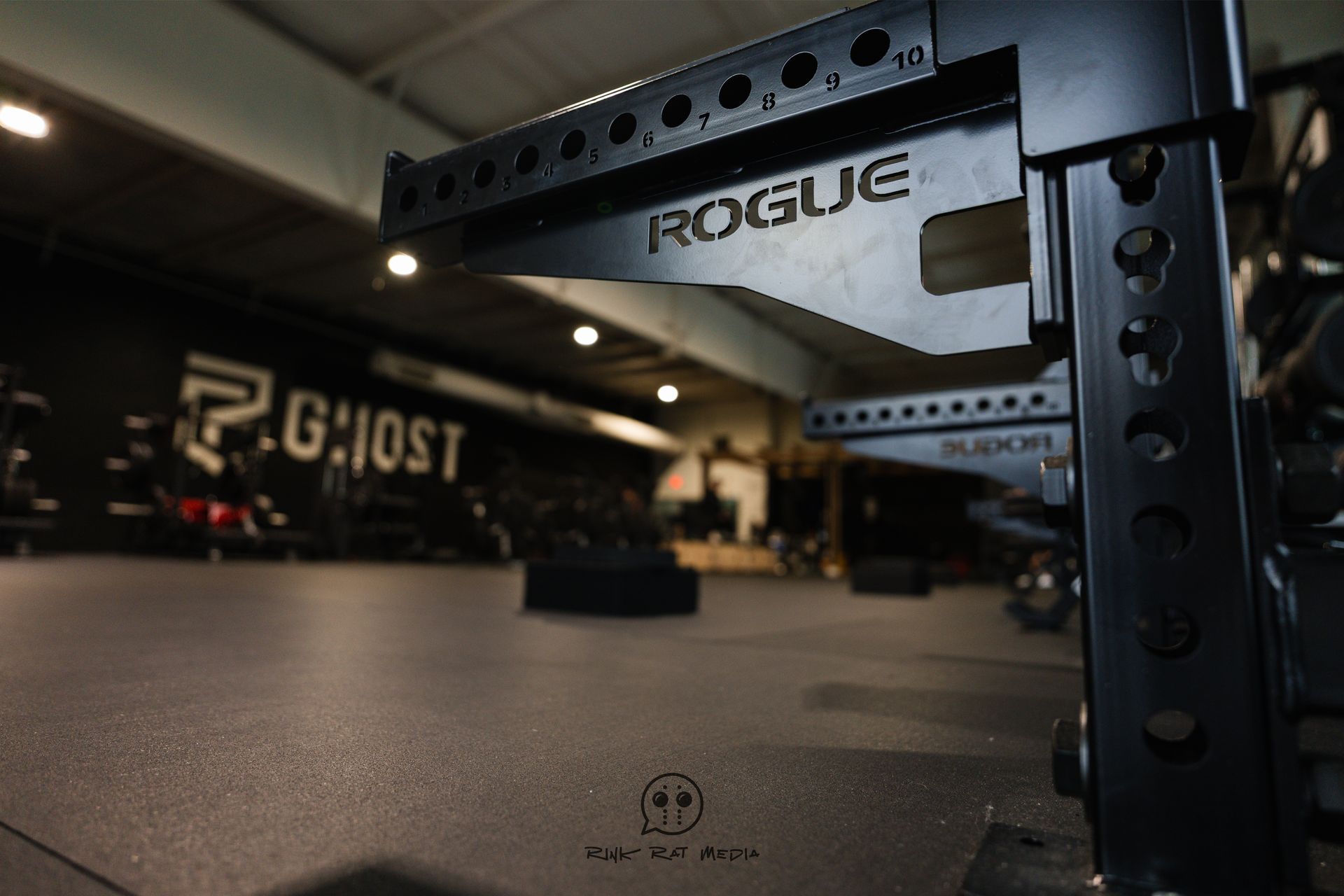
Focused goalie athlete performing lower-body strength work inside the Ghost Athletica facility

Focused goalie athlete performing lower-body strength work inside the Ghost Athletica facility

Conditioning needs the same clarity. A goalie has to produce short, powerful efforts and recover enough to respond again. Build that capacity progressively. Don't turn every session into a test of how tired your athlete can get.

In-season work should support competition, not compete with it. Adjust the training load when practices, games, travel, or tournaments increase. Keep quality high, reduce unnecessary volume, and avoid adding hard work just to prove the athlete worked hard.

For strength training with young athletes, the National Strength and Conditioning Association's youth resistance training position statement emphasizes appropriate instruction and supervision. The takeaway for parents: good coaching adapts the work to the athlete in front of them.

Match the Plan to the Goalie's Age and Week

Age matters, but it does not tell the whole story. Training history, growth, skill, health, and recovery all matter too. Use age as a guide, not as a reason to copy a program built for someone else.

  • 12U: Build coordination, balance, general strength, movement confidence, and foundational goalie skills. Keep the work age-appropriate and engaging. Don't rush into adult training volumes.
  • 13U to 14U: Develop movement and strength with more structure. Progress only when the athlete can perform the work with control and recover well.
  • 15U through junior: Individualize strength, power, conditioning, and goalie-specific practice around competition and the athlete's goals.

How often? Start with the full weekly schedule, not a fixed number pulled out of context. A goalie with several team practices and games may need less additional work than an athlete in a lighter training block. For many athletes, one focused goalie-development session and a manageable strength plan are a sensible starting conversation. The coach should adjust from there based on performance, soreness, sleep, and workload.

When your athlete is returning from pain or injury, don't guess at the next step. Coordinate with an appropriate medical professional and review rehabilitation and return-to-training support.

Choose a West Michigan Coach Who Can Explain the Plan

Choosing goalie training in West Michigan should come down to coaching quality and fit, not big promises. Ask the provider:

  • How will you assess my goalie's movement, strength, mobility, and training history?
  • What will you change based on my goalie's age, schedule, and needs?
  • How will off-ice training connect to on-ice performance?
  • How do you adjust the plan during a busy season or around pain?
  • What will you use to explain progress and the next priority?

Look for clear answers, practical coaching, and a plan that can change when the athlete's needs change. Be cautious of guaranteed outcomes, one identical program for every goalie, or extra volume without a reason.

At Ghost Athletica, goalie development sits within a broader performance ecosystem. Your athlete can train in person or remotely, depending on location and fit. Parents looking at the wider development picture can also read our guide to youth hockey training in Grand Rapids.

No guessing. No wasted reps. A clear plan built around your goalie.

FAQ: Grand Rapids Goalie Training

What age should goalie training start?

A goalie can begin age-appropriate athletic development in youth hockey. Start with movement skills, coordination, balance, general strength, and foundational goalie work. Keep training supervised and suited to the child's experience and schedule.

How many days per week should a goalie train?

There is no single schedule that fits every goalie. Count team practices, games, goalie sessions, school, and other sports first. Then set a training frequency that allows quality work and recovery. Adjust it during busy stretches.

Is goalie training completely different from skater training?

No. Goalies use the same core performance plan as skaters, with small tweaks for their position. Those adjustments can include hip and ankle mobility, lateral power, standing-height vision work, and conditioning that reflects goalie demands.

Can an out-of-town goalie train remotely?

Yes. Remote performance training can provide a personalized plan and coaching from outside Grand Rapids. Start by discussing your athlete's schedule, goals, equipment, and training environment. Explore remote training.

What should my goalie do during the season?

Keep training useful and manageable. Maintain strength and movement quality, adjust work around games and practices, and avoid adding fatigue for its own sake. If pain is affecting performance, seek appropriate medical guidance rather than training through it.

Take the Next Step

Stop guessing about what your goalie needs next. Tell us what you're seeing, what your athlete is working toward, and what their schedule looks like. We'll help you identify a clear starting point.
Find the right Ghost Athletica program or book a session.

Recent Posts

Hockey athlete on an air bike during off-ice hockey fitness testing at Ghost Athletica
By IIC2FRhivRRLOxIPEdhpmzNHnGG3 • October 15, 2026
See what four hockey fitness tests measure, how to interpret Ghost Athletica's team norms, and how to turn results into a focused training plan.
Hockey athlete performing an explosive sled pull inside the Ghost Athletica training facility in Byron Center
By IIC2FRhivRRLOxIPEdhpmzNHnGG3 • October 8, 2026
A six-question framework for Grand Rapids and West Michigan hockey parents to evaluate any youth hockey training program and spot the red flags. By Dr. Jamie Phillips.
Ghost Athletica goalies gathered around their coach at the net during an on-ice goalie movement training session
October 7, 2026
Five goalie movement drills that fix slow first pushes, drifting shuffles, and lost posture in the crease. Off-ice work from a DPT that fits your in-season week.
Hockey player doing an overhead dumbbell tricep extension during an in-season training session at Gh
September 30, 2026
Stay fast, strong and fresh all season with a 4-phase in-season hockey training plan: recover, maintain, sharpen and peak, plus goalie tweaks and a weekly template.
September 30, 2026
7 Mistakes You're Making With Your In-Season Hockey Workouts (And How to Fix Them ) 
By IIC2FRhivRRLOxIPEdhpmzNHnGG3 • May 22, 2026
The complete off-ice hockey training guide: strength, conditioning, mobility, and skating-specific drills for serious hockey players. Built by Ghost Athletica coaches in West Michigan.
By IIC2FRhivRRLOxIPEdhpmzNHnGG3 • May 22, 2026
The complete hockey goalie development guide: positioning, butterfly mechanics, skating, rebound control, and the mental game. Ghost Athletica's framework for building elite-level goalies.
By IIC2FRhivRRLOxIPEdhpmzNHnGG3 • May 22, 2026
What elite hockey goalies do between games: daily hip mobility, goalie-specific strength training, reaction drills, and recovery protocols. Ghost Athletica's complete off-ice goalie program.
By IIC2FRhivRRLOxIPEdhpmzNHnGG3 • May 22, 2026
What is hockey vision training and why does it matter? Ghost Athletica's complete guide to cognitive performance training for competitive hockey players — puck tracking, pattern recognition, and decision speed.
May 9, 2026
Hockey Performance | Ghost Athletica | Grand Rapids Hockey Training Should Hockey Players and Goalies Be Doing HIIT? The pros and cons of high-intensity interval training for hockey athletes, and how to use it intelligently Dr. Jamie Phillips | Ghost Athletica | Grand Rapids, Michigan High-intensity interval training is everywhere right now. Short, intense bursts of work followed by controlled recovery periods. It is tough, time-efficient, and backed by solid research across multiple sports and populations. But here is the question that actually matters for hockey players and goalies: is HIIT making you a better hockey athlete? The honest answer is that it depends. Like every tool in training, context matters enormously. Used well, HIIT has a meaningful place in a hockey development program. Used poorly, it is a fast track to accumulated fatigue, diminished sharpness, and compromised performance on the ice. Let's break it down. What HIIT Actually Is HIIT is built around short periods of maximum or near-maximum effort followed by controlled recovery. Think sprinting hard for 20 seconds, walking for 40 seconds, and repeating that cycle for multiple rounds. That structure probably sounds familiar. Hockey is a stop-and-start sport built around high-output shifts followed by bench recovery. On the surface, HIIT seems like a natural fit. But surface-level similarity does not mean it is always the right tool, particularly when you account for the specific physical demands of hockey and the recovery burden that on-ice training already places on athletes. Where HIIT Works for Hockey Athletes It Mirrors Game-Like Conditioning Hockey shifts are high-output bursts followed by recovery periods on the bench. HIIT trains your cardiovascular and metabolic systems to recover quickly between intense efforts, which is exactly the physiological demand of a hockey game. It Builds Both Aerobic and Anaerobic Capacity Well-programmed HIIT develops both the aerobic engine that supports sustained performance across a full game and the anaerobic capacity that powers explosive, short-duration efforts like sprints to pucks, hard forechecks, and crease recoveries. It Is Time-Efficient Hockey athletes are managing practices, strength training, skill sessions, school, and everything else that comes with being a student athlete. HIIT produces a meaningful conditioning return in a fraction of the time that traditional steady-state cardio requires. It Builds Mental Toughness Pushing through high-effort intervals when your body wants to stop is a genuine mental training stimulus. The ability to maintain output and composure under physical discomfort transfers directly to late-game, high-pressure situations on the ice. Where HIIT Goes Wrong for Hockey Athletes Too Much HIIT Compromises Recovery and Sharpness Hockey athletes are already accumulating significant training load through on-ice practices, strength sessions, and games. Layering in excessive high-output interval work on top of that can push athletes into a state of chronic fatigue that impairs the very qualities, sharpness, reaction speed, and explosive power, that HIIT is supposed to develop. More high-intensity work is not always better. The goal is to be explosive and precise, not to be the most fatigued person in the building. Goalies Need a Different Application For goalies specifically, the HIIT application needs to reflect the actual movement demands of the position. General sprint-based HIIT does not translate as directly to goaltending performance as short, powerful, position-specific efforts do. Goalie-appropriate high-intensity work looks more like resisted lateral shuffles, quick crease movement patterns, low-volume jump work, and short explosive push sequences with full recovery built in between efforts. The intensity is genuine. The movement patterns are relevant. The recovery is not compromised. HIIT for Its Own Sake Is a Waste Performing high-intensity interval training simply because it feels hard or because it is trending is not a training strategy. It is effort without direction. HIIT needs to be programmed intelligently within the context of your full training load, your position, and where you are in the training year. Random hard work is not the same as smart hard work. How to Use HIIT Intelligently in Your Hockey Training Timing within the training year: Use HIIT primarily during the offseason and early preseason when building aerobic and anaerobic base capacity is the primary objective. Reduce volume and intensity as the competitive season approaches and in-season, where the priority shifts to maintaining sharpness rather than building new capacity. Interval structure: Match your work-to-rest ratios to actual game pace. Work intervals of 20 to 40 seconds with 1:1 or 1:2 work-to-rest ratios are a practical starting point for hockey-specific conditioning work. Recovery awareness: If your on-ice performance is declining, your reaction time is slower, or you are carrying persistent fatigue between sessions, your total high-intensity training load is likely too high. Reducing HIIT volume is often the fastest fix. Position-specific application: Skaters and goalies have different movement demands and different conditioning needs. HIIT programming should reflect that distinction rather than applying a generic template to both. The Bottom Line HIIT is not inherently good or bad for hockey athletes. It is a tool. When it fits the goal, the position, and the training context, it produces real on-ice conditioning benefits. When it is used indiscriminately because it is hard or trendy, it costs recovery and sharpness without producing proportional gains. Train smart, not just hard. The goal is to be a better hockey player, not to accumulate the most fatigue. At Ghost Athletica, conditioning programming for hockey players and goalies across the Grand Rapids area is built around intelligent periodization that matches training stimulus to training goals at each phase of the year. If you are looking for a structured offseason or in-season program that takes the guesswork out of this, learn more at ghostathletica.com. Dr. Jamie Phillips, DPT Ghost Athletica | Ghost Goaltending | Grand Rapids Hockey Training Byron Center, Michigan | ghostathletica.com
Show More