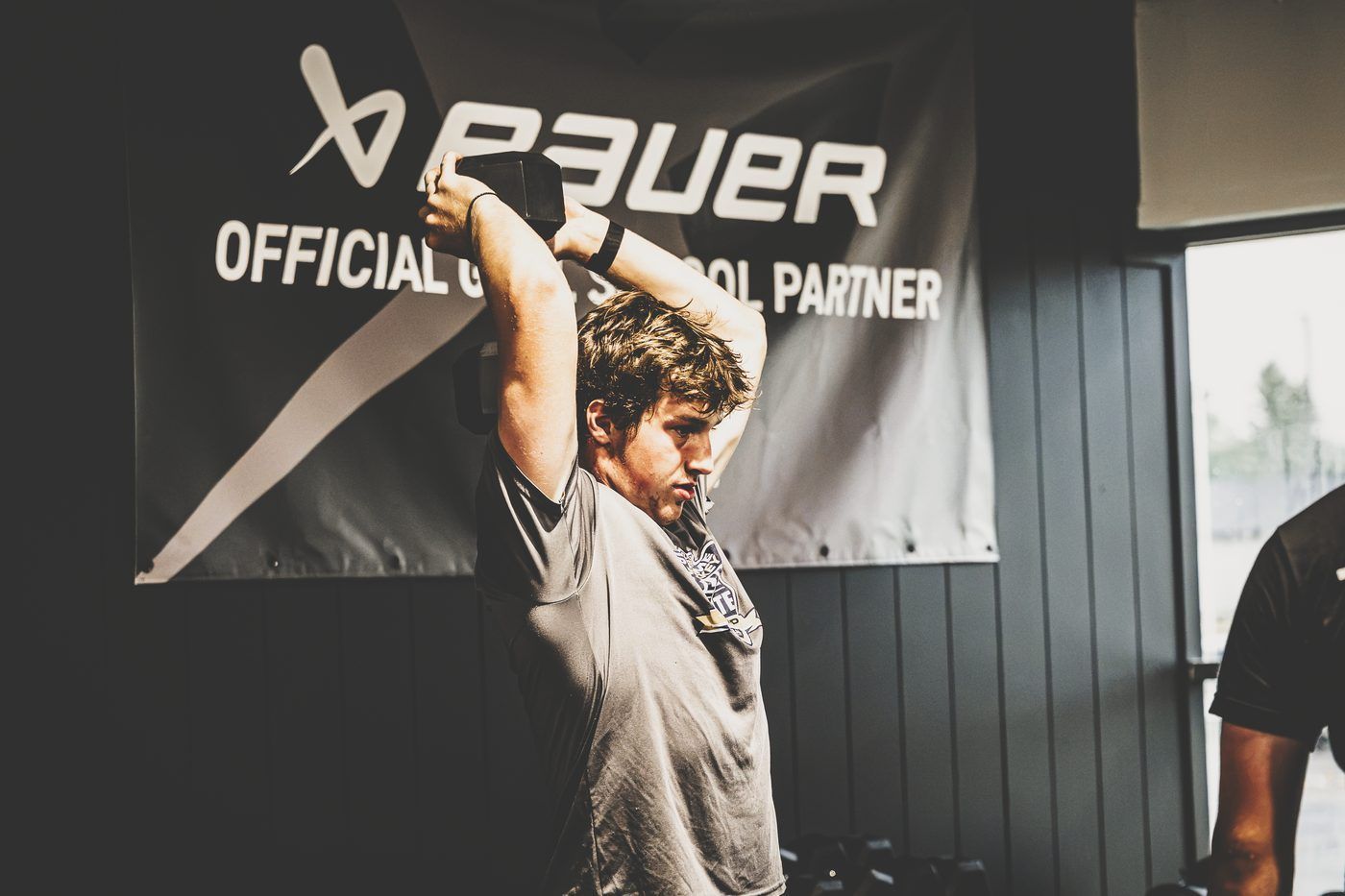
By Dr. Jamie Phillips, DPT, CSCS
Three letters are running around every rink in West Michigan right now: ADM. You’ve heard them at the rink. You’ve seen them in an email from your association. You may have heard them in an argument in the lobby about full-ice versus half-ice. And here’s the problem: nobody has actually explained what ADM means for your player.
Not the policy. Not the politics. Your player. What changes for an 8U kid. What changes for a 12U kid. What it means when you’re deciding whether to sign up for extra skills, another league, or off-ice training.
Here it is. Plain English. By the end of this page you’ll know exactly what ADM is, what it wants from your kid at every age, and how it should shape the way your player trains off the ice. No fluff. No jargon. Just the plan.
The short version:
- ADM is the American Development Model, USA Hockey’s age-appropriate development framework from 8U through 18U and beyond.
- The core idea is the right training at the right age, not adult hockey shrunk down for kids.
- 8U is fun and fundamental movement. 10U and 12U are the skill window. 14U to 16U is strength, speed, and hockey sense. 18U and junior is train to compete.
- Small-area games and half-ice play at young ages mean more puck touches, more decisions, and more skating per minute.
- Off-ice training should scale with the same age bands: movement quality first, real strength and power work at 14U and up.
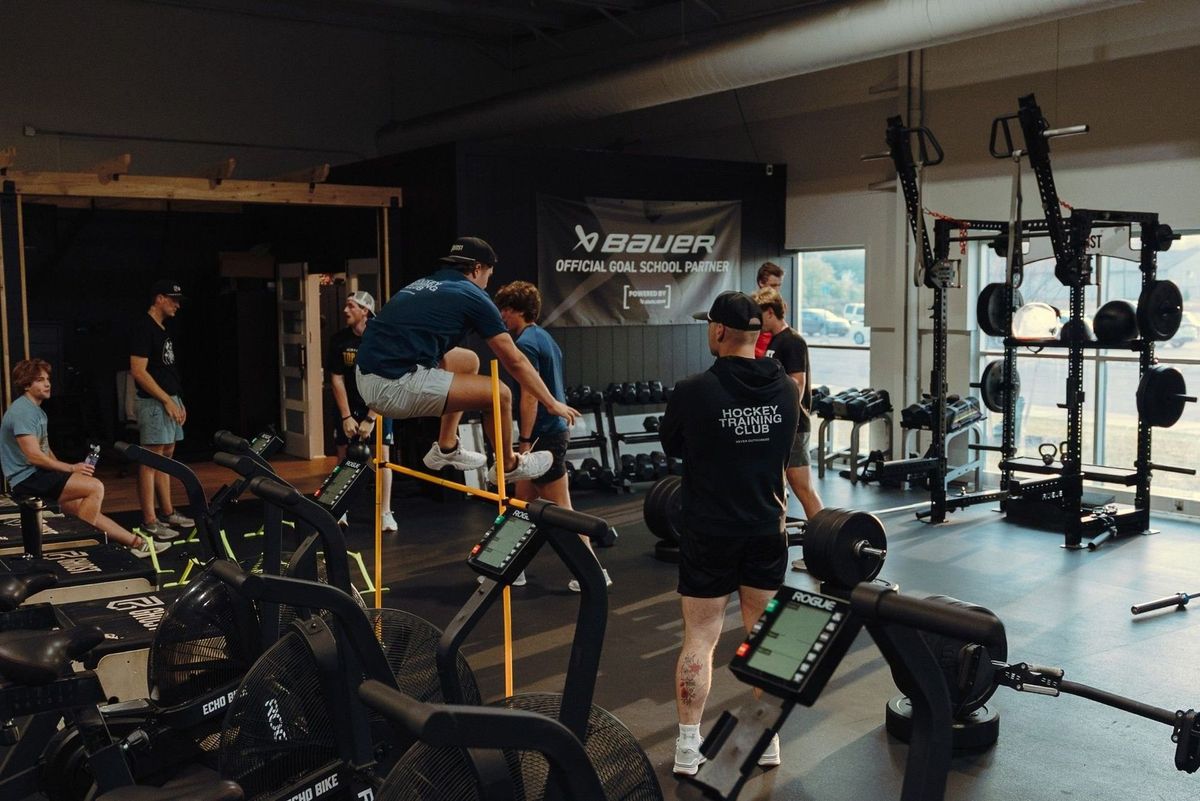
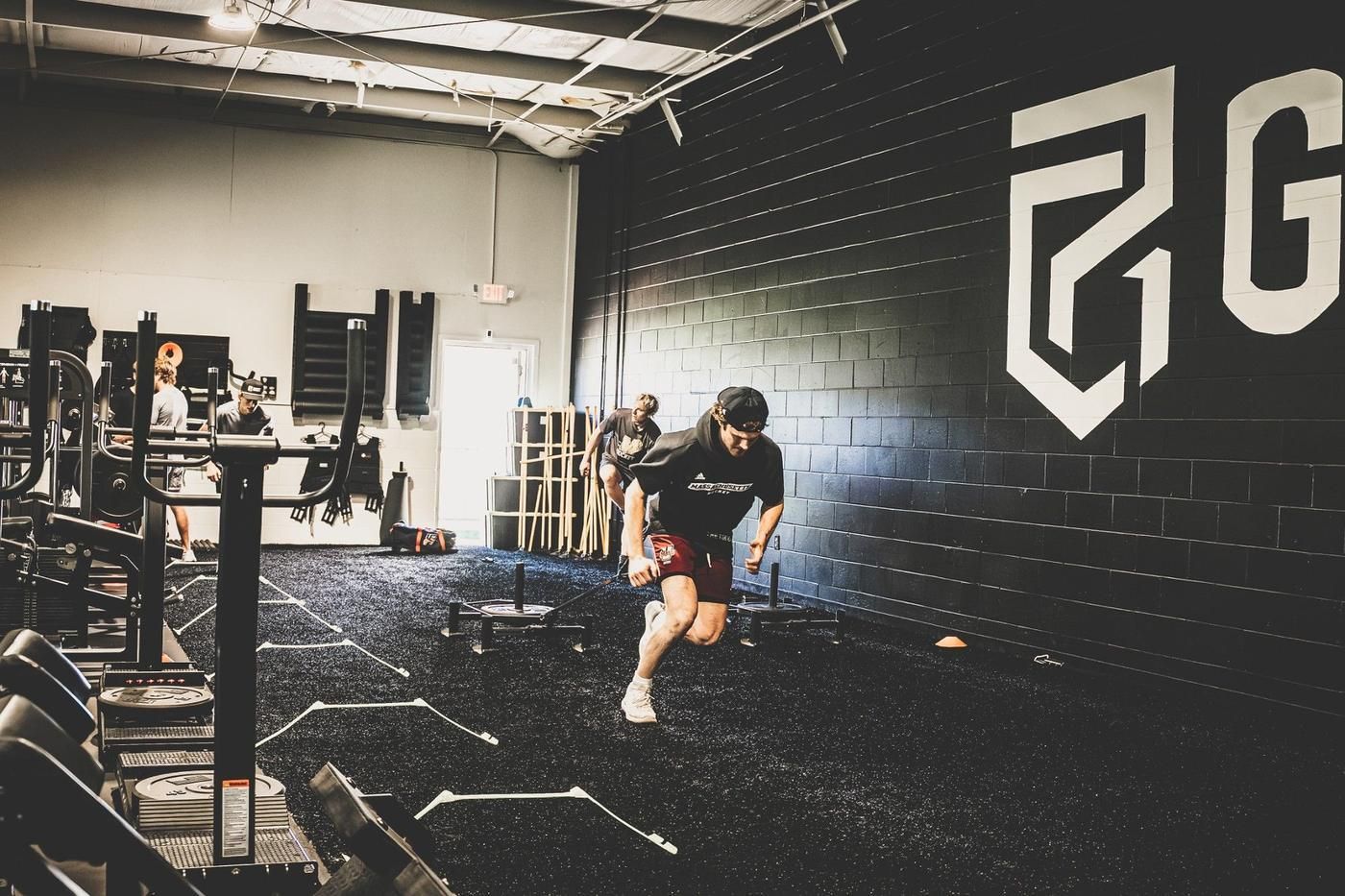
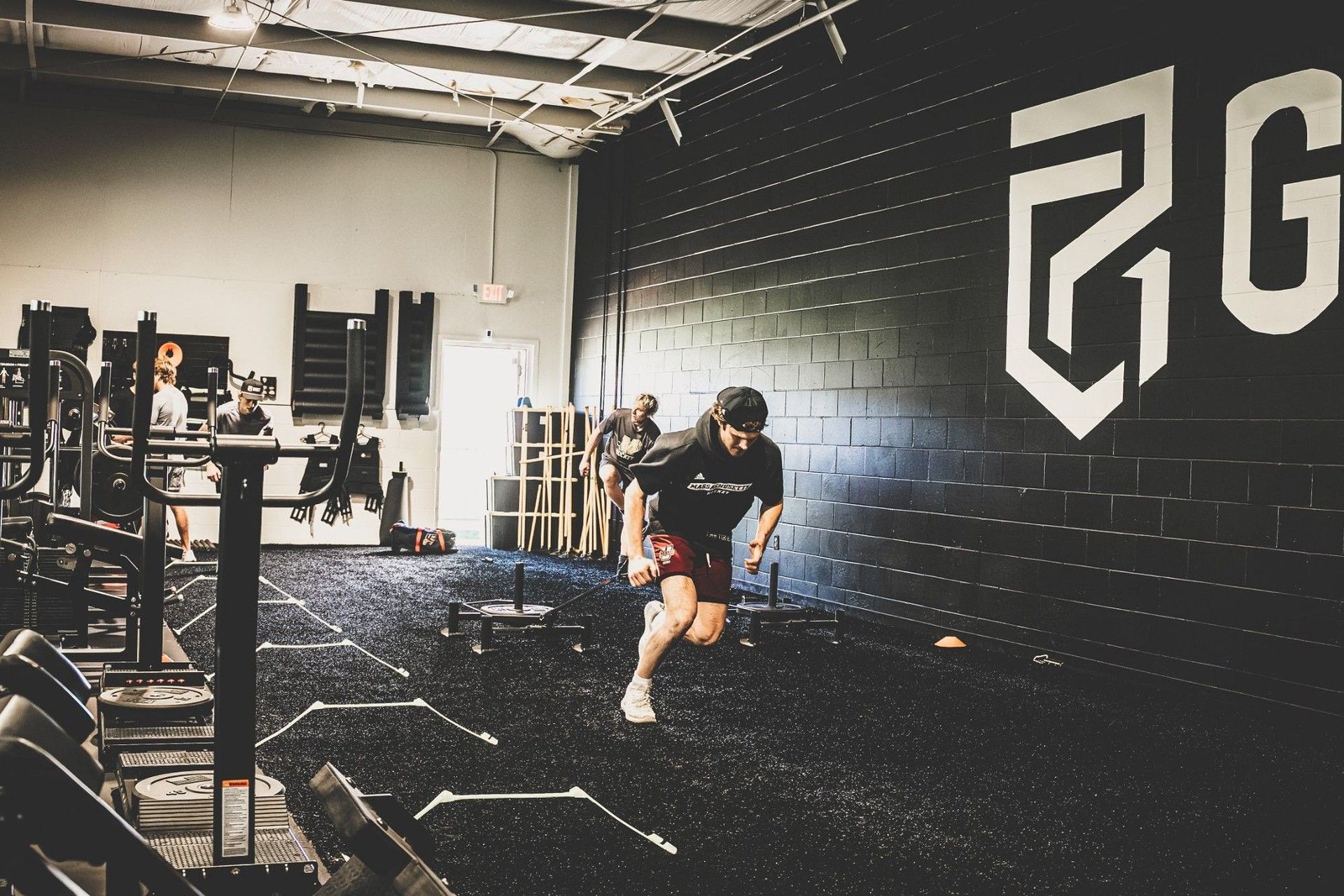
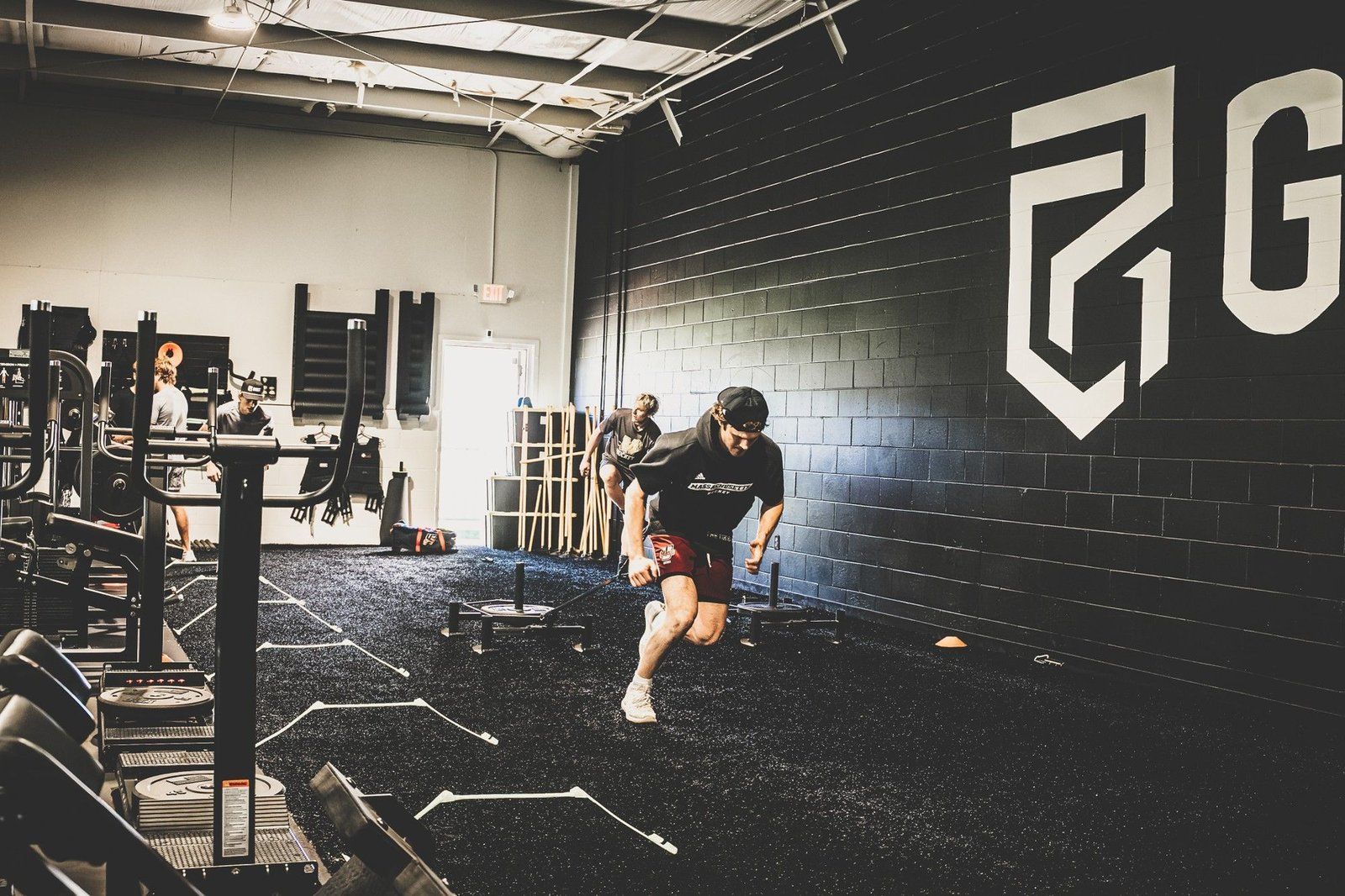
Age-appropriate off-ice work at Ghost Athletica: movement quality first, load when the age band earns it.
What ADM Actually Is
The American Development Model (ADM) is USA Hockey’s age-appropriate development framework. It is built on long-term athlete development science and lays out what a hockey player should practice, play, and train at every age from 8U through 18U and beyond.
Read that definition again and pull out the key phrase: age-appropriate. A 9-year-old is not a small 25-year-old. Their body, brain, and nervous system respond to different training at different ages. ADM takes that science and turns it into a roadmap: what to emphasize at 8U, what to hammer at 12U, when real strength work earns its place.
The core idea is simple: the right training at the right age. Not adult hockey shrunk down for kids. That’s it. Everything else flows from there.
The Age Bands That Actually Matter
ADM divides development into age bands. Here’s the version that matters to you as a parent: what each band is for, and what your player should be doing in it.
8U and Under: Fun First, Positions Never
- The job is simple: fall in love with the game.
- Fundamental movement runs the show: running, balance, agility, coordination.
- Small games, lots of puck touches, no set positions.
- If your 8U kid leaves the ice sweaty and smiling, the practice worked.
10U and 12U: The Skill Window
- This is when skating skills, puck control, and agility develop fastest.
- The body is primed for technical skill: edge work, stickhandling, passing, shooting mechanics.
- Big emphasis on reps. Quality reps, high volume, correct habits.
- Winning matters less than you think. Skill matters more than you think.
14U to 16U: Strength, Speed, and Hockey Sense
- Now the windows shift: strength, power, speed, and competition.
- Structured strength training earns its place here.
- Hockey sense develops through bigger games, real stakes, and hard decisions.
- This is the age where off-ice training stops being optional for serious players.
18U and Junior: Train to Compete
- The band is named for exactly what it is: train to compete.
- Physical preparation, recovery, nutrition, and mindset all carry real weight.
- The goal is a player who shows up to camp ready, not a player catching up.
One more thing about windows. There are ages when the body responds fastest to certain types of training. Scientists call them windows of accelerated adaptation. In plain terms: there are years when your kid gets more out of edge work than they ever will again, and years when a strength program pays off double. Missing a window doesn’t doom a player. Catching one compounds.
What ADM Says About Game Day
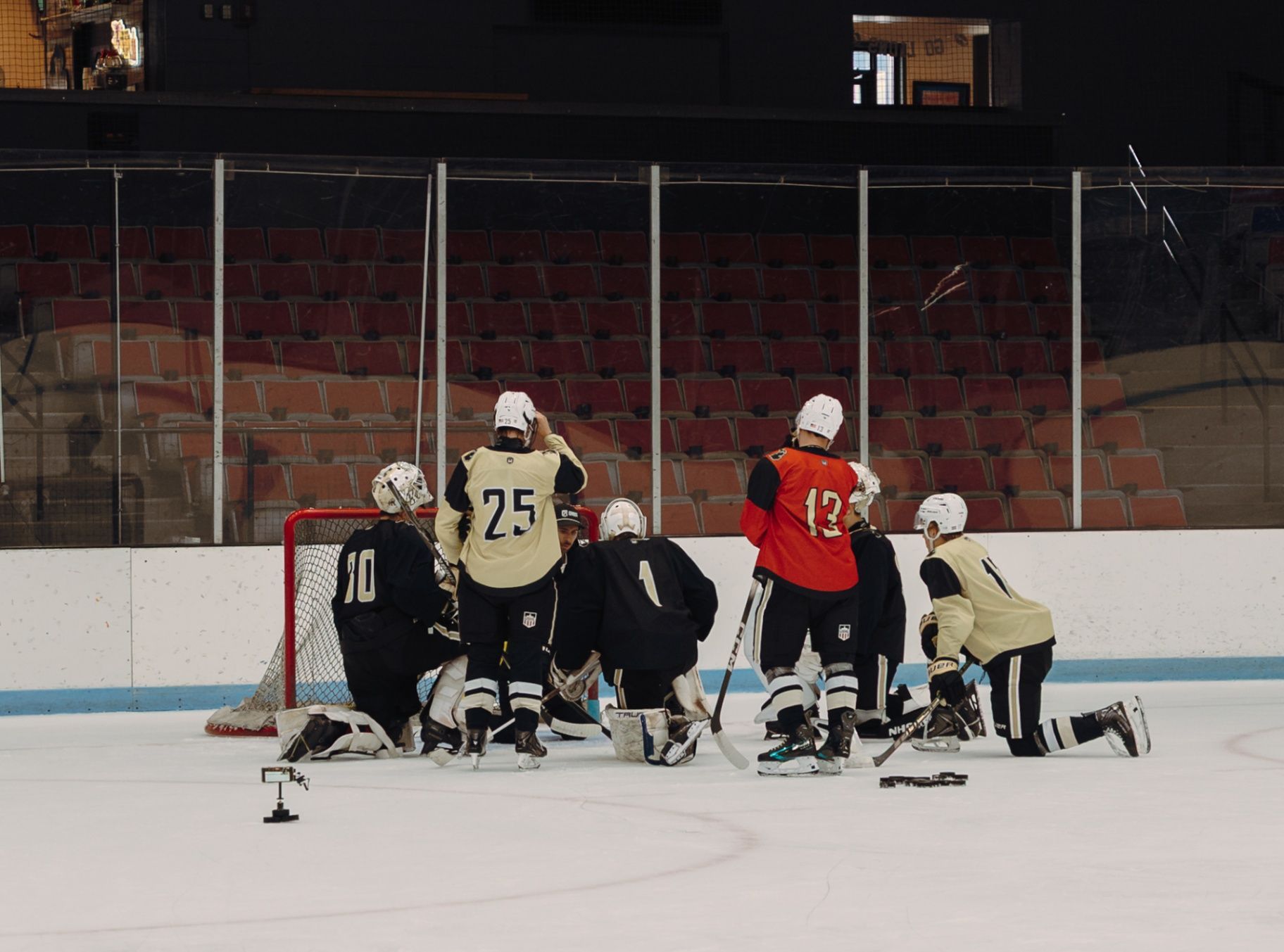
Here’s where most lobby arguments start: what the game itself should look like for young players. ADM is built around small-area games and half-ice play at young ages. Fewer players on the ice. Smaller spaces. More action per shift.
The reasoning is straightforward. A kid playing cross-ice gets more puck touches, more decisions, more skating per minute than a kid stuck on full ice with three touches in an hour. More stops and starts. More battles. More chances to handle the puck in traffic, which is the only place puck skill actually grows.
Full ice comes with age, and it comes with size. The point is not that full-ice hockey is bad. The point is that the game should scale to the player, the same way a weight scales to a lifter. You wouldn’t put a 10-year-old under a bar they can’t control. Don’t put them on a rink their game hasn’t grown into yet.
Where ADM and West Michigan Youth Hockey Meet
Now let’s land this in our own backyard. If you’re a parent in West Michigan, you’ve already run into ADM whether anyone named it or not. The association emails about skill bands. The practice plans that look more like stations than drills. The half-ice jamborees at the younger ages. That’s the model showing up in our local hockey community.
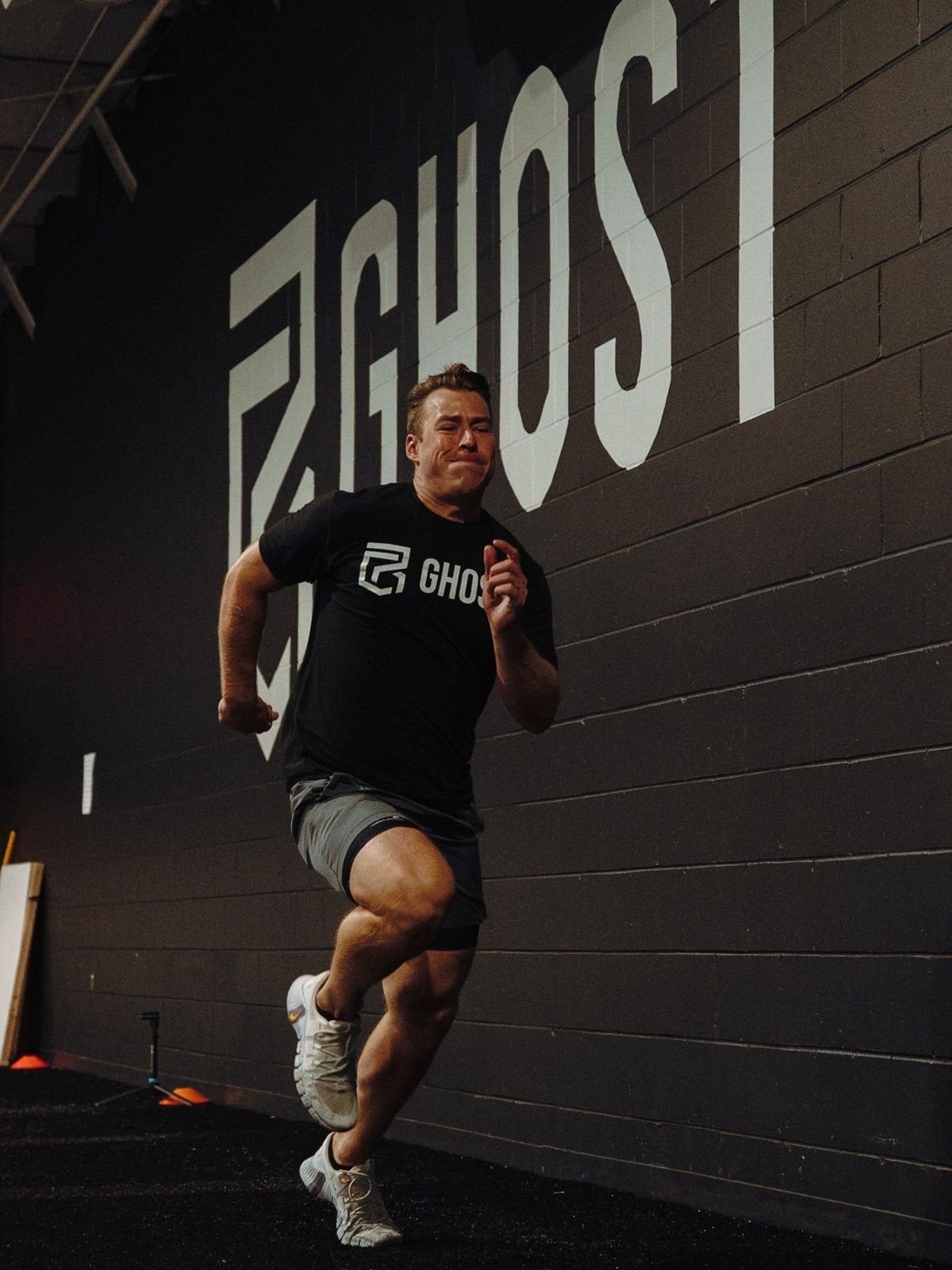
Speed and strength windows open at 14U and up. Before that, the job is coordination, balance, and reps.
And here’s the honest tension, because you’ve felt it: your kid is doing small-area games and half-ice jamborees while some other kid two towns over is “training like a pro” three nights a week. It feels slow. It feels like your player is being held back.
Counter-case, straight: early specialization burns kids out. The players still playing at 16, the ones with real skill, real strength, and the love still intact, almost always built a broad base first. Multi-sport athletes. Play that isn’t organized by adults. ADM-aligned development. That’s the long game. If the burnout conversation hits close to home, start here: how to beat burnout and get back to your best. And if you’ve ever wondered how much of this should be your call at all, this one’s worth your time: athletes, parents, and coaches: whose journey is it. There’s also a real case for letting kids just play, which we wrote about here: why unstructured hockey builds better players.
What ADM Means for Training Off the Ice
This is where we come in. ADM isn’t just an on-ice document. It’s a philosophy of the right training at the right age, and that philosophy should run your player’s off-ice work too.
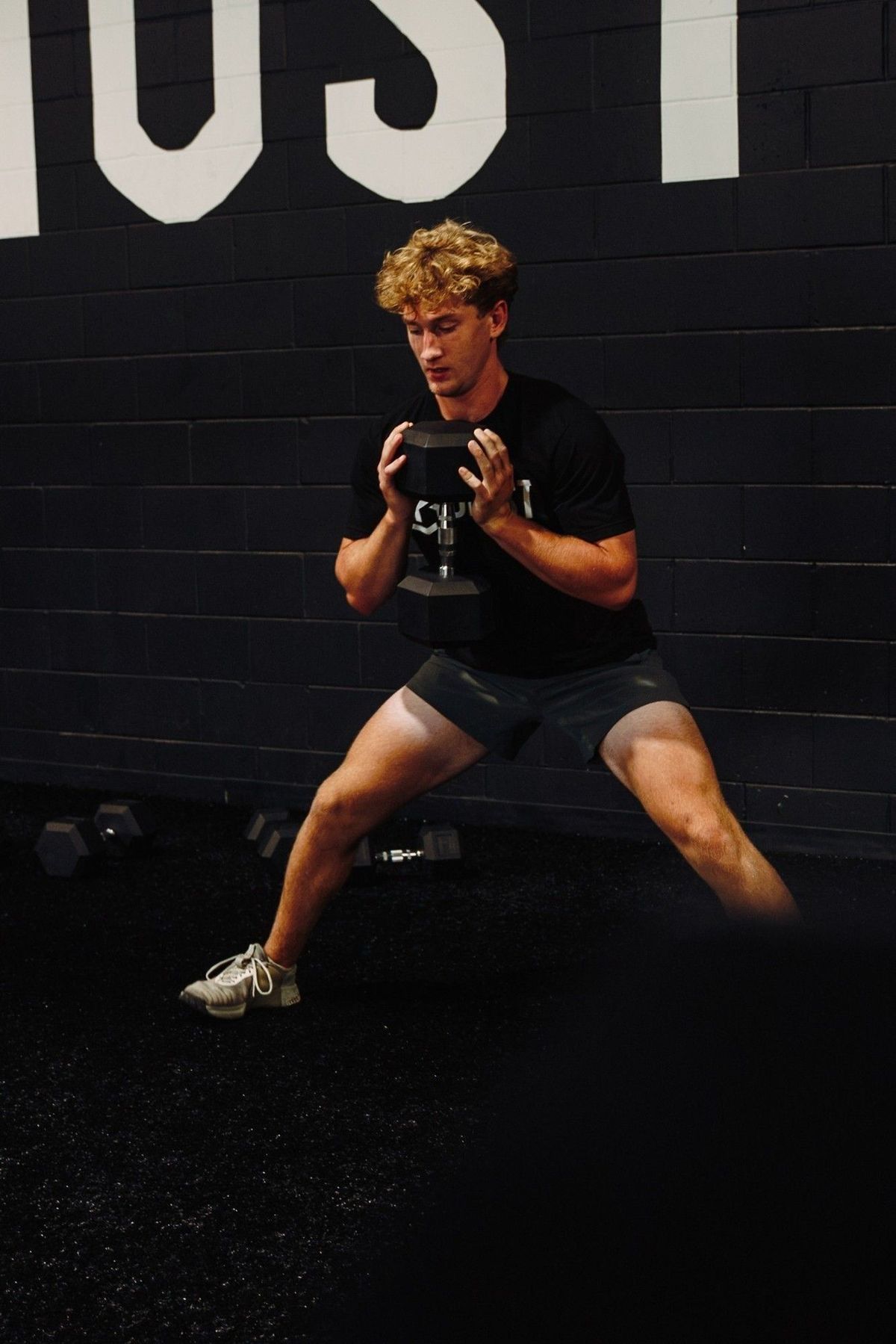
Loaded movement like a dumbbell lateral lunge belongs in the 14U-and-up band, after bodyweight control is in place.
For 10U and 12U players, off-ice development means movement quality. Coordination. Balance. Bodyweight strength. Skipping, crawling, hopping, landing, carrying, hanging. No barbells. No loaded sleds. The window is wide open for motor learning, and the job is to fill it.
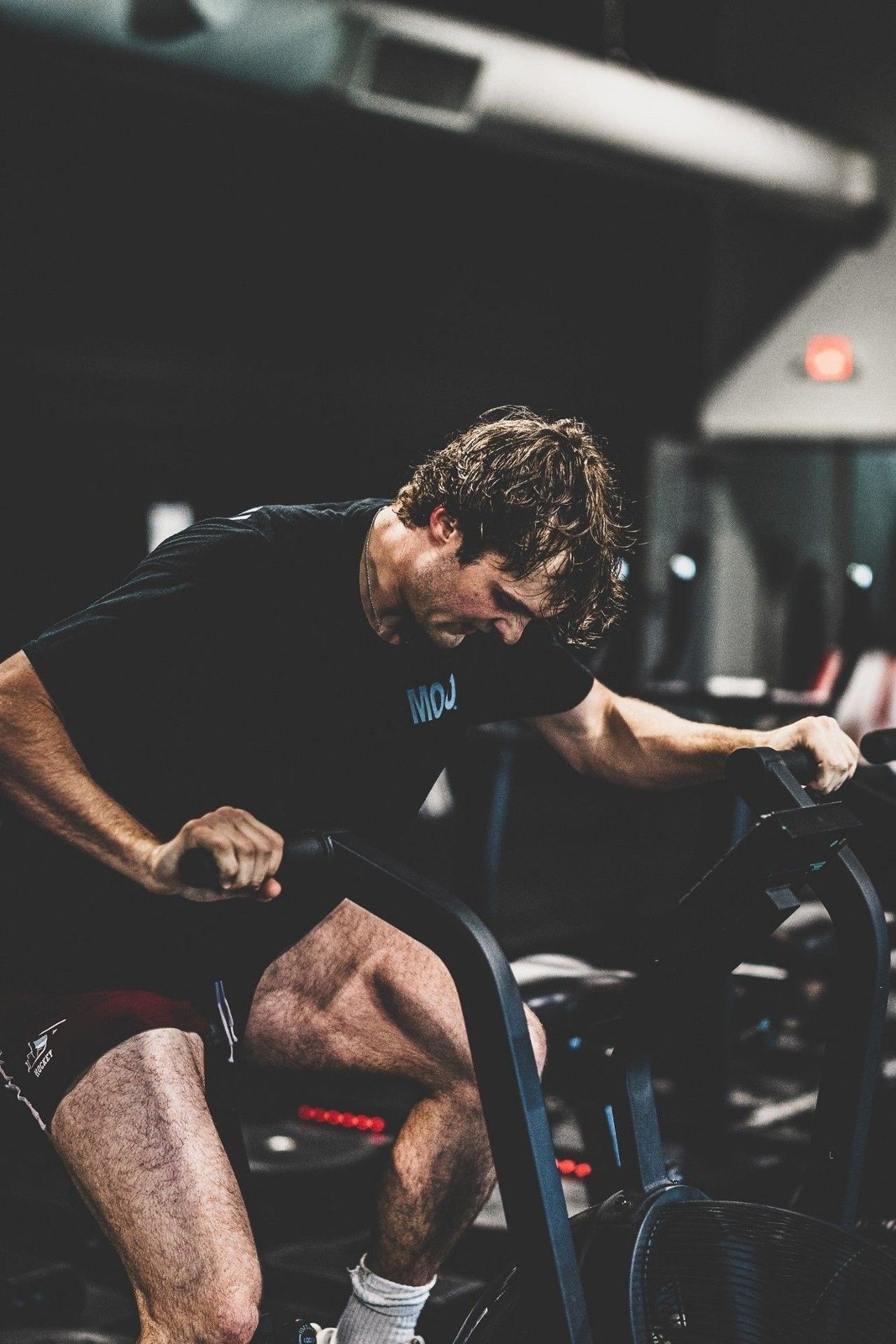
For 14U and up, real strength and power work lands. Loaded movement, structured lifting, speed and conditioning that matches the demands of a full season. This is the stage where a well-built off-ice program separates the player who peaks in January from the one who limps to the finish.
The principle never changes: the training plan should scale with the player’s band, not copy a pro program. Same foundation, shifting emphasis. That’s how we build every plan here, on the ice and off it. Fuel matters at every band too. If you’ve got a game-day eater in the house, this pre-game nutrition guide is the short version.
Whether that happens in person or from your living room depends on your player’s stage and schedule. We build both: in-person performance training and remote performance training.
What You Should Do Next
Whether your player is 8U or 16U, the plan should match the stage. Not a pro program. Not guesswork. The plan.
Start here: book a performance assessment or training session and we’ll build it with you. Everything we do lives at ghostathletica.com: training, skills, goalie development, nutrition, physical therapy, and mindset under one roof.
Want the deeper local guide first? Read our full breakdown of youth hockey training in Grand Rapids. It pairs with this one.
ADM FAQ
What does ADM stand for in hockey?
ADM stands for the American Development Model. It's USA Hockey's age-appropriate development framework, built on long-term athlete development science, that lays out what players should practice, play, and train at every age from 8U to 18U and beyond.
Does ADM mean my kid plays less hockey?
No. ADM means smarter structure, not less hockey. A well-run ADM practice packs more puck touches, more decisions, and more skating per minute into the same ice time. Your player gets more development out of every hour, not fewer hours.
Is half-ice hockey actually good for development?
Yes. For young ages it beats the alternative. Half-ice and cross-ice play means more puck touches, more decisions, and more skating per minute in tighter spaces. Full ice comes with age. A bigger rink is a tool, not a trophy.
Should my 10U player lift weights?
No barbell work. At 10U the right off-ice work is bodyweight movement quality: coordination, balance, skipping, landing, hanging, carrying. Load comes later, when control and age earn it. Rushing weights doesn't speed development; it usually just burns time and patience.
How does ADM connect to off-ice training?
Off-ice training should scale with the same age bands. Young players build movement quality, coordination, and bodyweight strength. Players 14U and up earn real strength and power work. Same philosophy as everything we write: the foundation is the same, the emphasis shifts with age.
One last thing before you go. When practice ends and the drills stop, remember that some of the best development happens when nobody’s coaching: why unstructured hockey builds better players.
Coach Jamie Phillips, DPT, CSCS
Ghost Athletica LLC | Hockey Performance Training | Grand Rapids, MI