By Dr. Jamie Phillips, DPT, CSCS
Every injured hockey player knows the moment. You sit across from the doctor, they scan the notes, look up, and say the words you have waited months to hear: “You’re cleared. Go play.” You walk out light. You tell your coach, your teammates, your parents. Game day gets circled.
Then practice starts. Day one feels fine. Day three, your legs are gone, the pace feels a step too fast, and you hesitate on the first hard stop you have not done in months. Two weeks later you are back in the training room, wondering what went wrong.
Here is the truth we drill at Ghost Athletica: cleared is the start of your return, not the end of it. A medical release says the tissue healed. It says nothing about whether you are prepared for what hockey demands. That gap is exactly where re-injury lives, and it is exactly what this plan closes.
I am Dr. Jamie Phillips, physical therapist and strength coach at Ghost Athletica in West Michigan. I have sat on both sides of this: rehabbing athletes back and programming the strength work that keeps them there. What follows is the same return-to-play framework we use in our facility. Use it.
The short version:
- Clearance confirms healed tissue, managed pain, and basic function. It does not test strength symmetry, power, deceleration, reaction, or confidence.
- Return to play runs in four stages: strength base, high force and absorption, hockey-specific chaos, then full practice and games.
- Every stage has an objective gate. Our standard is at least 90 percent limb symmetry on strength and jump tests before you advance.
- Goalies use the same plan with the emphasis shifted to hips, adductors, and lateral power.
- The last gate is mental: you return when you play full speed without thinking about the injury.

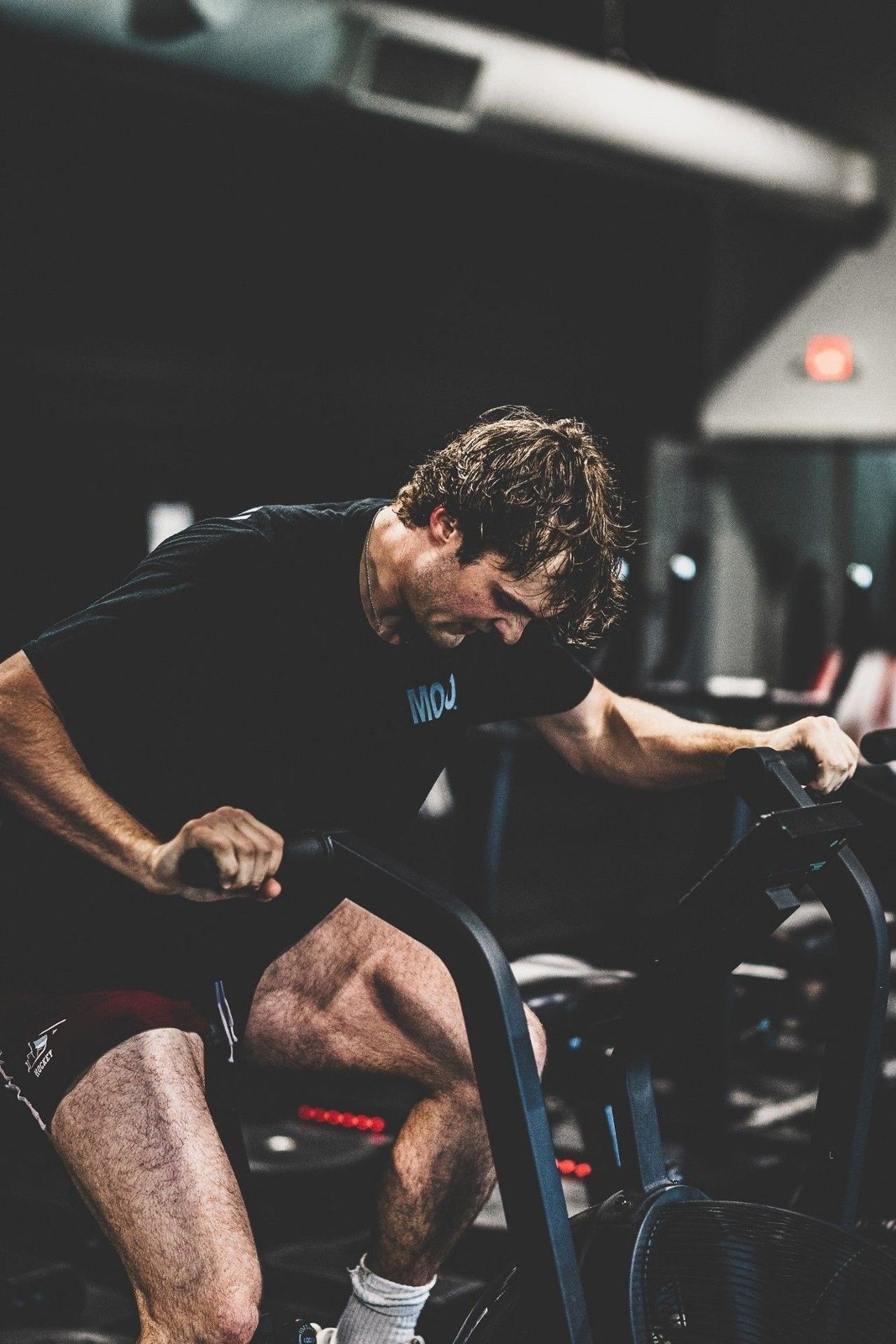
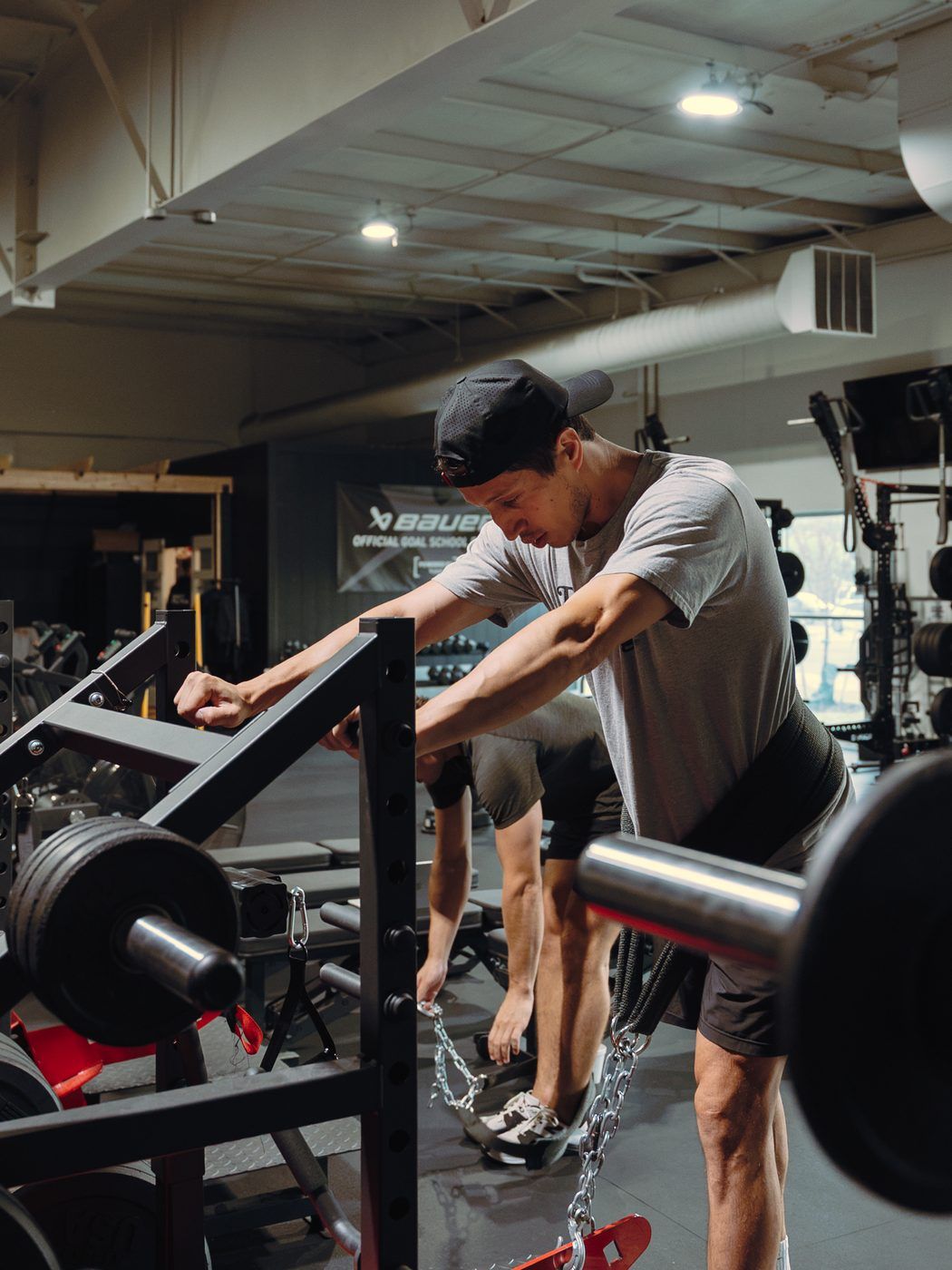
Strength foundation work: belt squat with chain loading at Ghost Athletica.
What “Cleared” Actually Means (and What It Doesn’t)
Clearance is a medical decision, not a performance assessment. It confirms three things:
- The tissue healed. Bone, tendon, ligament, or muscle repaired and tolerated the rehab load.
- Pain resolved or is managed. You can move through your day without guarding.
- Basic range and function returned. You walk, jog, and move without restriction.
That is real progress. It is also the floor, not the ceiling. Clearance does not test:
- Strength symmetry between your injured and uninjured side.
- Power: how fast you produce force, not just how much.
- Deceleration capacity: how well you absorb force when hockey slams the brakes on you. We break this down in depth in our guide to deceleration capacity.
- Reaction to chaos: a net-front battle, a broken play, a puck that changes everything.
- Confidence. The mental side that makes you hesitate at exactly the wrong moment.
If nobody measured those, you are not cleared to perform. You are cleared to begin preparing. Know the difference before you step on the ice.
The Gap Between the Doctor’s Office and the Rink
Hockey is one of the most physically chaotic sports you can return to. Think about what a shift actually asks of you:
- Repeated sprints, 30 to 45 seconds apart, with almost no full recovery.
- Hard stops and starts every single shift, each one a high-force landing on one leg.
- Contact, and contact you cannot schedule.
- One-sided loading: shots, stride asymmetries, and the same rotational patterns over and over. That is why problems like hip pain in hockey players show up even in athletes who never missed a game.
- Decision-making under fatigue, when your legs are screaming and the play speeds up.
Now compare that to the typical rehab finish line: “jog until it doesn’t hurt, then practice.” That plan prepares you for jogging. It does not prepare you for a wall battle in the third period. The research backs this up: after ACL reconstruction, athletes who return without passing objective strength and hop tests come back at higher re-injury risk and lower performance, a pattern documented across large reviews of return-to-sport outcomes ( Ardern et al., 2011; Ardern et al., 2014). In general terms: pass the tests or raise your risk. Those are your options.
This is not a knock on surgeons or PTs. Repairing tissue is their job, and they do it well. Preparing the whole athlete for the demands of hockey is ours. That is the gap, and a staged plan closes it.

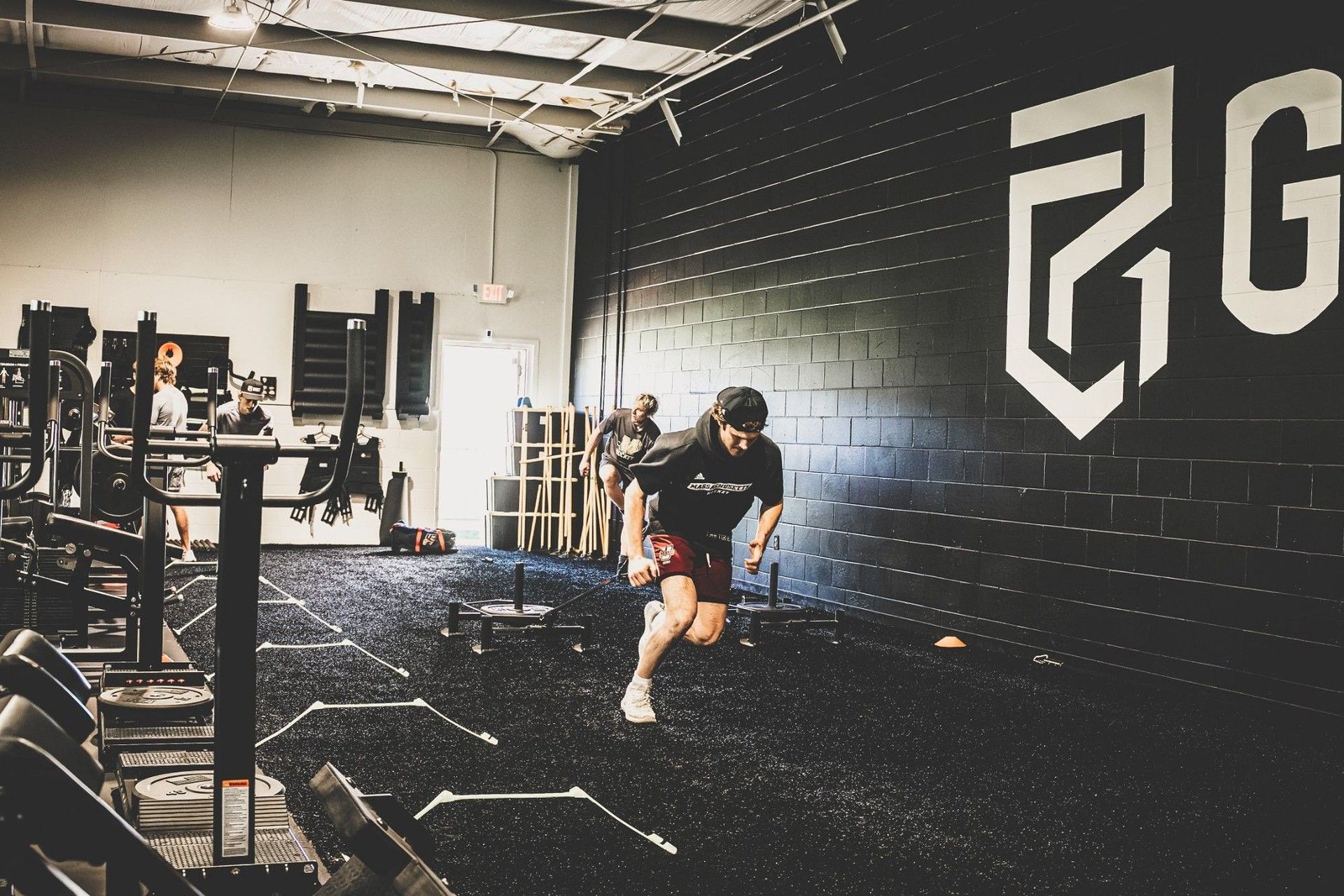
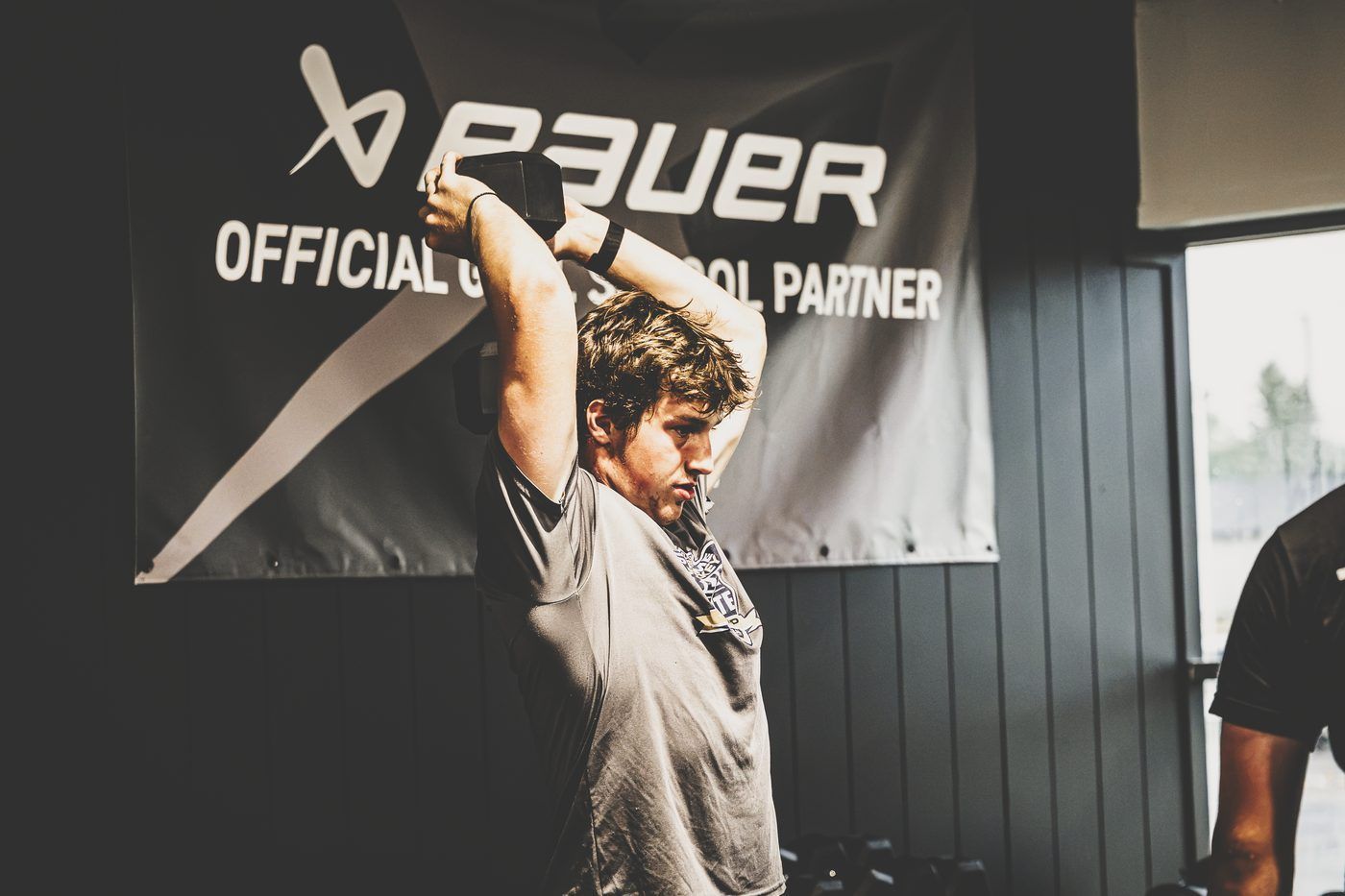
High-force work: sled sprint, the Stage 2 engine of return to play.
The Ghost Athletica Return-to-Play Framework
We run every returning athlete, skater or goalie, through the same four stages we build inside our rehab program. Each stage has a gate: objective criteria you must hit before you advance. No gate, no promotion. This is the standard we use.
Stage 1: Rebuild the Strength Base
Start by re-earning the right to train hard. Full-range strength work on both sides, close attention to the injured limb, and simple conditioning to rebuild work capacity. We re-establish deep squat and hinge patterns, single-leg strength, and trunk control. Nothing fancy. Heavy, controlled, boring on purpose.
Exit gate: pain-free training through full range and strength symmetry of at least 90 percent between limbs on our base strength tests.
Stage 2: High Force and Absorption
Hockey does not break you with slow force. It breaks you with fast force: landings, stops, collisions. So we train it directly. We rebuild jump and landing progressions first, then eccentric strength, then explosive output: sled work, trap-bar jumps, med-ball throws. If you skipped Stage 1, do not touch this stage.
Exit gate: at least 90 percent limb symmetry on single-leg jump and hop tests, and clean, repeatable landing mechanics under our eyes.
Stage 3: Hockey-Specific Chaos
Now we make it look like hockey again. Change of direction at full speed, reactive agility where you respond to a stimulus instead of a cone, and contact-readiness work: board battles, net-front positioning, sanctioned body-contact progressions for the players who need them. This is also where nagging issues like FAI recovery get managed under real speed, not just on a table.
Exit gate: full-speed hockey movements repeated across multiple sessions with no swelling, no compensation, and no hesitation.
Stage 4: Full Practice, Then Games
Return to full practice, progressively: partial shifts first, full reps next, back-to-back practices before you think about games. Then a controlled game exposure, then the real thing. We keep testing throughout, because readiness earned in week one can erode by week four.
Game readiness: every gate is passed, twice, and you play a full game at pace without guarding.
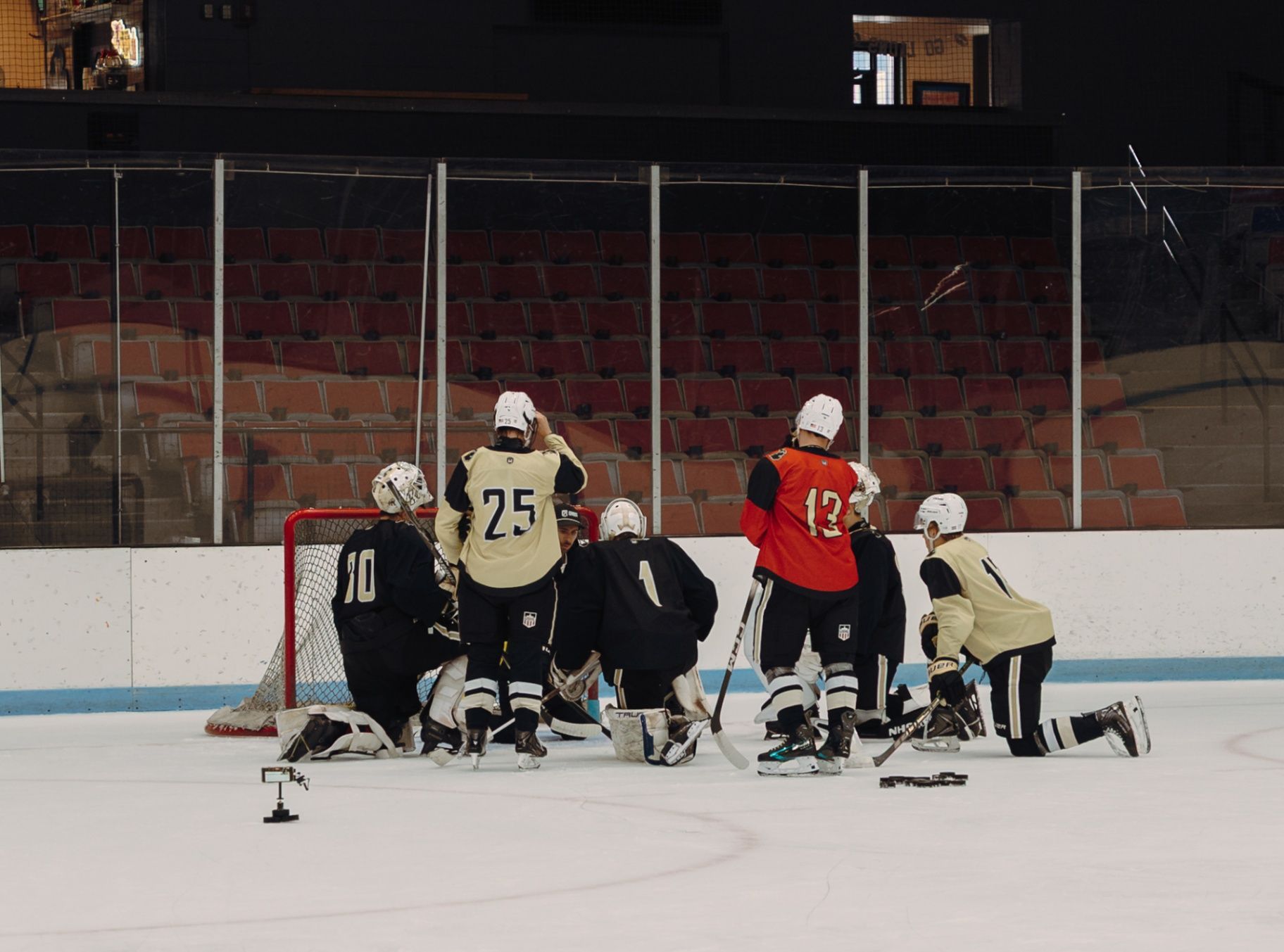
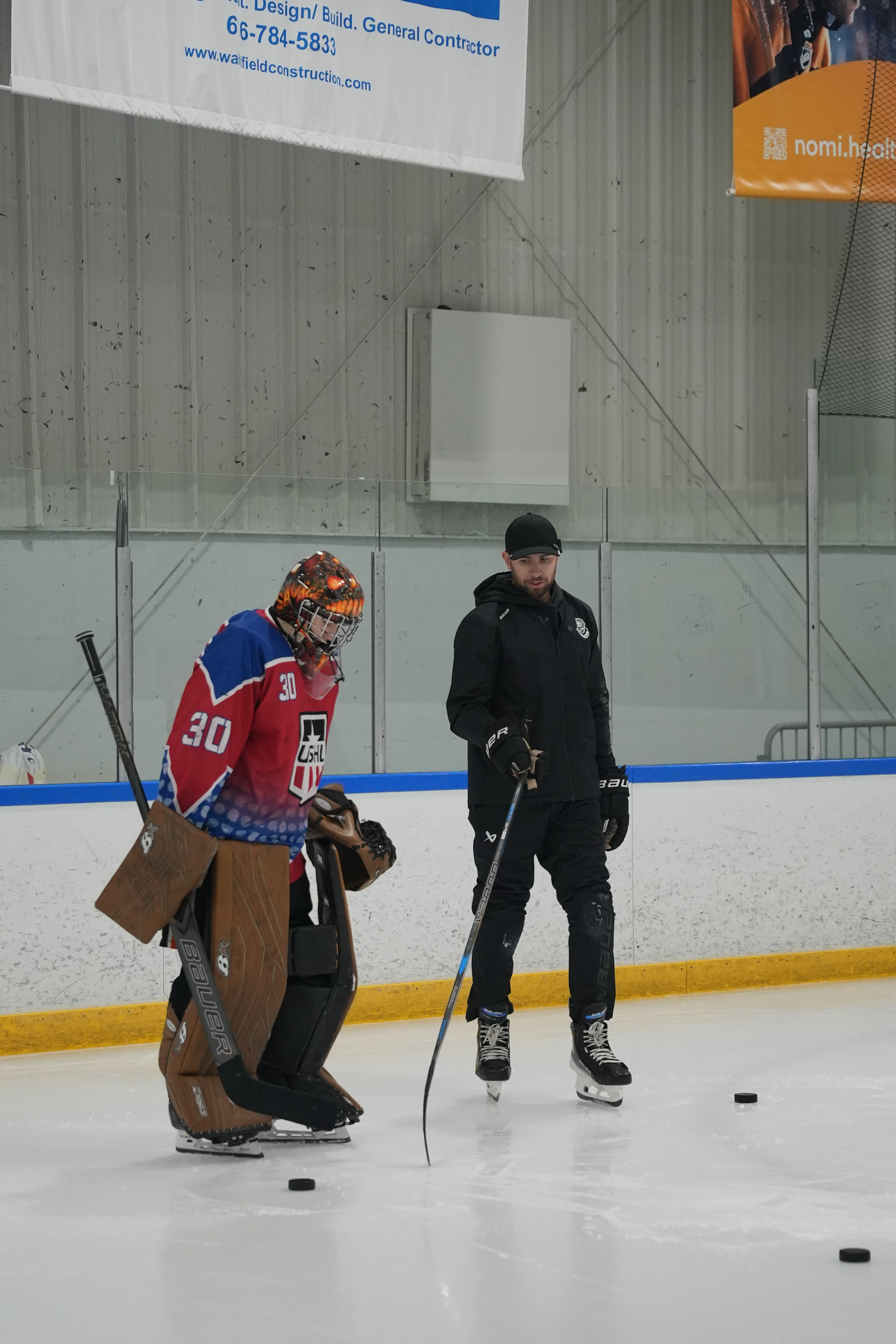
Goalies: Same Plan, Different Stress
Goalies ask all the time whether they need a separate program. You do not. You need the same staged plan with small tweaks, because your position stresses the body differently:
- Lateral push volume: your crease movement is thousands of short, violent side pushes.
- Butterfly loading: hips and knees under heavy flexion, at speed, on demand.
- Sealing and recovering under duress, with no time to set up.

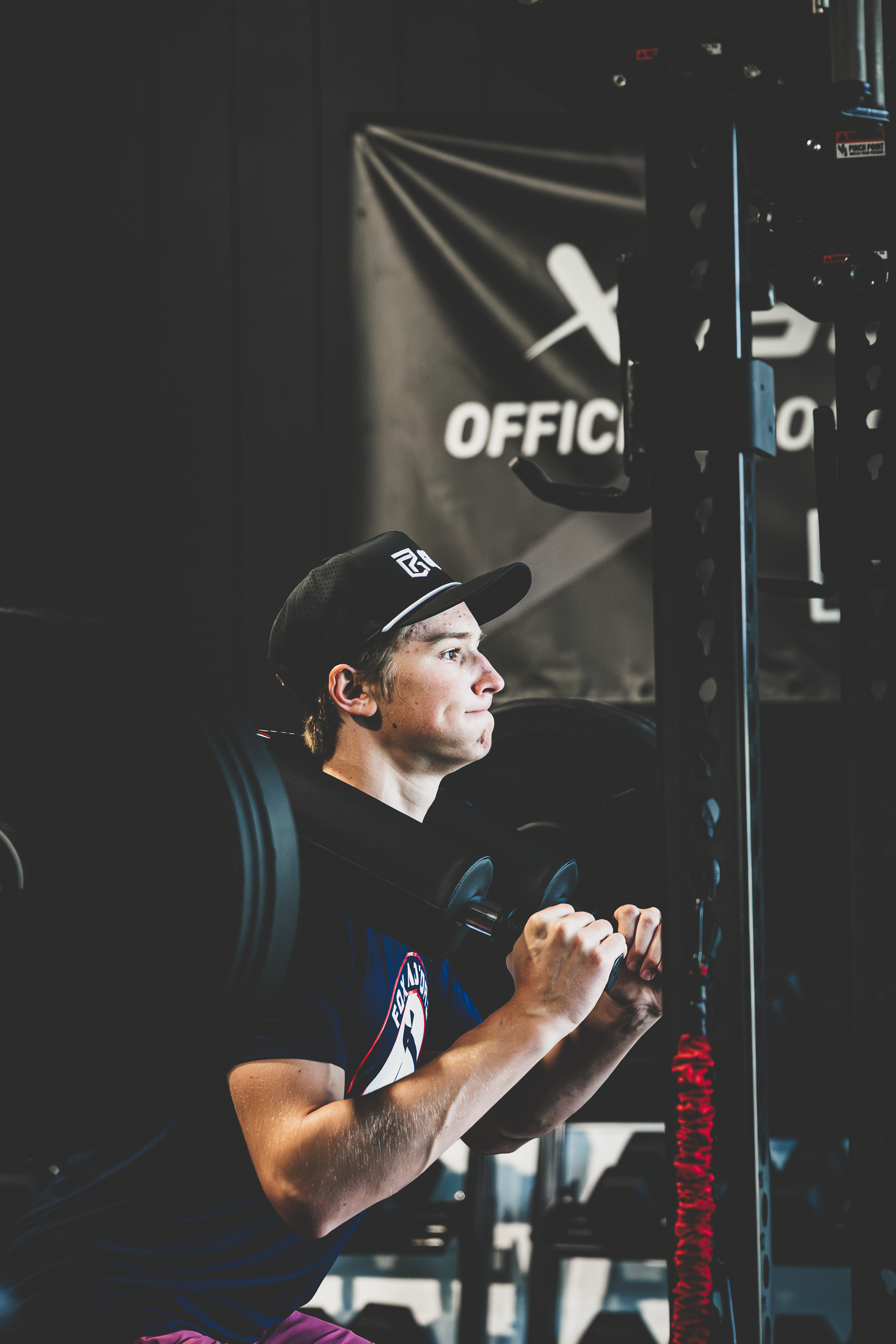
Goalie athletes lift too: strength work in the rack builds crease-ready force.
So we keep the four stages and shift the emphasis. Stage 1 adds dedicated hip and adductor strength work, because that is where goalie stress concentrates, and issues like AC joint rehab from collisions or awkward saves fit into the same structure. Stage 2 emphasizes lateral force production and absorption rather than pure vertical jumping. Stage 3 becomes crease-specific: butterfly-down and recovery chains, push sequences, scramble plays. The gates stay identical, and testing emphasizes lateral power and hip endurance. Same plan. Different stress. That is how we run goalie return to play, and it works.
Readiness Is Also a Skill You Train
Here is the stage nobody programs: the one between your ears. You can pass every physical test and still freeze the first time you have to cut hard on the leg you injured. That hesitation is not softness. It is a protection response, and it is both a performance problem and a re-injury risk, because guarded athletes land stiff, move late, and put force in the wrong places.
Confidence is trainable, so we train it. Exposure to the exact situations you fear, in controlled doses, until they stop being threats. We drill positive self-talk as a daily practice, not a poster on a wall. Breathing and reset routines between shifts, and staying locked in when the game gets wild. Your last gate is mental: you return when you play full speed without thinking about the injury. Not one rep before that.
What You Should Do Next
If you are cleared but not sure you are ready, that is exactly the gap we test. Book a return-to-play assessment at Ghost Athletica. We run the full battery: strength symmetry, jump and landing quality, deceleration, reactive control, and the mental side. You leave with a number, a gate, and a plan.
Already cleared and ready to build the capacity that keeps you healthy? Train with our team at Ghost Athletica. Return from injury once, correctly, and you will never want to do it twice.
Stop guessing. Start testing. Return to play on purpose.
Return-to-Play FAQ
What does “cleared” actually mean after a hockey injury?
Clearance means the injured tissue has healed, your pain is resolved or managed, and your basic range of motion and daily function are back. It confirms the medical side of recovery. It does not confirm strength symmetry, power, deceleration capacity, reaction to chaos, or confidence. Treat clearance as permission to begin a structured return-to-play plan, not as proof you are ready to play games.
How long after being cleared should a player return to games?
The honest answer: until the player passes objective return-to-play gates, and that typically means weeks, not days. The timeline is set by testing, not by the calendar. Rushing back because a date on the calendar arrived is how re-injuries happen. Pass the tests first, then play.
What is return-to-sport testing for hockey players?
It is an objective battery that compares the injured side to the uninjured side: strength symmetry, single-leg hop and jump distance, landing quality, deceleration control, and reactive change-of-direction. The standard we use at Ghost Athletica is at least 90 percent limb symmetry on strength and jump tests before a player advances stages. Numbers replace guesses, and gates replace vibes.
Can a goalie follow the same return-to-play plan as a skater?
Yes. Goalies use the same four-stage plan with small tweaks to exercise selection and testing emphasis, because the crease stresses the body differently: heavy lateral push volume, butterfly loading, and hips and knees working under deep flexion. The stages and the 90 percent gates stay the same; only the details shift.
How do I know if my player is ready to return after injury?
Ask for numbers, not reassurance. Has your player passed strength and hop tests with at least 90 percent symmetry? Have they practiced at full speed several times without swelling or limping? Do they play without hesitating on the previously injured side? If any answer is no, they are not ready, and a return-to-play assessment will show you exactly where the gaps are.
What should I do between getting cleared and playing my first game back?
Work through the four stages in order: rebuild the strength base, retrain high-force landings and absorption, reintroduce hockey-specific chaos, then return to full practice before games. Test at every gate. Clearance is the day that process starts, not the day it ends.
Is it normal to feel slow after coming back from a hockey injury?
Yes, and it is a signal, not a character flaw. Feeling a step slow usually means power, deceleration, or confidence has not been rebuilt yet, even if the tissue has healed. Those qualities return with targeted training, and they are exactly what objective testing picks up.
What tests should I pass before returning to hockey after an injury?
At minimum: at least 90 percent limb symmetry on base strength tests and on single-leg jump and hop tests, clean and repeatable landing mechanics, full-speed change of direction and reactive agility with no swelling or compensation, and several full-speed practices without hesitation or guarding.
How do goalies return to play after a hip or groin injury?
Through the same four stages, with extra emphasis on hip and adductor strength in Stage 1, lateral force production and absorption in Stage 2, and crease-specific butterfly, recovery, and push sequences in Stage 3. Testing weighs lateral power and hip endurance, and the 90 percent gates still apply.
Why do athletes get re-injured after being cleared?
Because clearance confirms healed tissue, not restored capacity. Athletes who return without passing objective strength and hop tests carry a higher re-injury risk and perform worse, a pattern documented in large reviews of return-to-sport outcomes after ACL reconstruction. Strength asymmetry, poor landing mechanics, and hesitation are the usual culprits.
What does a return-to-play assessment include?
At Ghost Athletica it is a full battery: side-to-side strength symmetry, single-leg jump and hop testing, landing quality, deceleration control, reactive change-of-direction, and a look at the mental side. You leave with numbers, a clear gate to pass, and a plan to get there.
Dr. Jamie Phillips, DPT, CSCS
Physical Therapist and Strength Coach, Ghost Athletica, Byron Center, Michigan