New TitleWhy Off-Ice Training Is Non-Negotiable for Hockey Players
Off-ice training is non-negotiable for hockey players because the physical qualities that determine on-ice performance, including skating speed, shot power, change-of-direction ability, and the capacity to sustain high output late in games, cannot be fully developed through ice time alone. The evidence is direct: research on male youth ice hockey players has confirmed that diverse off-ice measures of aerobic fitness, anaerobic power, muscular strength, power, and sprinting speed are all predictive of on-ice performance. The gym and the rink are not competing priorities. One builds the physical platform the other runs on.
This guide covers the four pillars of hockey off-ice training, a sample in-season weekly structure, the most common mistakes players make, and how Ghost Athletica approaches this work with competitive hockey athletes at every level.
Why Ice Time Alone Is Not Enough
Players who rely entirely on ice time for their development are, in effect, training the same physical qualities over and over without ever building above their current ceiling. Game reps develop skill execution. They do not systematically develop the strength, power, aerobic capacity, or mobility that allow skill to be expressed at higher speeds, against stronger opponents, and deeper into a season.
In ice hockey match-play, brief bouts of supramaximal activity are frequently superimposed onto intermittent exercise at intensities below or around maximal oxygen uptake. The anaerobic energy systems are highly activated during each shift, and there is a greater reliance on anaerobic energy provision at the onset of each shift and during sudden fluctuations in exercise intensity that constantly occur during play. Neither the anaerobic nor the aerobic system that fuels those shifts is best developed by simply playing more games. Both require targeted off-ice training to reach their ceiling.
Wiley Online Library
The same applies to injury prevention. Limited hip mobility is the single strongest predictor of groin injury risk in hockey players. When the hips cannot move through their full range of motion, the body compensates by asking other structures to work harder or move further than they should, and that compensation eventually breaks down, usually in the form of a groin strain. The skating motion itself does not correct this. Without deliberate off-ice mobility work, the pattern compounds across a season until something gives.
Runners Edge Physio
TL;DR: Ice time develops skill. Off-ice training develops the physical platform that determines how fast, how powerfully, and how sustainably that skill can be executed. Both are required for complete player development.
The Four Pillars of Hockey Off-Ice Training
1. What Is the Best Strength Training for Hockey Players?
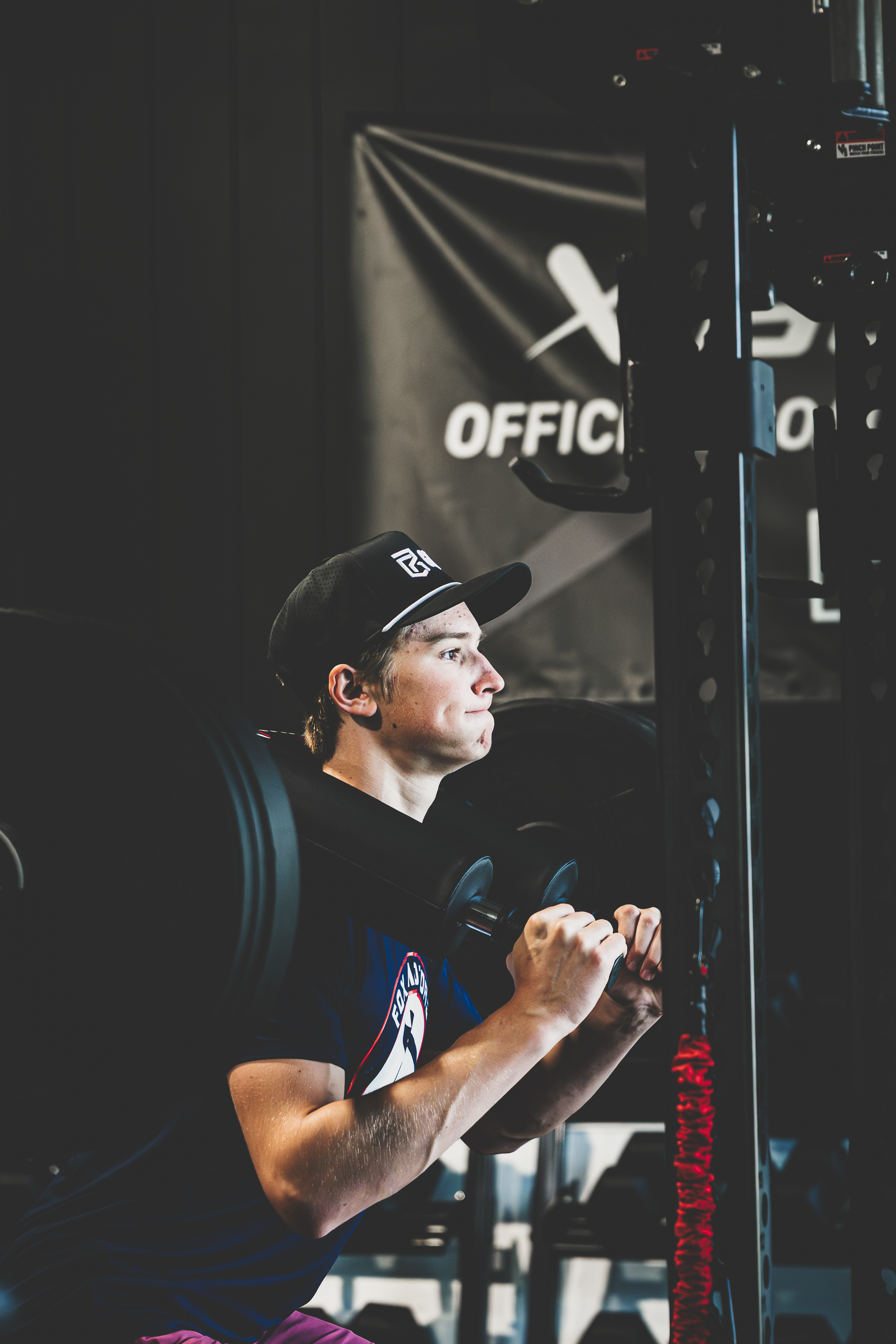
The best strength training for hockey players builds power through movement patterns that directly mirror the demands of skating, shooting, and battling for position along the boards. This is functional, hockey-specific strength, not general fitness.
The skating stride is a single-leg, hip-dominant push. Every stride a player takes transfers force from one skate blade through the hip and into the ice. That means single-leg exercises including Bulgarian split squats, single-leg Romanian deadlifts, and lateral step-ups are more directly applicable to skating performance than bilateral movements alone. Functional strength training focuses on movement patterns rather than isolated muscles, emphasizing single-leg exercises that mimic the unilateral demands of skating, rotational movements that develop the core power needed for shooting and checking, and multi-planar training that prepares athletes for the three-dimensional nature of hockey.
Stadium Performance
Research supports a combined approach. Studies comparing combined plyometric and strength training to strength training alone found that the combination produced greater improvements in on-ice skating sprint performance, with the enhancement of fundamental movement patterns translating directly into faster skating. This means the strength program for a hockey player should include both loaded strength work and explosive plyometric training, not one or the other.
ResearchGate
The posterior chain deserves particular attention. Glutes, hamstrings, and the muscles of the lower back generate the extension and push-off that power the skating stride. Players who neglect this area in favor of quad-dominant work, which is the default in most commercial training programs, develop a physical profile that does not match what the sport actually demands.
Core strength is the third component of a complete hockey strength program. A stable, anti-rotation core is what allows shot power to transfer from the lower body through the stick, what keeps a player in contact position along the boards, and what maintains skating mechanics when fatigue accumulates in the third period. Pallof presses, dead bugs, and single-arm loaded carries develop this quality far more effectively than crunches or sit-ups.
TL;DR: Hockey strength training should be built around single-leg hip-dominant movements, combined with plyometrics and anti-rotation core work. This builds the physical output the skating stride actually demands, rather than general gym fitness.
2. What Is the Best Cardio and Conditioning for Hockey Players?
The best conditioning for hockey players develops the ability to produce high-intensity efforts repeatedly across a game, not the ability to sustain a single continuous output. Hockey is an intermittent sport. Shifts last 30 to 60 seconds at near-maximal intensity, followed by 90 to 120 seconds of rest on the bench. That specific demand requires a specific conditioning approach.
Research on the energy structure of repeated high-intensity on-ice efforts found a dominant aerobic contribution of approximately 63%, followed by phosphagen metabolism at approximately 30%, with a relatively small glycolytic contribution of around 7%. This finding has important implications for how players should train off the ice. The aerobic system is not just for endurance events. It is the recovery mechanism between explosive shifts, and a more developed aerobic base means faster recovery of the phosphagen system between efforts.
MDPI
Research examining the influence of aerobic capacity on lactate clearance and heart rate recovery during ice hockey matches found significant positive correlations between higher aerobic capacity and faster heart rate recovery between shifts and better sprint performance maintenance across the game. In practical terms, the player with a better-developed aerobic engine recovers faster between shifts and arrives on the ice for shift three in better condition than a player of equal speed who neglected their aerobic base.
ResearchGate
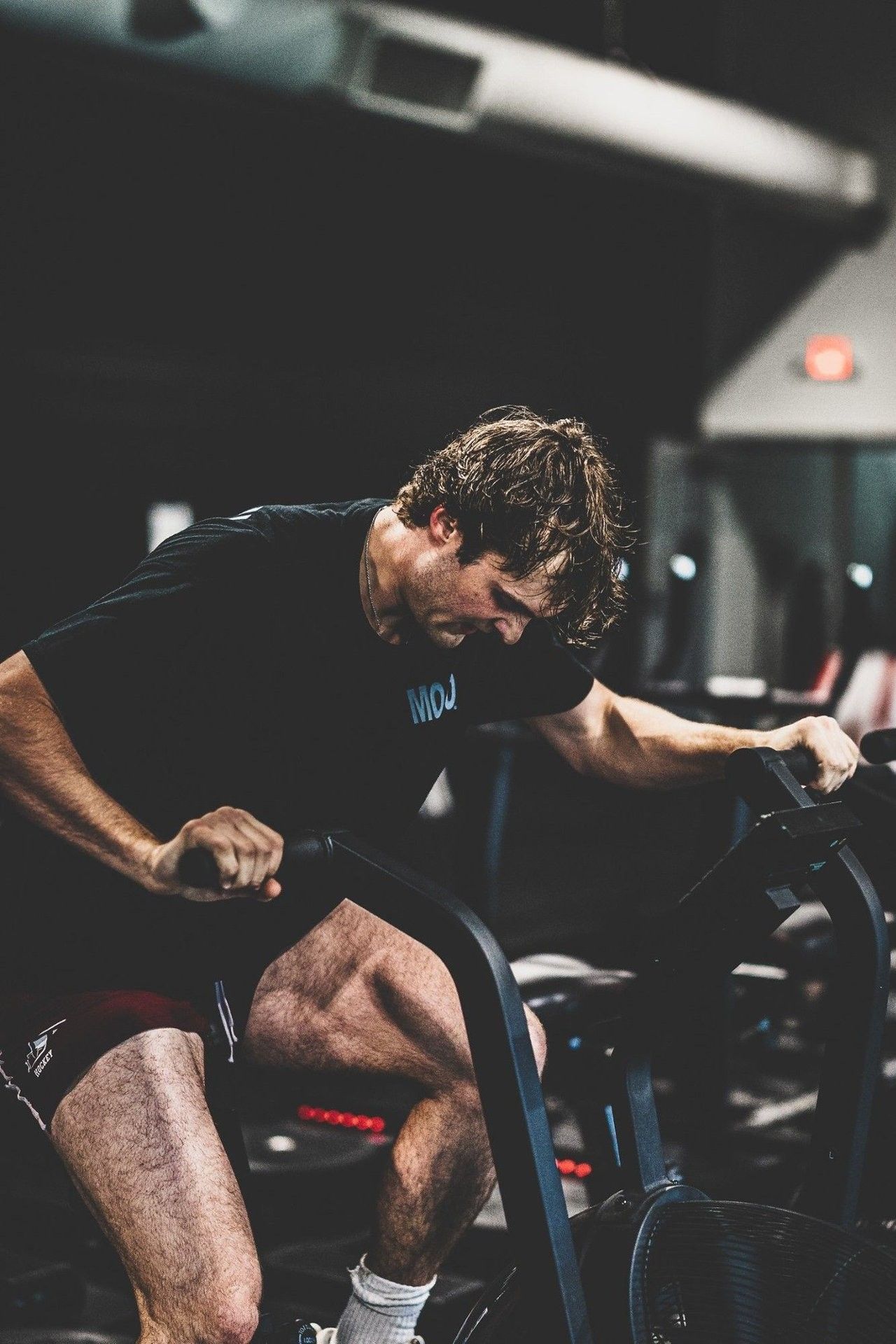
High-intensity interval training that mimics shift structure is the most effective conditioning method for hockey players. Work intervals of 30 to 60 seconds at true maximal effort, followed by 90 to 120 seconds of rest, directly train the energy systems in the ratio that games demand. Assault bike intervals, track sprints, and sled pushes are all effective formats. Long, slow steady-state cardio, by contrast, develops a different physiological profile and has limited direct transfer to the explosive, intermittent demands of hockey.
Conditioning volume should be managed carefully in-season. Most in-season programs should not require a high volume of conditioning, as the most hockey-specific conditioning stimulus will come from practices and games. The true purpose of in-season training is to support on-ice development, not replace it. Off-ice conditioning in-season is best kept short, intense, and low in volume, preserving the physical capacity to produce high-quality effort in practice and on game days.
Kevinneeld
TL;DR: Hockey conditioning should be built around high-intensity interval training that replicates shift structure. The aerobic base matters because it determines how fast a player recovers between explosive efforts, but long slow cardio is not the right tool to build it for hockey players.
3. Why Is Mobility the Most Neglected Pillar of Hockey Training?
Mobility is the most neglected pillar of hockey off-ice training, and it is the one with the most direct relationship to both injury prevention and skating performance. Most players stretch occasionally. Almost none of them treat mobility as a structured training discipline with the same consistency they bring to their strength work.
The skating motion creates predictable tightness patterns. The skating position keeps hips in a flexed and slightly externally rotated position for extended periods, which tightens hip flexors and limits hip extension. Limited hip internal rotation from the externally rotated skating stance and restricted hip extension because the skating stride never takes the hip into full extension are among the most common mobility deficits in hockey players.
Runners Edge Physio
These are not minor inconveniences. A multimodal intervention program for male professional ice hockey players that included hip adductor strengthening, hip mobility, and pelvic control exercises reduced the occurrence of groin injuries from 3.2 injuries per 1000 game exposures to 0.71 injuries per 1000 game exposures. That is a reduction of more than 75 percent from a targeted mobility and strengthening program. For a player who wants to stay available across a full season, that finding alone makes mobility work non-negotiable.
PubMed Central
The performance case is equally compelling. A player with limited hip mobility cannot achieve the deep knee bend that produces a powerful skating stride. They compensate with a more upright posture that limits stride length and power output. They cannot transfer efficiently through the shot because thoracic rotation is restricted. And they cannot absorb contact cleanly because their hip and lumbar spine cannot move through the full range the play demands.
The daily mobility routine for hockey players should target three primary areas: hip flexors and quads through couch stretch and hip flexor lunges, hip internal and external rotation through 90/90 stretching and pigeon variations, and thoracic spine through foam rolling and rotation drills. Ten to fifteen minutes per day, done consistently, produces meaningful changes in tissue quality and available range of motion within four to six weeks.
TL;DR: Mobility is the pillar most players skip and the one most directly tied to staying healthy and skating powerfully across a full season. Targeted daily hip and thoracic mobility work has been shown to dramatically reduce groin injury rates and improve the physical quality of the skating stride.
4. What Is Movement Quality and Skating-Specific Training Off the Ice?
Movement quality and skating-specific off-ice training bridges the gap between gym strength and on-ice performance by developing the neuromuscular patterns, single-leg stability, and lateral movement capacity that skating demands. This is the pillar that makes strength training transfer.
Off-ice training is foundational for developing key physical qualities such as strength and power in ice hockey, but the efficacy of its transfer to on-ice performance hinges on the consistency of movement patterns between off-ice and on-ice environments. Significant biomechanical discrepancies between training settings could diminish the benefits of off-ice training, or worse, reinforce faulty movement patterns that increase on-ice injury risk.
Frontiers
This is why skating-specific movement training matters. A player who develops strength through generic gym patterns but never trains the lateral, single-leg, and hip-dominant movement quality that skating demands will find that their gym performance does not fully convert to on-ice performance. The body needs to learn how to apply that strength in patterns that resemble what happens on skates.
The most effective tools for this category include lateral bounds and broad jumps, which develop explosive lateral power in a movement plane that skating requires constantly. Slide board training directly mimics the push-off angle and recovery of the skating stride on a low-friction surface. Lateral hurdle hops and single-leg hop-and-stick drills build the landing mechanics and single-leg stability that determine how cleanly a player absorbs force during skating maneuvers. Skater squats and rear-foot elevated split squats develop the deep hip flexion and single-leg strength that power a low, aggressive skating stance.
The goal of this training is not to simulate skating in the gym. It is to develop the physical qualities and movement competencies that make skating itself more powerful, more efficient, and more sustainable across a three-period game.
TL;DR: Movement quality training ensures gym strength transfers to the ice. Lateral bounds, slide board work, and single-leg stability drills develop the neuromuscular patterns and movement capacities that skating demands, bridging the gap between what a player can lift and how they actually perform on skates.
Sample Off-Ice Weekly Program (In-Season)
The following structure is a general framework for a competitive hockey player during the season. Volume is intentionally conservative. The goal of in-season training is to maintain physical qualities, not build new ones at the cost of on-ice freshness.
Monday: Lower Body Strength (45 minutes) Warm-up with dynamic hip mobility and activation (10 minutes). Primary work: trap bar deadlift or Romanian deadlift (3 sets of 4 to 6 reps), Bulgarian split squat (3 sets of 6 per leg), lateral band walk superset with Copenhagen adductor hold. Finish with 10 minutes of hip and thoracic mobility.
Tuesday: Game or Practice (active recovery if off day) Light movement, soft tissue work, and hip mobility only. No structured training.
Wednesday: Upper Body Strength and Core (40 minutes) Push-pull structure: dumbbell bench press or push-up variation paired with single-arm dumbbell row. Overhead press paired with face pulls. Core finisher: Pallof press, dead bugs, and side plank variations. Three rounds, 10 to 12 minutes.
Thursday: Game or Practice
Friday: Speed and Power (30 minutes) Short, high-quality session. Lateral bounds, broad jumps, and medicine ball rotational throws. Three to four sets of each, full rest between sets. Slide board if available: 6 sets of 30 seconds with 60 seconds of rest. Finish with 10 minutes of mobility.
Saturday and Sunday: Games plus recovery Soft tissue work, targeted mobility, sleep, and nutrition are the training on game days.
Total structured off-ice time in-season: approximately two to three hours per week, distributed across three sessions. This is enough to maintain strength, power, and mobility without accumulating fatigue that competes with on-ice performance.
Common Off-Ice Training Mistakes Hockey Players Make
Most hockey players do not make zero off-ice training mistakes. They make one or two consistently, and those mistakes limit the return on everything else they do.
Training the same way year-round. The physical demands of the off-season, pre-season, and in-season are fundamentally different, and the training program should reflect that. Training at maximum intensity twelve months per year leads to overtraining, burnout, and diminishing returns. The body needs varying stimulus and strategic recovery periods to continue adapting, and the conditioning demands of the off-season differ significantly from those of the pre-season and in-season.
RinkHive
Skipping mobility work. This is the most common and most costly mistake. Players who spend 45 minutes on strength and zero minutes on mobility are building capacity on top of a movement pattern that is already restricted by the demands of skating. Over the course of a season, that restriction accumulates into injury.
Doing generic conditioning instead of hockey-specific conditioning. Long distance running develops a different physiological profile than what hockey demands. A player who runs five miles on off days is not developing hockey conditioning. They are developing endurance in a movement pattern unrelated to skating, at an intensity unrelated to shift demands, and accumulating fatigue that reduces the quality of everything else they do.
Training for soreness rather than adaptation. Exhaustion after a training session does not mean the session was productive. In-season, the physical qualities that players most need to preserve, including speed and power, are the first to degrade when training volume is poorly managed. The goal of off-ice training is to maintain and gradually build physical capacity. Sessions that leave a player unable to practice well the next day are working against the development they are supposed to support.
Kevinneeld
Using unstable surfaces as a substitute for loaded strength work. Balance boards, BOSU balls, and stability exercises have a place in rehabilitation. They do not develop the strength and power that skating demands, and lower body training on unstable surfaces, even as a small part of a workout, reduces the strength and speed adaptations that result from conventional training on stable surfaces. A split squat develops single-leg hockey strength. Standing on a wobble board does not.
Next Level Athletics
How Ghost Athletica Approaches Off-Ice Training
Ghost Athletica, based at Southside Ice Arena in Byron Center, Michigan, provides hockey-specific strength and conditioning for competitive players across all levels and ages. Our Complete Performance Program is a subscription-based training system built specifically for hockey players, covering all four pillars of off-ice development with programming that adjusts across the in-season and off-season cycle.
Our approach to off-ice training is built on the same principle that guides everything we do: what happens in the gym only matters insofar as it makes a player better on the ice. We do not program for aesthetics, for general fitness, or for the kind of soreness that signals effort without producing adaptation. We program for skating speed, for first-step explosiveness, for the physical durability to compete through a full season, and for the injury prevention that keeps players available to develop in the first place.
Nutrition guidance is available through Lauren, our nutrition and recovery coach. Mental performance coaching is available through Ben Vutci. And for players who want complete goalie-specific development, our Elite Goalie Method integrates all of this within a one-on-one mentorship framework.
If you are ready to approach your off-ice development with the same seriousness you bring to your game, a seven-day free trial of our Complete Performance Program is available at ghost.fitr.training/p/CompletePerformanceProgram.
Frequently Asked Questions About Hockey Off-Ice Training
What is the best off-ice training for hockey players?
The best off-ice training for hockey players integrates all four pillars: strength training built around single-leg hip-dominant movements and plyometrics, conditioning structured around high-intensity interval training that mimics shift demands, daily mobility work targeting the hip and thoracic spine, and movement quality training including lateral bounds and slide board work that bridges gym strength to on-ice performance. Programs that address only one or two of these areas consistently produce players with identifiable physical gaps. A complete off-ice program, periodized across the off-season, pre-season, and in-season, is the most direct path to sustained on-ice improvement.
How many days a week should hockey players train off the ice?
The research-supported recommendation is three to four sessions per week during the off-season and pre-season, scaling to two to three sessions per week in-season. Sessions should range from 30 to 60 minutes and should be structured so that training does not interfere with on-ice quality. At minimum, one lower body strength session and one movement quality or conditioning session per week in-season is enough to prevent the physical degradation that accumulates across a long season without supplemental training. Daily mobility work of 10 to 15 minutes should be done every day regardless of the training schedule, including on game days.
Should hockey players lift weights?
Yes, unequivocally. Diverse off-ice measures of muscular strength, power, and anaerobic performance are predictive of on-ice performance in youth male ice hockey players. Strength training is one of the most direct levers available for improving skating speed, shot power, and physical durability. The key is that the strength training must be hockey-specific, built around the movement patterns of the skating stride rather than general bodybuilding or machine-based isolation work. Single-leg exercises, hip-dominant movements, rotational core work, and combined plyometric-strength protocols are the training methods with the strongest evidence base for hockey performance transfer.
PubMed
What is the best cardio for hockey players?
The best cardio for hockey players is high-intensity interval training structured around the work-to-rest ratios of actual hockey shifts. Intervals of 30 to 60 seconds at maximal output followed by 90 to 120 seconds of rest develop the exact energy system demands that games require. Assault bike intervals, sled sprints, track sprints, and skating treadmill work are all effective. Long-distance, low-intensity cardio develops a different physiological profile with limited hockey transfer. It can be used selectively during the early off-season to build an aerobic base, but it should not be the primary conditioning modality for a player who wants to develop hockey-specific fitness.
How do I improve my skating speed off the ice?
Skating speed improves off the ice through a combination of hip and posterior chain strength, single-leg power development, lateral bounds and plyometrics, and slide board training. The skating stride is a hip-dominant, unilateral push, and training those specific movement patterns in the gym translates directly to faster skating on the ice. Trap bar deadlifts, Bulgarian split squats, and single-leg Romanian deadlifts build the posterior chain strength that powers each stride. Lateral bounds and broad jumps develop explosive lateral power. Slide board training mimics the push-off angle and recovery of the actual skating stride on a low-friction surface. Consistent hip mobility work also contributes directly to skating speed by allowing the stride to reach its full extension and length.
When should hockey players do off-ice training during the season?
The optimal timing for in-season off-ice training is the day after a game or the morning before an afternoon practice, giving the body time to recover from the training stimulus before it needs to perform again. Strength training within 24 hours of a game generally degrades on-ice performance quality and should be avoided. The two to three in-season weekly sessions should be distributed across the week to avoid consecutive heavy training days and should be kept to 30 to 45 minutes, prioritizing quality over volume. Players who train hard the day before a game and wonder why their legs feel flat during warm-up have answered their own question.