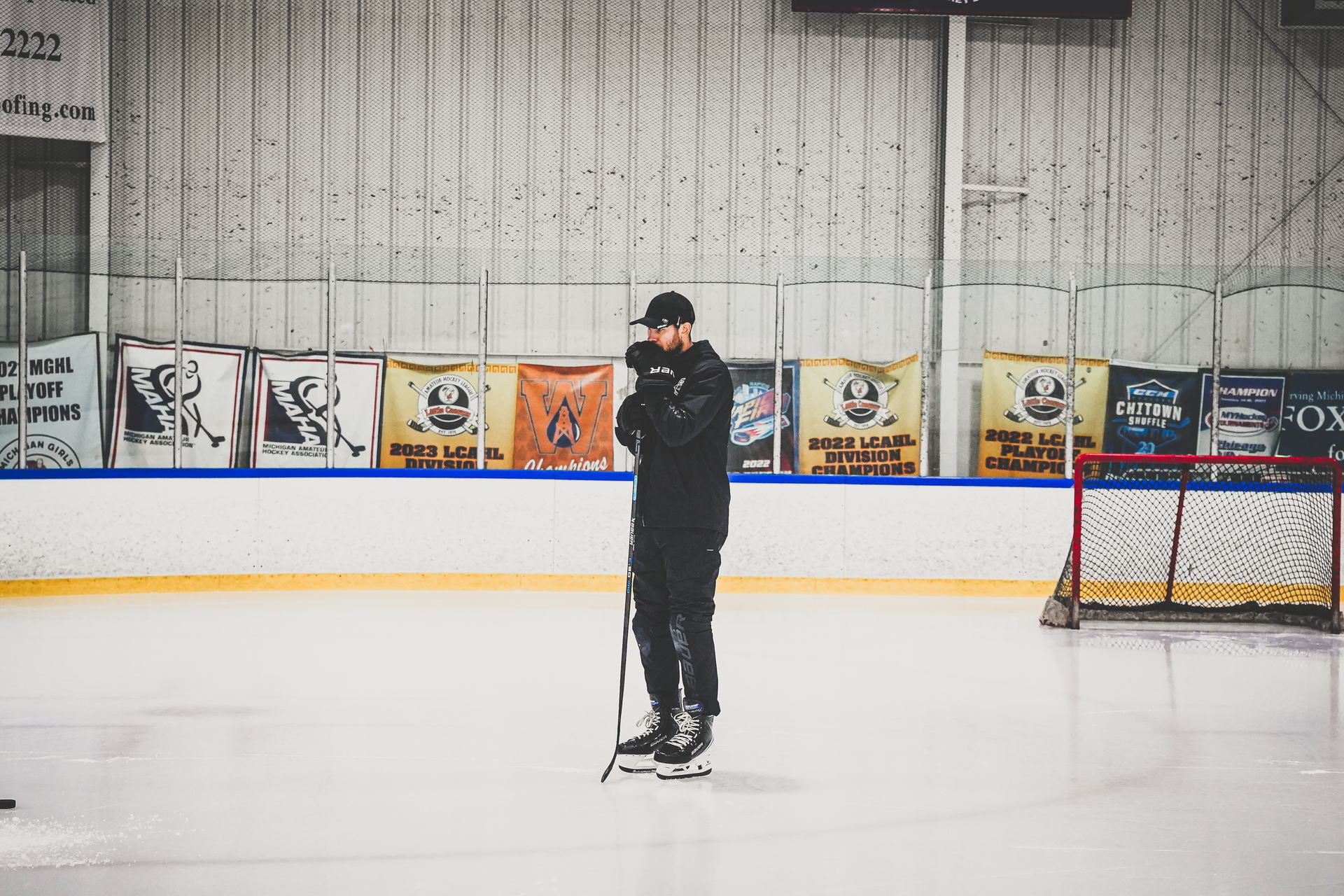
Deceleration: The Most Underrated Skill in Hockey
Everyone wants to be faster. But speed without the ability to stop is a liability, and here is how to fix that
Dr. Jamie Phillips | Ghost Athletica | Grand Rapids, Michigan
Everyone wants to be faster.
But ask any strength coach, rehab specialist, or pro-level hockey player and they will tell you the same thing: speed without the ability to decelerate is a liability.
If you cannot stop, slow down, or absorb your own momentum cleanly, your injury risk increases significantly and your effectiveness on the ice drops. That is why learning to decelerate properly is just as important as developing acceleration, and why it is a foundational element of the hockey performance training we do at Ghost Athletica in Grand Rapids.
Why Deceleration Training Matters in Hockey
Every high-speed movement in hockey ends in a braking moment.
- Stopping to transition into a new direction
- Pulling up to make a pass or get set for a shot
- Slowing down to avoid contact or absorb force along the boards
- Halting near the crease or in tight spaces without losing position
If you do not control how you stop, your body absorbs that force through your joints rather than your muscles. The result is joint strain, poor positioning at critical moments, and a significantly elevated injury risk.
Proper deceleration produces better edge control, smoother directional transitions, and a meaningful reduction in non-contact injuries over the course of a season.
The Science Behind Deceleration
Deceleration places high eccentric loads on your muscles, particularly the quads, glutes, hamstrings, and calves. Eccentric strength is your body's ability to control force while the muscle is lengthening, the same demand that occurs when landing from a jump or absorbing a hit.
Athletes with underdeveloped eccentric control are significantly more likely to suffer ACL injuries, groin pulls, and high ankle sprains. In hockey specifically, most of those injuries occur not during contact but during attempts to stop or change direction without adequate muscular control.
Building that control off the ice is one of the most direct investments a hockey player can make in both performance and injury prevention.
How to Train Deceleration Off the Ice
Eccentric Strength Work
These exercises build the force-absorbing foundation your body needs to stop powerfully and land safely.
Tempo goblet squats: Lower for 3 to 5 seconds under control, focusing on quad and glute engagement throughout the descent.
Eccentric single-leg RDLs: Slow, controlled lowering on one leg builds the hamstring and glute strength that protects the knee and hip during braking movements.
Slow Nordic hamstring curls: One of the most research-supported exercises for hamstring injury prevention in hockey athletes. Lower slowly, control the eccentric phase completely.
Jump Landings and Skater Hops
These train your body to absorb lateral and vertical force in positions that directly mirror the demands of skating.
Stick landings: Jump and land with soft knees and hips, holding the position for two to three seconds before resetting. Focus on quiet, controlled landings.
Lateral skater hops with holds: Hop laterally and hold the landing position for two to three seconds, building single-leg stability in a skating-specific pattern.
Single-leg box drop to balance: Step off a box onto one leg and absorb the landing with control. Progresses eccentric load in a hockey-relevant position.
Reactive Braking Drills
These train your ability to decelerate from unpredictable movement, which is closer to the actual demand of a hockey game than any predetermined pattern.
Sprint-to-stick stop drills: Accelerate over a short distance and come to a complete, controlled stop on an audio or visual cue.
Shuttle deceleration with cues: Use audio or visual signals to trigger direction changes, forcing your body to manage momentum reactively rather than by anticipation.
Band-resisted pull-backs into holds: Use resistance to challenge your ability to brake and stabilize under load.
Cues to Keep in Mind
These are the coaching cues we use most consistently in our hockey training programs at Ghost Athletica:
- "Absorb, do not slam"
- "Soft knees, strong hips"
- "Land like you are trying not to make a sound"
- "Control first, then speed"
Good deceleration is not just about stopping. It is about arriving at each stop in a position where your body is loaded and ready for the next movement. That is what separates athletes who are fast and effective from athletes who are fast and fragile.
How This Fits Into Your Hockey Training
Speed is only an asset when it is paired with control. The athletes who stay healthy through long seasons, who make clean transitions under pressure, and who perform consistently late in games are the ones who have trained deceleration alongside acceleration from the beginning.
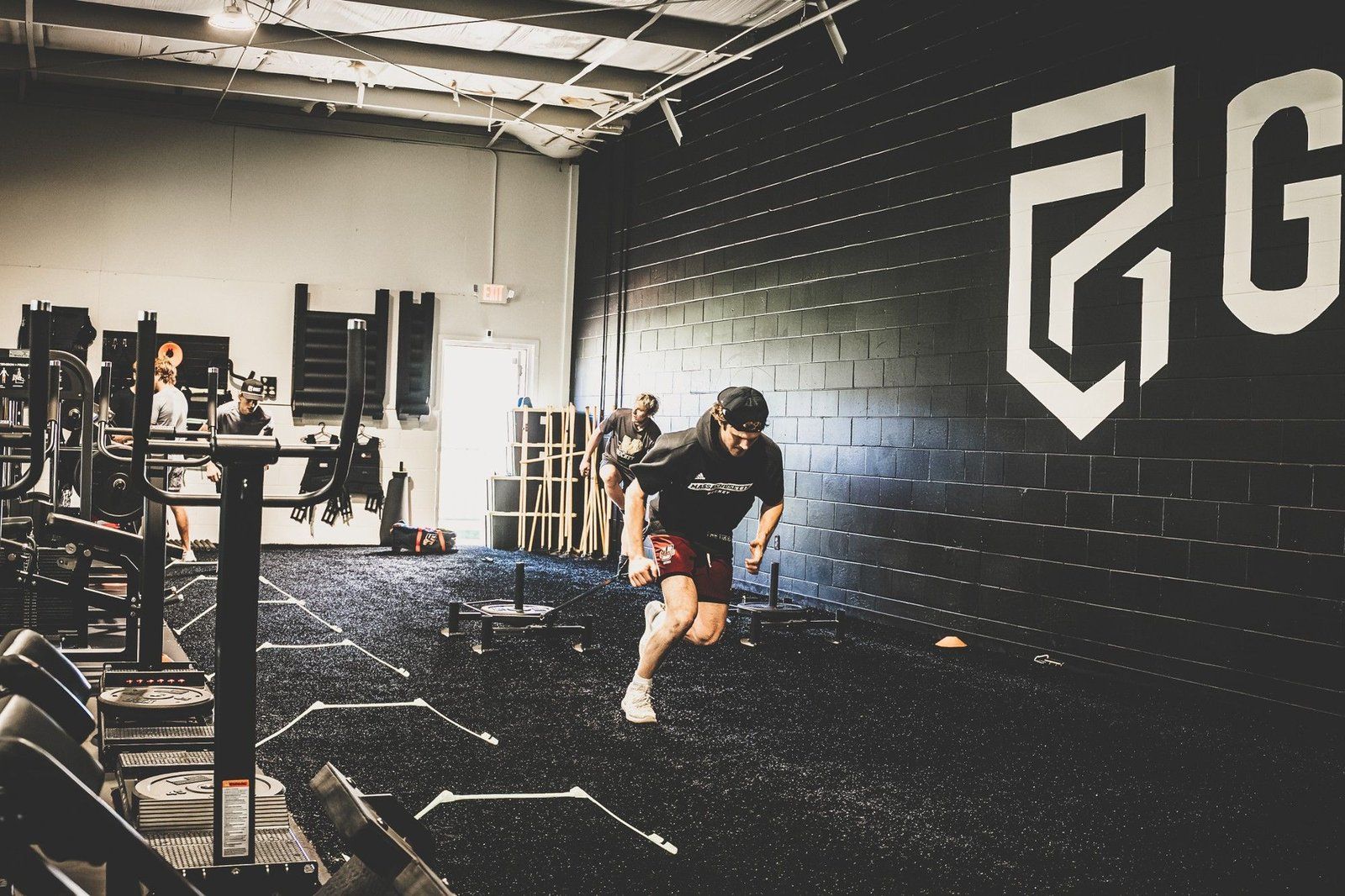
This is a non-negotiable component of the hockey strength and conditioning programs at Ghost Athletica, serving players and goalies across Grand Rapids and West Michigan. We build movement control before we build movement speed, because that is the sequence that produces results that hold up when the game is on the line.
If you are a hockey player or goaltender in the Grand Rapids area looking for a performance program built around this philosophy, learn more at ghostathletica.com.
Dr. Jamie Phillips, DPT Ghost Athletica | Ghost Goaltending | Grand Rapids Hockey Training Byron Center, Michigan | ghostathletica.com