Visualize Like a Pro: The Power of Mental Imagery in Elite Goaltending
How to train your brain the way the best goalies in the world do, and why it works
Dr. Jamie Phillips | Ghost Athletica | Grand Rapids, Michigan
Before we talk technique, let's talk about Patrick Roy.
Beyond his talent and his technical ability, Roy was one of the first goalies to openly credit visualization as a key to his success. Before games, he did not just warm up his body. He mentally rehearsed every possible scenario. By the time the puck dropped, he had already played the game in his head. His mind was prepared, his confidence was high, and his reactions were automatic.
Science has since confirmed what Roy instinctively knew: visualization is one of the most powerful performance tools available to goalies at any level. Here is exactly how to do it right.
Why Visualization Works
Visualization, or mental imagery, is not just daydreaming about making saves. When done correctly, it is a full sensory rehearsal that produces measurable changes in how your brain and body perform.
Research shows that effective visualization activates the same neural pathways as physical repetitions. Your brain fires the same signals whether you are imagining a save or actually making one. It improves reaction time and decision-making by allowing you to pre-experience situations so you recognize and respond to them faster in real games. And it builds confidence while reducing pre-game anxiety, because your brain has already seen you succeed before you ever step on the ice.
Elite athletes across every sport use visualization. Most goalies, however, do not use it correctly. The most common mistake is failing to engage all five senses, which is what separates effective mental training from passive wishful thinking.
How to Visualize the Right Way: A Step-by-Step Guide
Step 1: Find a Quiet Space and Get Into a Relaxed State
Sit or lie down somewhere without distractions. Take slow, deep breaths and let your body settle. The calmer your baseline state, the more vivid and effective your imagery will be. This is not optional. It is the foundation the rest of the process builds on.
Step 2: Engage All Five Senses
This is where most goalies fall short. Effective visualization is not about seeing a play in your head. It is about feeling it from the inside.
- Sight: Picture the rink, your gear, the puck, the scoreboard, the shooter's release point.
- Sound: Hear the skates cutting the ice, your goalie coach calling out adjustments, the crowd reacting to a big save.
- Touch: Feel your skates gripping the ice, your pads absorbing a shot, the puck hitting your glove pocket clean.
- Smell: Take in the cold arena air, the scent of your equipment, the familiar feel of your pre-game environment.
- Taste: Imagine taking a sip of water between whistles, the coolness resetting your focus.
Research indicates that engaging multiple senses makes visualization significantly more effective at improving on-ice performance. The more realistic the imagery, the more your brain treats it as a genuine rep.
Step 3: Visualize Specific, Game-Like Scenarios
Do not visualize "playing well" in a general sense. That is too vague to be useful. Instead, rehearse the exact situations you will actually face:
- Tracking a puck from the blue line through traffic and making a clean glove save
- Reading a two-on-one, anticipating the pass, and sliding into position before the shot comes
- Battling through a net-front scramble, staying square, and making the second save
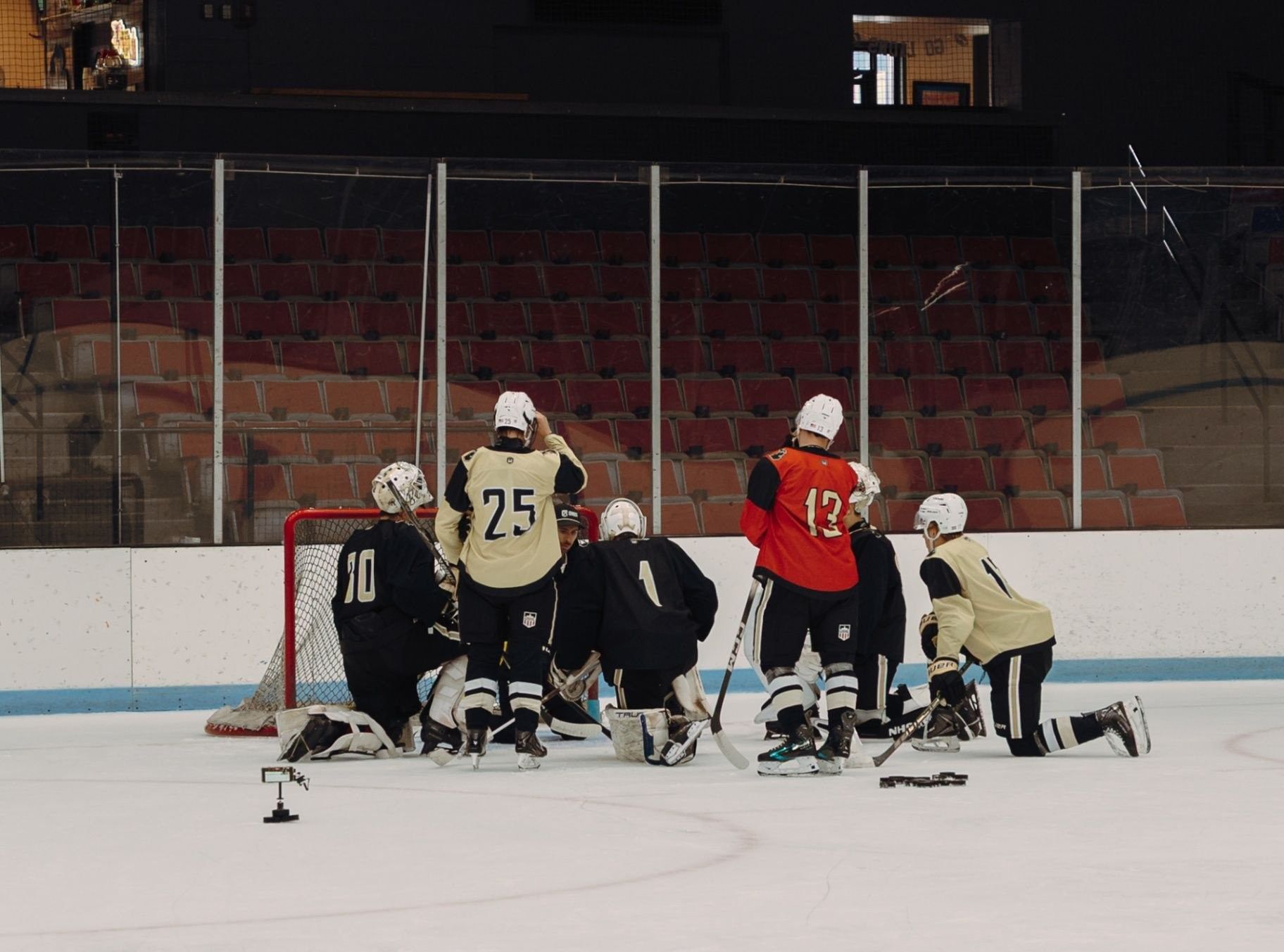
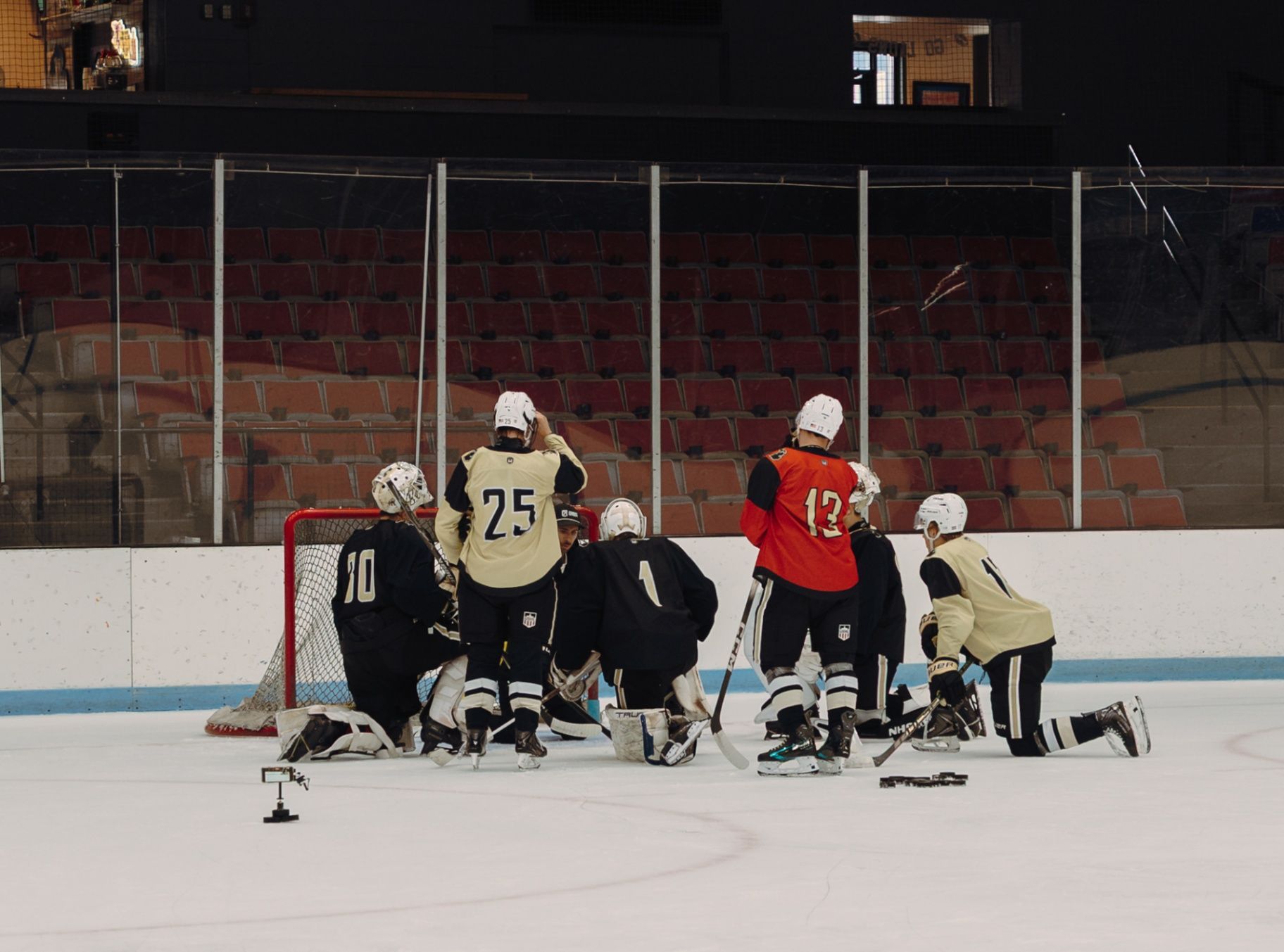
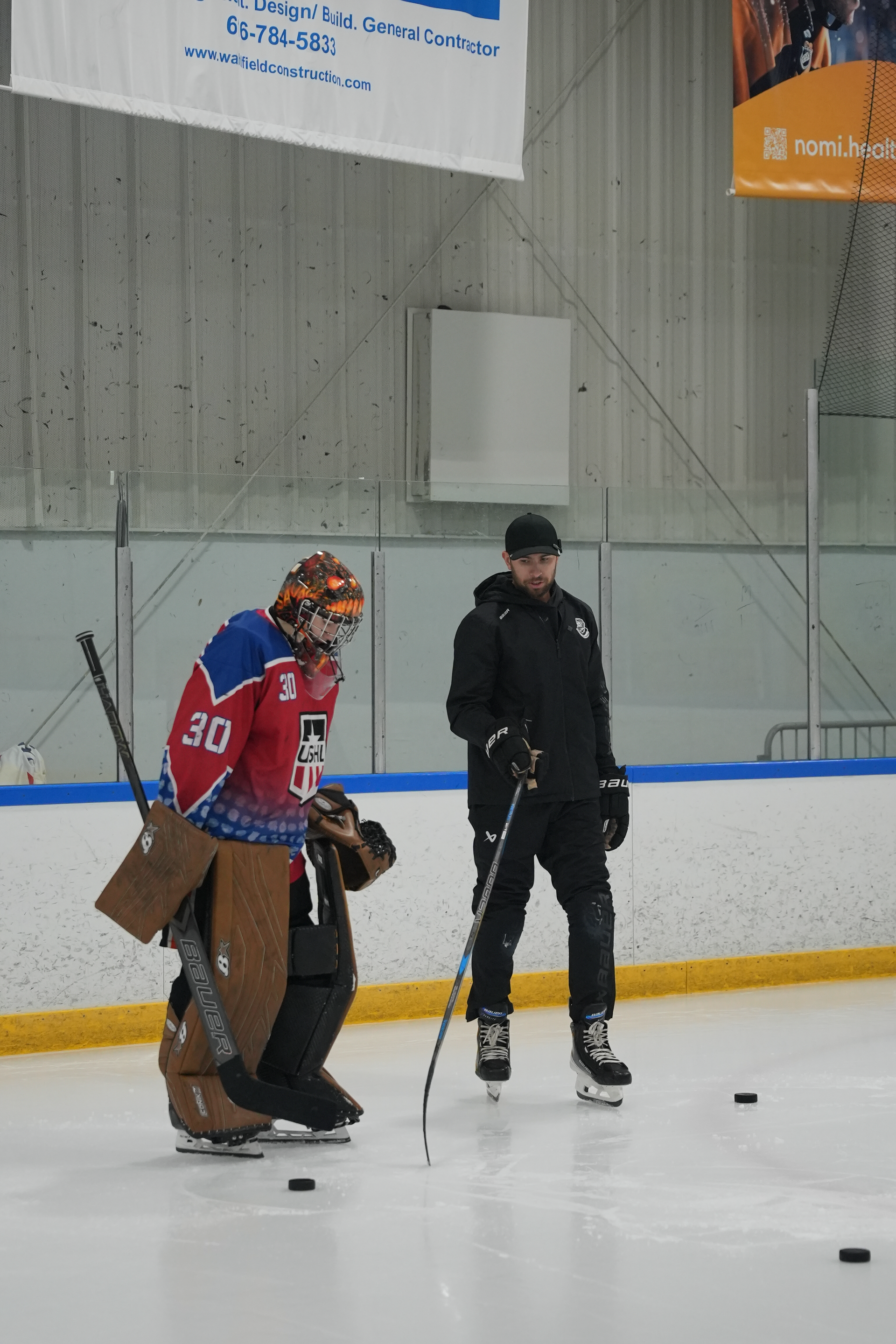
The more specific and detailed your scenarios, the more directly they transfer to game performance. This is a core component of the mental performance work we do with goalies in our Ghost Goaltending programs in the Grand Rapids area.
Step 4: Control the Outcome and Stay Positive
Your brain does not distinguish cleanly between a vividly imagined experience and a real one. This is precisely why you should only visualize success. If a negative outcome creeps into your imagery, stop, reset, and replay the scenario with you making the save.
Over time, this conditions your brain to expect success. It reinforces automatic responses and builds the kind of quiet confidence that holds up in high-pressure situations.
Step 5: Use Visualization Before Games, Practices, and Recovery Days
Patrick Roy visualized before every single game. You should build the same habit.
Take 5 to 10 minutes before stepping on the ice to mentally rehearse key saves and reads. Before practice, run through the drills in your head before you step into the crease. On recovery days, use visualization to keep your reaction patterns sharp even when your body is resting.
Visualization is not just a pre-game ritual. It is a daily training tool that reinforces confidence, sharpens reactions, and keeps your mind prepared for the crease.
The Takeaways
Visualization is one of the highest-leverage tools available to hockey goalies, but only when it is done with intention and consistency.
Engage all five senses to make your imagery realistic. Focus on specific, game-like scenarios you will actually face. Always visualize success to build the confidence and automatic responses that hold up under pressure. And use it every day, not just on game days.
If you train your mind the way Patrick Roy trained his, you will step into every game having already made the saves that matter.
If you are a goaltender in the Grand Rapids area looking for a development program that integrates mental performance training alongside technical and physical development, Ghost Goaltending and Ghost Athletica's hockey training programs are built for exactly that. Learn more at ghostathletica.com.
Dr. Jamie Phillips, DPT Ghost Athletica | Ghost Goaltending | Grand Rapids Hockey Training Byron Center, Michigan | ghostathletica.com