The Biggest Goalie Mistake I See: Majoring in the Minors
Why obsessing over the wrong details is slowing your development, and what to focus on instead
Dr. Jamie Phillips | Ghost Athletica | Grand Rapids, Michigan
As a goalie, you are constantly fine-tuning your game. Your stance, your positioning, your reactions. But are you actually focused on the right things?
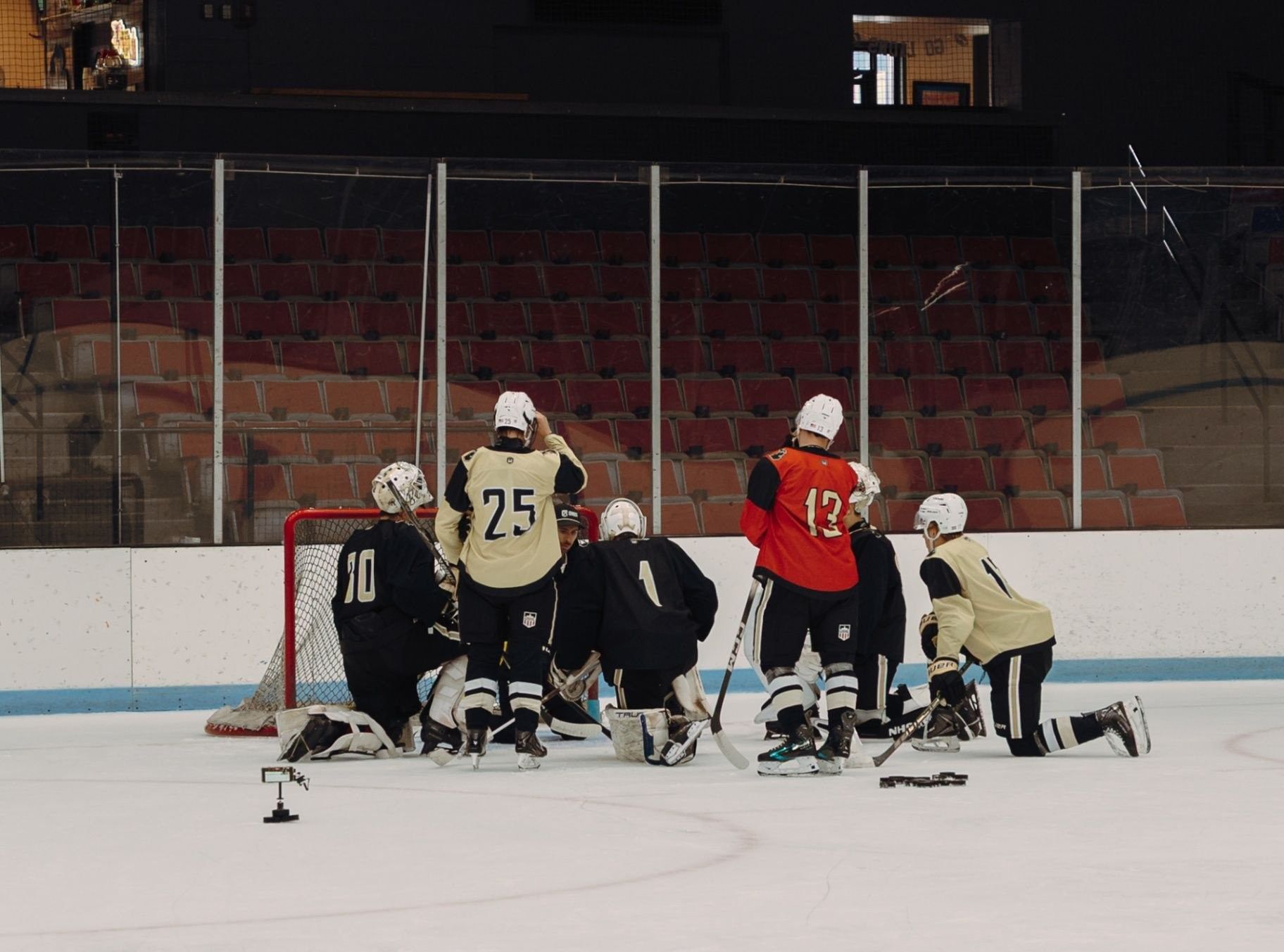
Too many goalies get caught up in small details that do not move the needle, while ignoring the big-picture habits that truly drive development. This pattern shows up constantly in the goalies I work with across Grand Rapids and through the Elite Goalie Method program.
It is called majoring in the minors. And it is one of the most common development mistakes I see at every level.
What Does "Majoring in the Minors" Mean?
It is what happens when goalies obsess over small, low-impact details instead of locking in on the core fundamentals that actually lead to improvement.
Here is what it looks like in practice:
- Worrying about how your glove looks instead of improving hand positioning and puck tracking
- Changing your stance every week instead of committing to and refining what works for your body
- Blaming performance on minor gear adjustments instead of addressing reaction time and positioning
- Spending hours on flashy one-off drills from social media instead of building crease movement, puck tracking, and save execution
When you invest energy in things that do not significantly impact your game, you are not just wasting time. You are actively crowding out the work that matters.
What Elite Goalies Actually Focus On
If you want to take your game to the next level, whether that means earning a junior roster spot, a college offer, or simply outperforming your competition this season in the Grand Rapids area, the path runs through these fundamentals:
Puck Tracking and Vision If you cannot see it, you cannot stop it. The best goalies in the world track the puck from the moment of the shooter's release all the way into their body. This is a trainable skill, and it is one of the highest-leverage things you can develop.
Efficient Crease Movement Great goalies do not move more than they have to. Mastering your edges, getting set early, and taking clean angles are far more valuable than any drill you saw online. Economy of movement is a hallmark of elite goaltending.
Game Situations Over Isolated Drills Technical drills have their place. But if you are not applying them in realistic, game-like situations, they will not hold up when it matters. Training context is everything.
Consistency and Mental Toughness Goalies who control their emotions, reset quickly after mistakes, and maintain a structured mindset win more games. Mental performance is not a soft skill. It is a competitive advantage, and it is something we develop intentionally in our goaltending programs at Ghost Athletica.
Proper Recovery and Preparation Success starts before you hit the ice. Sleep, nutrition, and off-ice training play a massive role in game-day performance. This is a non-negotiable part of elite goaltender development.
The 80/20 Rule Applied to Goalie Development
In business, the Pareto Principle holds that 80 percent of results come from 20 percent of efforts. The same principle applies directly to hockey goaltending development.
80 percent of your improvement comes from the fundamentals: tracking, movement, positioning, and mental preparation.
The remaining 20 percent, or less, comes from minor adjustments, aesthetic details, and flashy drills.
When you identify and commit to the 20 percent of habits that drive 80 percent of your results, your game improves faster, your training becomes more efficient, and you build skills that actually hold up when the puck drops in a real game.
This is the framework behind the goalie-specific training we do at Ghost Goaltending in the Grand Rapids area.
The Takeaways
Stop obsessing over small details that do not impact performance. Focus on tracking, movement, positioning, and game situations. Apply the 80/20 rule to make sure your energy is going toward the skills that actually win games. And train smarter, not just harder.
Major in the majors.
If you are a goaltender in West Michigan looking for a development program built around this philosophy, Ghost Goaltending and Ghost Athletica's hockey training programs are designed exactly for this.
Reach out at ghostathletica.com to learn more.
Dr. Jamie Phillips, DPT Ghost Athletica | Ghost Goaltending | Grand Rapids Hockey Training Byron Center, Michigan | ghostathletica.com