Hockey Performance | Ghost Athletica | Grand Rapids Hockey Training
Baby Got Back: Unlock Your Hockey Power by Training the Posterior Chain
Why the muscles behind you are the most important ones you are probably undertrained, and exactly how to fix that
Dr. Jamie Phillips | Ghost Athletica | Grand Rapids, Michigan
Most hockey athletes love training what they can see.
Quads. Chest. Abs.
But the muscles that make the biggest difference in skating power, stability, and injury prevention? They are all behind you.
Your posterior chain, specifically your glutes, hamstrings, and lower back, is the engine of acceleration, edge control, and postural strength on the ice. If you are not actively and deliberately training it, you are leaving speed, durability, and injury resilience on the table every single season.
This is one of the most consistent gaps we address in the hockey training programs at Ghost Athletica in Grand Rapids, and the performance improvements athletes experience when they close that gap are some of the most noticeable we see.
Why the Posterior Chain Is the Foundation of Hockey Performance
Whether you are a goalie pushing hard across the crease or a forward breaking out of the zone at full speed, every powerful stride is driven by hip extension. That movement originates from three key muscle groups working in coordination.
Glutes: The primary power producers in skating. Every push-off, every crossover, and every explosive first step requires glute activation as the foundation.
Hamstrings: Support stride recovery and deceleration, the often-overlooked return phase of every skating stride that determines how quickly you can reload and push again.
Lower back: Maintains postural integrity and transfers force efficiently through the core between your lower and upper body. Without it, power generated by the legs leaks before it reaches the ice.
Neglecting these muscles does not just limit your performance ceiling. It systematically increases your risk for groin pulls, hamstring strains, hip impingements, and the chronic lower back fatigue that accumulates across a long season and becomes a serious problem by playoff time.
What a Strong Posterior Chain Actually Does for Hockey Athletes
More Explosive Strides
Stronger glutes and hamstrings mean more force applied into the ice with each push. That translates directly to faster acceleration out of stops, more powerful crossovers, and a stride that holds up under fatigue late in games.
Better Stability and Edge Control
A well-trained posterior chain supports dynamic balance and stability in the positions that hockey demands constantly, absorbing contact along the boards, holding edges through tight turns, and maintaining postural control during the unpredictable situations that define real game scenarios.
Injury Prevention Across a Full Season
Weak hamstrings and underactive glutes are consistently implicated in the most common hockey injuries, including groin strains, hip impingements, and lower back breakdown. Training these areas with intention and progressive load reduces the mechanical vulnerability that produces those injuries, particularly late in games and late in seasons when accumulated fatigue is highest.
The Best Posterior Chain Exercises for Hockey Athletes
Deadlifts
The deadlift builds full posterior chain power and teaches the fundamental hip hinge mechanics that underlie nearly every other posterior chain exercise and skating movement pattern. Prioritize form and progressive load over ego. A technically sound deadlift at moderate weight is more valuable than a heavy deadlift with compensated mechanics.
Hip Thrusts
Hip thrusts isolate and strengthen the glutes with a high degree of specificity. The loaded hip extension position is directly relevant to the push-off mechanics of skating. Use a barbell for loaded progressions or bodyweight for earlier training phases and warm-up applications.
Romanian Deadlifts
RDLs target the hamstrings through a deep, controlled eccentric hinge that builds both mobility and eccentric strength simultaneously. This is one of the most important exercises in a hockey athlete's program for hamstring health, injury prevention, and stride recovery mechanics.
Hamstring Curls
Sliders, stability balls, or machines all work here depending on what is available. The goal is developing posterior knee strength and muscular balance between the hamstrings and quads, an imbalance that is extremely common in hockey athletes and that contributes significantly to knee and hip injury risk.
Sled Pushes
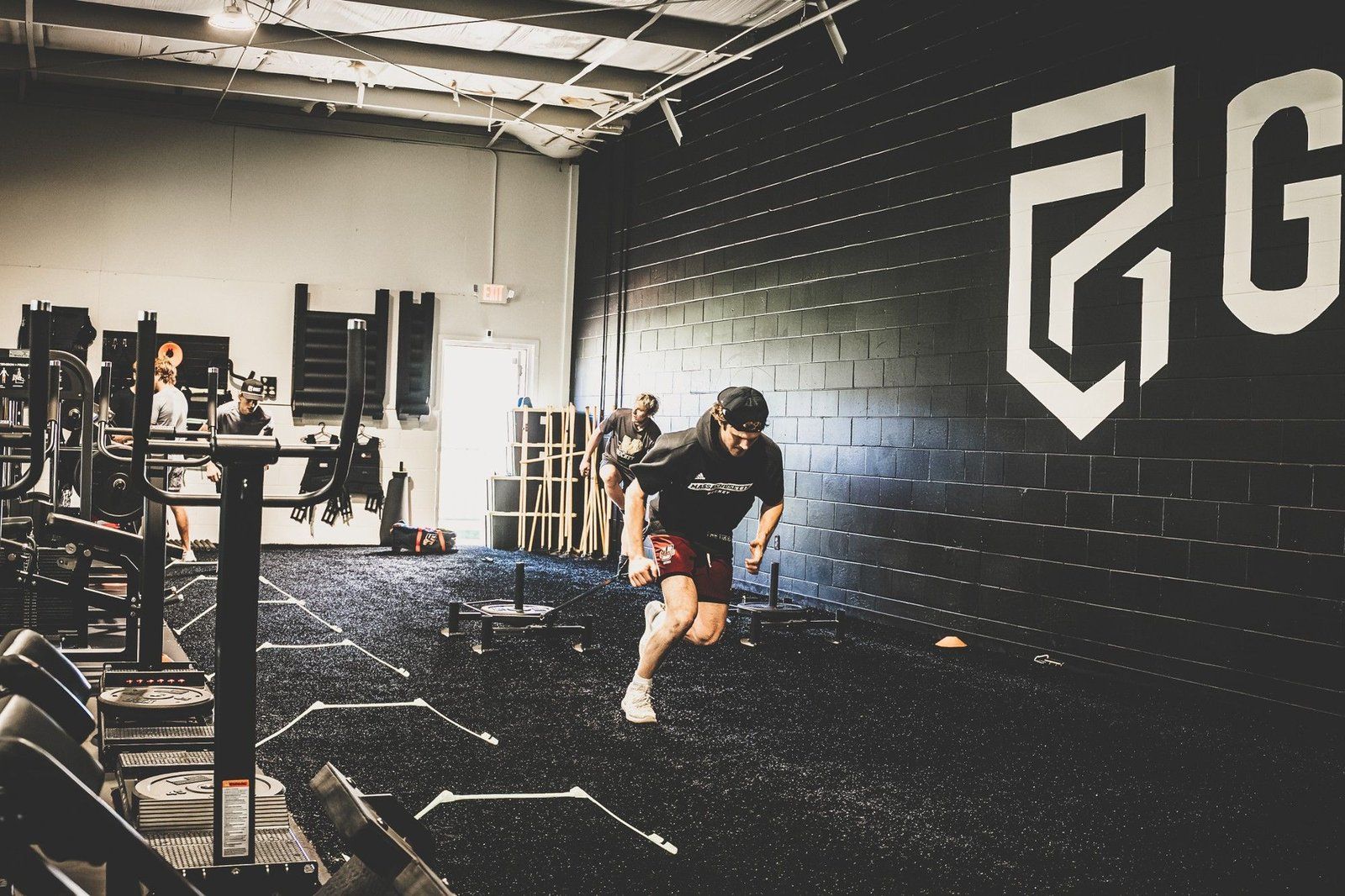
Sled pushes train horizontal force production and hip extension in a pattern that closely mirrors the demand of the skating stride. They are one of the most hockey-specific posterior chain training tools available, and they have the added benefit of being low impact enough to use in-season without significant recovery cost.
How to Prioritize Posterior Chain Training
The most common mistake hockey athletes make with posterior chain training is treating it as supplemental work that gets done if time allows, rather than as a primary training priority.
Build your strength sessions around posterior chain movements. Start with deadlifts or RDLs as your primary lift, add hip thrusts as a secondary movement, and use hamstring curls and sled work as your accessory block. That sequencing ensures the most important muscles get the most training quality rather than getting whatever energy is left at the end of the session.
At Ghost Athletica, posterior chain development is a foundational component of every hockey strength and conditioning program we run for players and goalies across the Grand Rapids area. The athletes who commit to it consistently show up to tryouts and training camps noticeably stronger, faster, and more durable than the version of themselves from the previous season.
If you are a hockey player or goaltender in West Michigan looking for a structured offseason or in-season program that prioritizes the physical qualities that actually drive on-ice performance, learn more at ghostathletica.com.
Dr. Jamie Phillips, DPT Ghost Athletica | Ghost Goaltending | Grand Rapids Hockey Training Byron Center, Michigan | ghostathletica.com