Hockey Performance | Ghost Athletica | Grand Rapids Hockey Training
Top Athletes Swear By This, And It Costs Nothing to Learn
How controlling your breath gives hockey players and goalies a measurable competitive advantage under pressure
Dr. Jamie Phillips | Ghost Athletica | Grand Rapids, Michigan
Breathe in. Breathe out.
When pressure builds in a game, your heart races, your legs get heavy, and your vision narrows. Most athletes respond by focusing on their body, trying to shake out their legs, reset their stance, or push through the discomfort physically.
But one of the most effective tools for recovery, focus, and performance control in those moments is something you are already doing every second of every game.
Your breath.
Controlling your breathing can improve performance in the moment, accelerate recovery between shifts, and regulate your nervous system under competitive stress. It is not a relaxation trick. It is a physiological mechanism, and when trained and applied consistently, it is a genuine competitive advantage.
Why Breathing Affects Everything Else
When your breathing is out of control, the downstream effects are immediate and compounding.
Heart rate spikes beyond what the work demands. Decision-making slows because your brain is operating in a threat response rather than a performance state. Muscles tighten as your body prepares to protect itself rather than perform. Confidence erodes because the physical sensations of being dysregulated feel like weakness rather than something you can manage.
When you take conscious control of your breath, you interrupt that cascade.
Controlled breathing can regulate heart rate during high-stress moments, sharpen focus under competitive pressure, accelerate recovery between shifts or saves, and reduce anxiety and tension in the moments that matter most.
This is not theoretical. It is built on straightforward physiology. When you slow your breathing, particularly through nasal breathing, you activate your parasympathetic nervous system, your body's built-in reset mechanism. That activation is something you can initiate deliberately, from the bench, in the crease, or during a stoppage in play.
Two Breathing Techniques Every Hockey Athlete Should Know
Nose Breathing Between Shifts and During Breaks
Most athletes default to mouth breathing during and after intense efforts, which is understandable when you are working hard. But during low-intensity moments, between shifts, during stoppages, or while waiting in the box, switching to nasal breathing produces meaningful physiological benefits.
Nasal breathing improves oxygen delivery efficiency to working muscles, slows heart rate more effectively than mouth breathing, and promotes better carbon dioxide tolerance, which is directly related to endurance and the ability to recover quickly between high-intensity efforts.
The practice: After a shift or a hard rep, inhale slowly through your nose for 4 to 5 seconds, then exhale through your nose or mouth for 6 to 8 seconds. Repeat 4 to 6 times. The extended exhale is the key variable. It is what activates the parasympathetic response and brings your system down.
Box Breathing for High-Pressure Situations
Box breathing is used consistently by elite athletes, military special operations personnel, and high-performance professionals across disciplines precisely because it works quickly and reliably under pressure.
The pattern is simple and repeatable:
- Inhale for 4 seconds
- Hold for 4 seconds
- Exhale for 4 seconds
- Hold for 4 seconds
Repeat for 1 to 2 minutes, or as many cycles as the situation allows. Use it before a shift when nerves are running high, before a big save situation, or immediately after a mistake to reset your nervous system before the next play develops.
The value of box breathing is not just that it calms you down. It is that it gives you something specific and controllable to do in a high-pressure moment rather than just trying to will yourself into composure.
Why This Matters Specifically for Goalies and Skaters
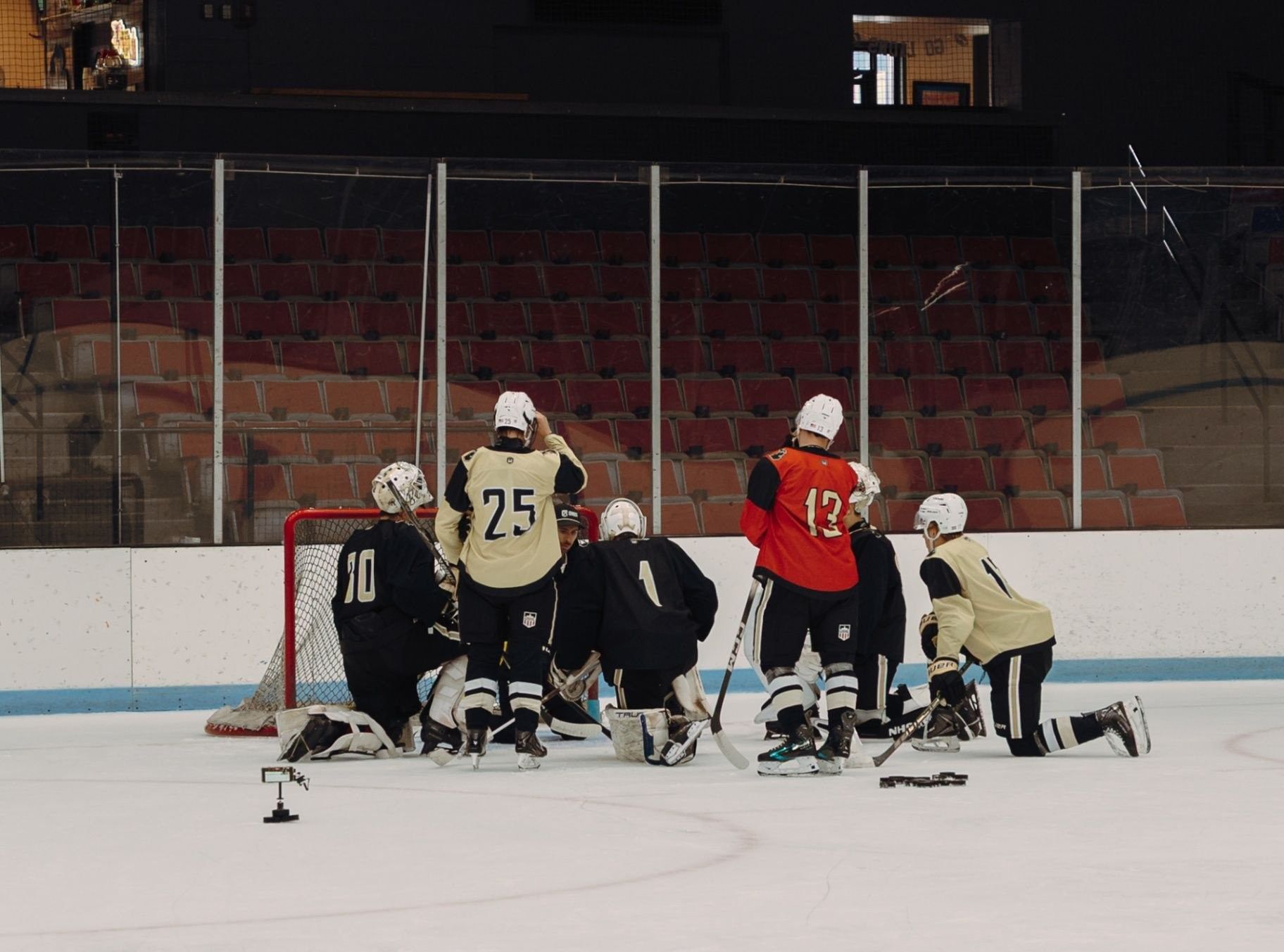
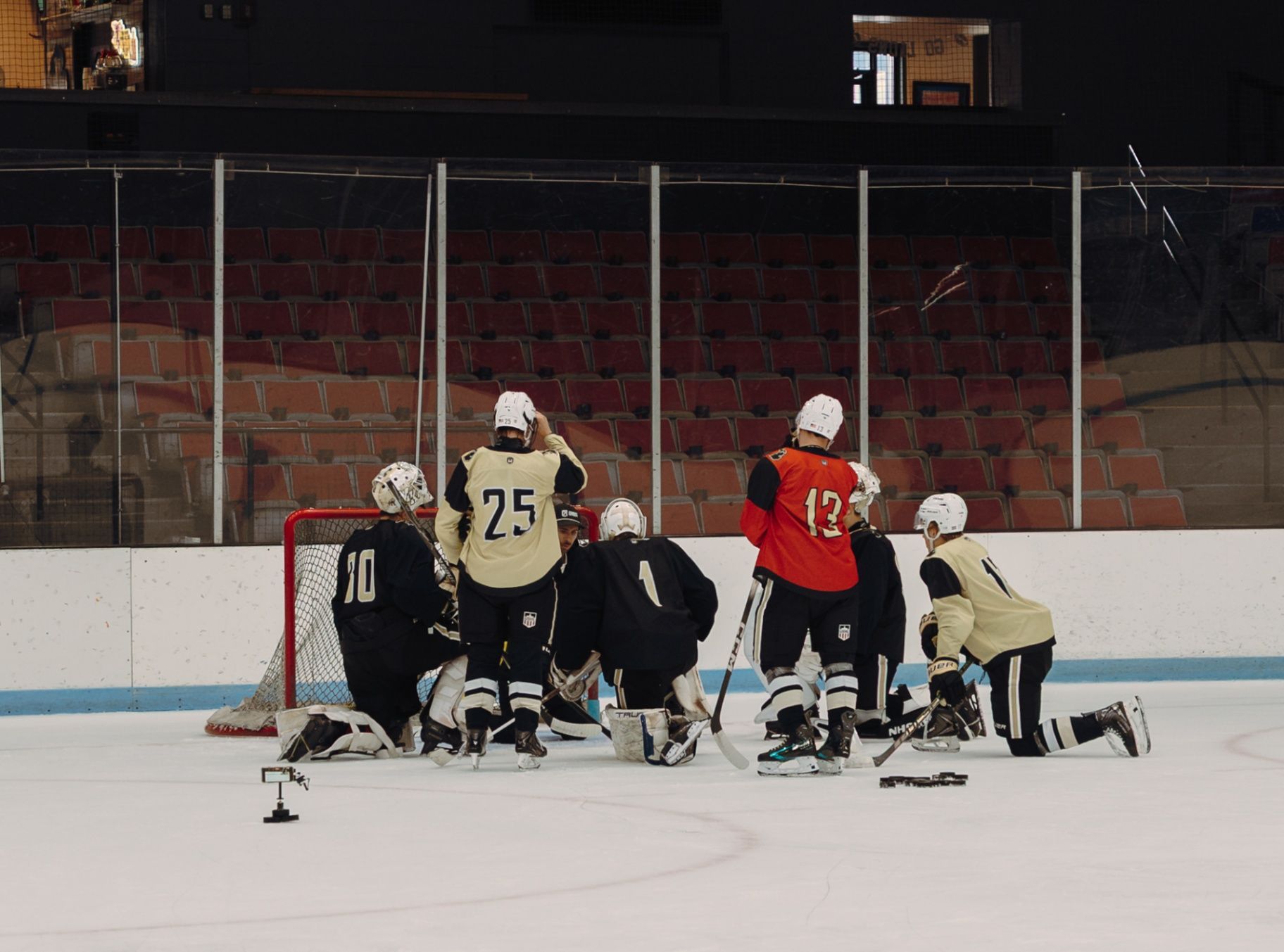
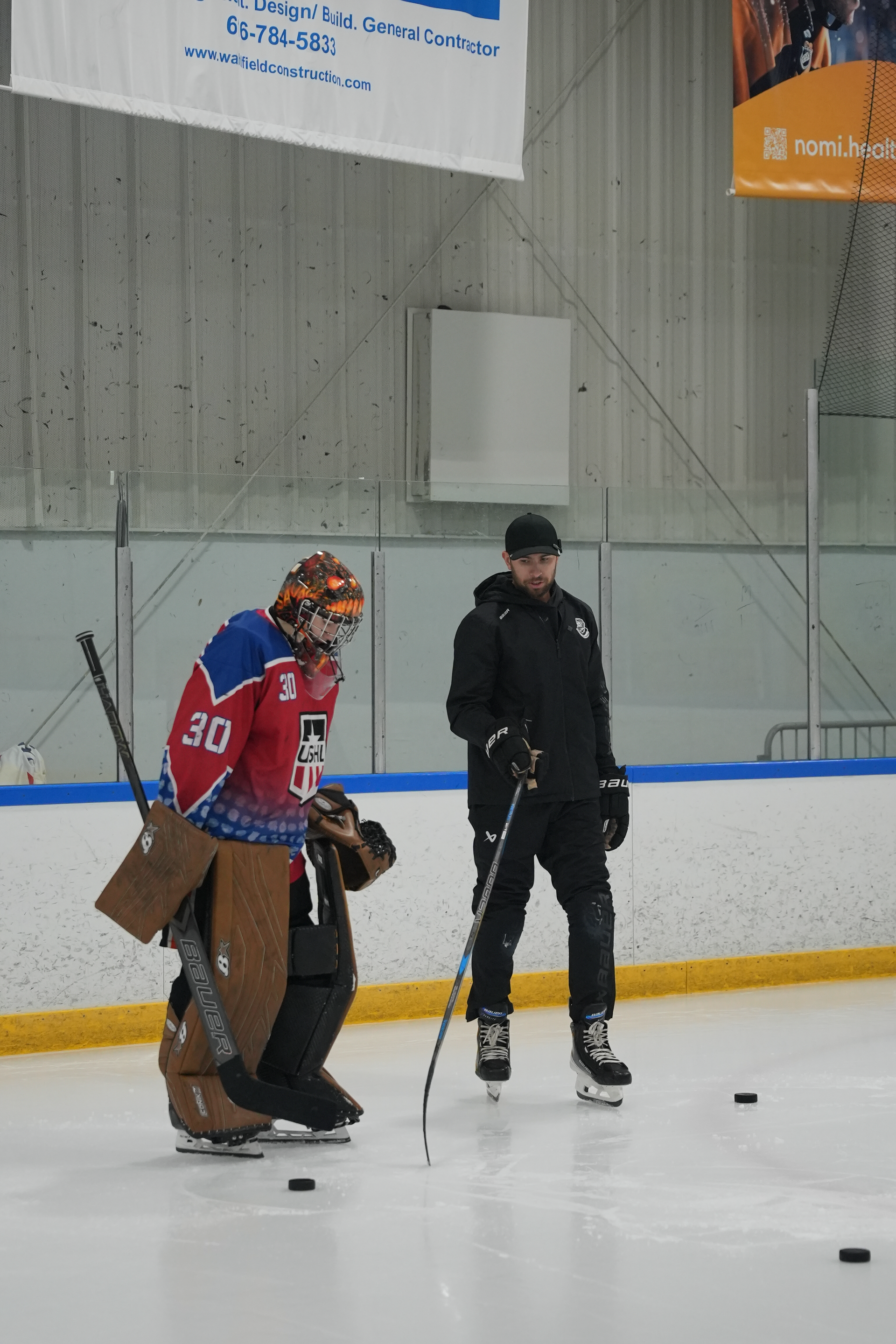
For goalies: Controlled breathing between whistles keeps your nervous system balanced across the full arc of a game. It reduces over-arousal, which narrows your visual field and slows your reaction time, and it helps you maintain the calm, locked-in state that elite goaltending requires from the first shift to the last. This is a core component of the mental performance work integrated into our goalie training programs at Ghost Athletica.
For skaters: Intense shifts elevate heart rate rapidly, and incomplete recovery between shifts compounds across a game. Deliberate breath control on the bench and during stoppages brings your system down faster than passive rest alone, meaning you are more physically and mentally recovered when your line goes back over the boards.
How to Build Breathing Control as a Trainable Skill
Like any other performance skill, breathing control improves with deliberate practice. Athletes who only try to use these techniques in high-pressure game situations without having practiced them in lower-stakes environments find that the skill is not reliable when they need it most.
Build the habit in practice first. Use nose breathing during warm-ups and lower-intensity drills. Practice box breathing before practice starts and between reps during conditioning work. The more automatic the pattern becomes in familiar settings, the more available it will be when the game is on the line and the pressure is real.
Five minutes of intentional breathing practice per day, whether as part of a pre-skate routine or before bed, builds the foundation for reliable performance under pressure.
If you are a hockey player or goaltender in the Grand Rapids area looking for a development program that integrates mental performance tools like breathing control alongside physical training and technical skill development, Ghost Athletica's hockey training programs are built for exactly that. Learn more at ghostathletica.com.
Dr. Jamie Phillips, DPT Ghost Athletica | Ghost Goaltending | Grand Rapids Hockey Training Byron Center, Michigan | ghostathletica.com