How to Stop Flinching at Pucks and Build Confidence in the Crease
Why goalies close their eyes on shots, and the step-by-step process to fix it for good
Dr. Jamie Phillips | Ghost Athletica | Grand Rapids, Michigan
If you have ever flinched or closed your eyes when facing a shot, you are not alone. It is one of the most common challenges goalies at every level deal with, from youth hockey in Grand Rapids all the way through junior and college programs.
The good news is that flinching is a habit. And habits can be broken with the right approach.
Here is exactly why it happens, and what to do about it.
Why Goalies Flinch or Close Their Eyes on Shots
Flinching is not a character flaw. It is a natural response to the demands of the position. Understanding the root cause is the first step toward fixing it.
Fear Response Your brain's threat detection system treats a puck moving toward your face as danger. The flinch is an automatic protective mechanism, not a sign of weakness. It just needs to be trained out through deliberate exposure.
Lack of Confidence in Equipment If you have any doubt about whether your mask, chest protector, or gloves are truly protecting you, your body will hesitate. Uncertainty in your gear translates directly into hesitation in your movements.
Poor Puck Tracking Habits When you are not locking onto the puck's full trajectory from release to save, your brain fills the gap with anxiety. Tracking the puck properly gives your nervous system something concrete to respond to, which replaces the flinch reflex with an action reflex.
Fear of Injury A previous experience of taking a puck to an unprotected area can create a conditioned hesitation response that lingers long after the injury has healed. This is common and completely addressable with progressive exposure work.
Lack of Sufficient Repetition If you have not faced enough shots in a controlled, low-stakes environment, your nervous system never gets the chance to normalize the experience. Confidence under pressure is built through accumulated, intentional reps.
Five Steps to Stop Flinching for Good
Step 1: Build Trust in Your Equipment
Confidence starts with knowing your gear actually has your back. Check that your mask fits securely with no movement, your chest protector covers all key impact areas, and your gloves feel reliable and broken in.
If any part of your setup creates doubt, address it before you try to address the flinch. You cannot build mental confidence on a physical foundation you do not trust.
Step 2: Start with Slow, Controlled Drills
Do not begin by facing full-speed shots and willing yourself not to flinch. That approach rarely works and often reinforces the habit.
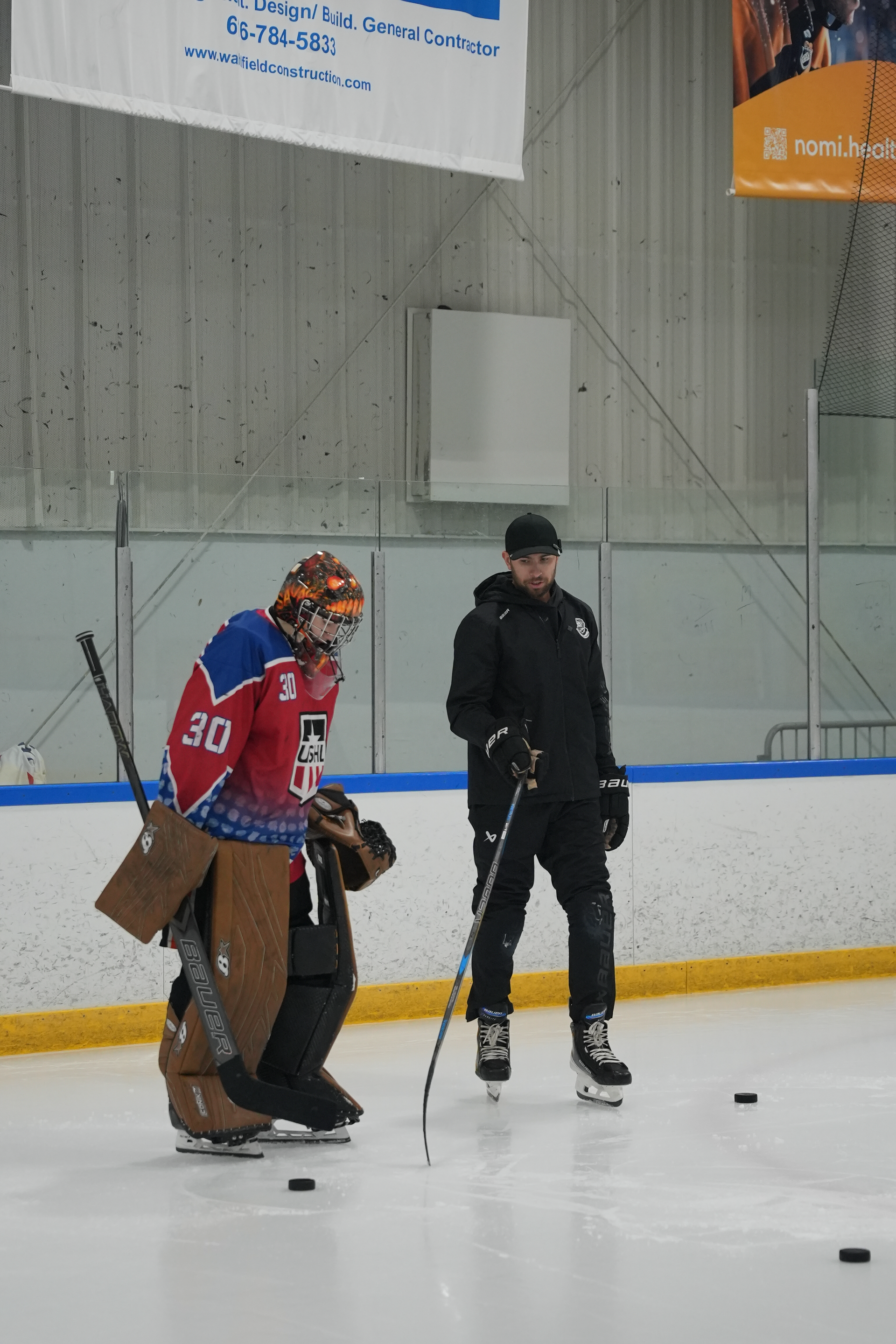
Instead, start with tennis balls, foam pucks, or light wrist shots in a controlled setting. The goal at this stage is not to make highlight-reel saves. It is to train your eyes to stay open and your body to stay calm. Gradually increase speed and intensity only as your comfort level earns it.
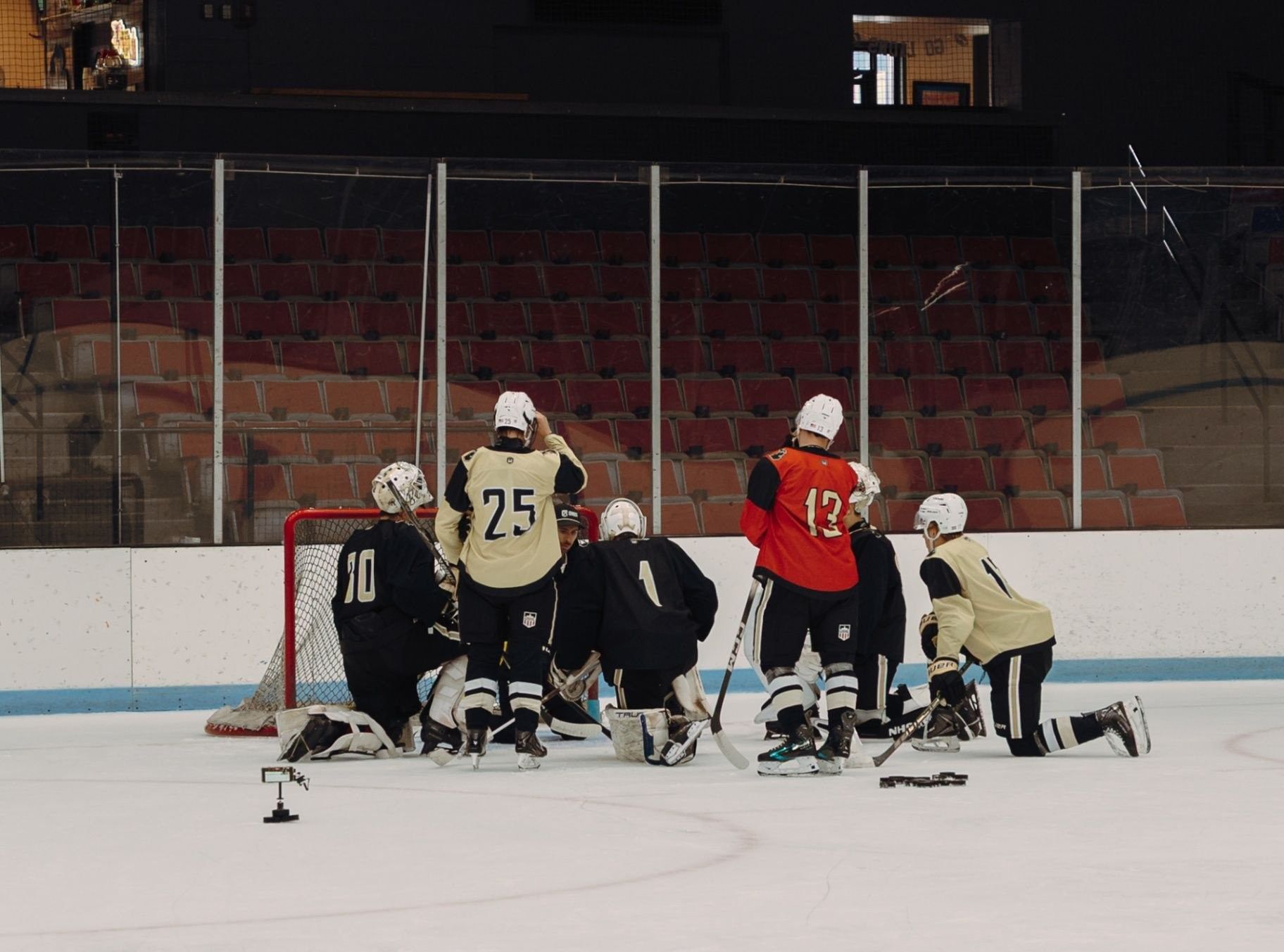
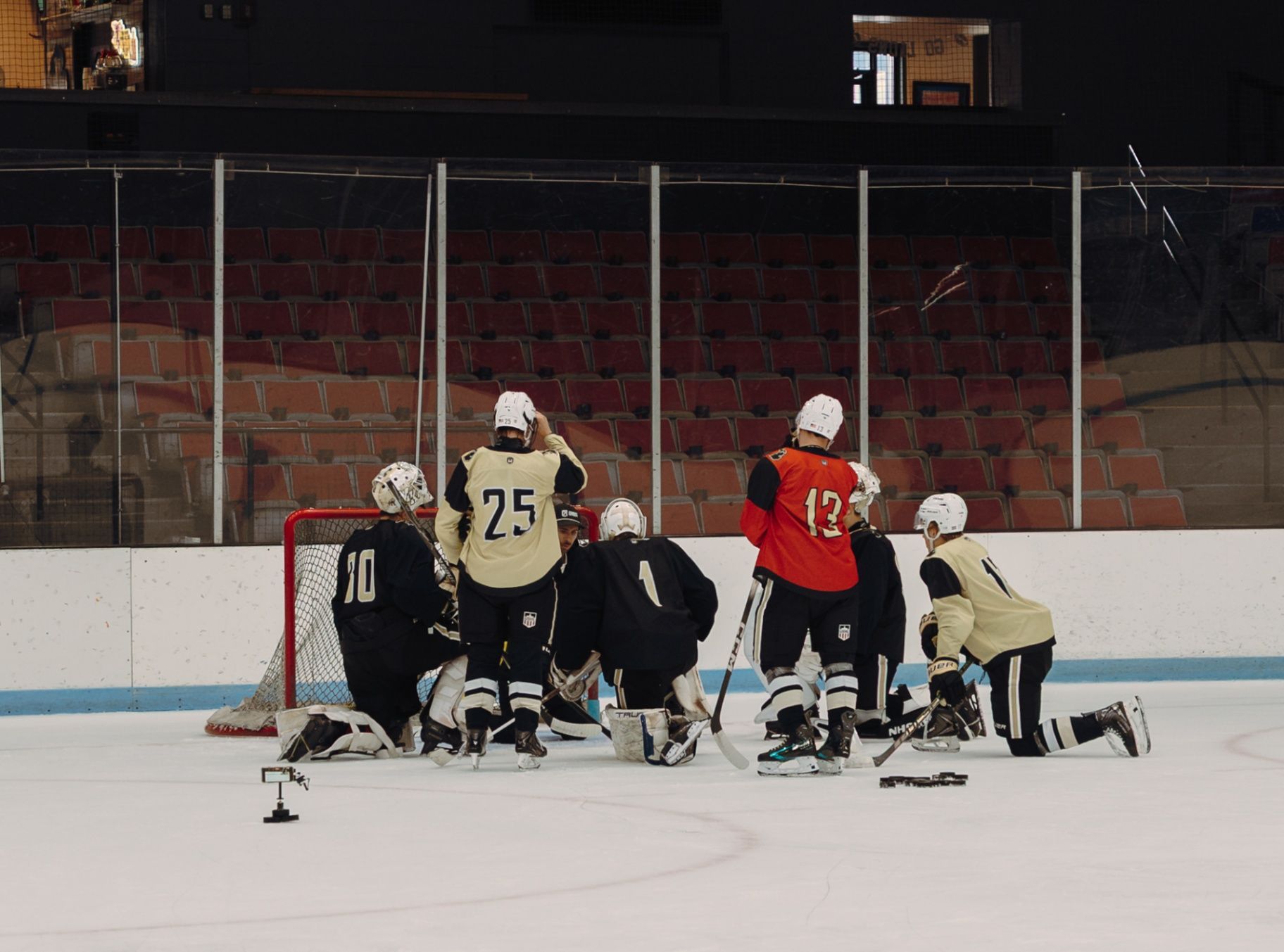
This progression-based approach is foundational to the goalie development work we do at Ghost Goaltending in the Grand Rapids area.
Step 3: Develop Your Puck Tracking
Tracking is one of the highest-leverage skills a goalie can develop, and it is also one of the most direct antidotes to flinching. When your eyes are actively following the puck from the shooter's stick release all the way to your body or glove, your brain is engaged in a task. That task-focus naturally displaces the fear response.
Soft toss drills, where a coach or teammate tosses pucks from varying angles at moderate speed, are an excellent starting point for building tracking skill in a low-threat environment.
Step 4: Use Visualization to Rewire Your Response
As we covered in a previous post on mental imagery, visualization is one of the most powerful tools available to goalies. Applied specifically to flinching, it works like this.
Spend time each day imagining shots coming toward you and seeing yourself tracking the puck calmly, staying open, and making the save with confidence and control. Picture this in as much sensory detail as possible. Your brain does not distinguish cleanly between a vividly imagined rep and a real one, which means consistent visualization actively rewires your default response to incoming shots.
Step 5: Gradually Increase Intensity
Once controlled drills feel genuinely comfortable, begin introducing harder, more game-realistic scenarios. The key word here is gradually. Skipping steps in this progression is one of the most common mistakes goalies make when trying to break the flinch habit.
Build the foundation of calm and control first. The speed and intensity can always be added once the habit is properly replaced.
The Takeaways
Flinching is common, understandable, and fixable. The path forward is straightforward but requires patience and consistency.
Trust your gear so your body has a solid foundation to work from. Start slow and earn your way into harder drills through demonstrated comfort. Master puck tracking so your eyes have a job to do on every shot. Use visualization to train your brain between ice sessions. And build confidence incrementally through progressive, intentional repetition.
With consistent effort, flinching stops being your default response. Calm, focused tracking takes its place.
If you are a goaltender in the Grand Rapids area working through this or any other development challenge, Ghost Goaltending and Ghost Athletica's hockey training programs offer goalie-specific coaching built around exactly this kind of intentional, progressive development. Learn more at ghostathletica.com.
Dr. Jamie Phillips, DPT Ghost Athletica | Ghost Goaltending | Grand Rapids Hockey Training Byron Center, Michigan | ghostathletica.com