Hockey Performance | Ghost Athletica | Grand Rapids Hockey Training
Why Your Skating Speed Is Lacking, And How to Fix It Off the Ice First
The proven connection between sprint mechanics and on-ice acceleration, and what to do about it
Dr. Jamie Phillips | Ghost Athletica | Grand Rapids, Michigan
In hockey, the ability to accelerate out of a stop, win the first three strides to a puck, execute a clean T-push, or change direction under pressure can be the entire difference between winning a puck battle and watching it happen from a step behind.
Most players try to fix their skating speed by skating more. And while ice time matters, there is a foundational layer that gets skipped almost universally: off-ice sprint mechanics.
Training how you run before you train how you skate is one of the highest-leverage adjustments a hockey athlete can make, and the research backs it up.
The Link Between Sprinting and Skating
Skating and sprinting are not the same movement. But they share enough foundational mechanics that improvements in one consistently transfer to the other.
Research examining highly trained teenage ice hockey players found that off-ice performance measures including 30-meter sprints, agility tests, and standing long jumps had significant correlations with on-ice skating force and velocity characteristics. Sprint ability, agility, and power output off the ice are moderately to strongly associated with skating performance on it.
That means the work you do in the gym and on the track this offseason has a direct and measurable return when you get back on the ice. This is a principle we apply consistently in our hockey training programs at Ghost Athletica in Grand Rapids.
The Sprint Mechanics That Transfer Most Directly to Skating
Posture
Maintain a slight forward lean initiated from the ankles, not the waist, with a neutral spine throughout. This alignment is the same postural demand that produces an efficient skating stance, and athletes who habitually stand upright when they run almost always have the same problem when they skate.
Shin Angle
At push-off, aim for approximately a 45-degree shin angle to maximize horizontal force production. This is directly analogous to the push-off mechanics of a skating stride. Athletes who are too upright at push-off in sprinting are losing the same force they are losing on the ice, and fixing it in one context tends to improve it in the other.
Arm Swing
Drive the arms forward and backward in full, controlled synchronization with your leg movements. Arm swing contributes to balance, rhythm, and propulsion in both sprinting and skating. Restricted or crossed arm mechanics are a common technical flaw that limits top-end speed and first-step quickness in both contexts.
Hip Extension
Fully extend the hips at the back of each stride to generate maximum power output. Incomplete hip extension is one of the most common technical deficiencies in youth and junior hockey athletes, and it is almost always present in sprinting before it shows up as a problem on the ice.
What Proper Sprint Mechanics Produce on the Ice
Enhanced acceleration: Efficient off-ice sprint mechanics translate directly into quicker starts, cleaner first strides, and better separation from opposing players in the first three to five steps.
Improved force application: Optimal posture and push-off positioning allow for greater force transfer into the ice on every stride, which means faster top-end speed and more powerful crossovers.
Injury prevention: Proper sprint technique distributes load through the correct structures and reduces the compensatory movement patterns that produce hamstring strains, groin pulls, and hip injuries over the course of a long season.
How to Integrate Sprint Mechanics Into Your Hockey Training
Sprint Drills Targeting Start Technique
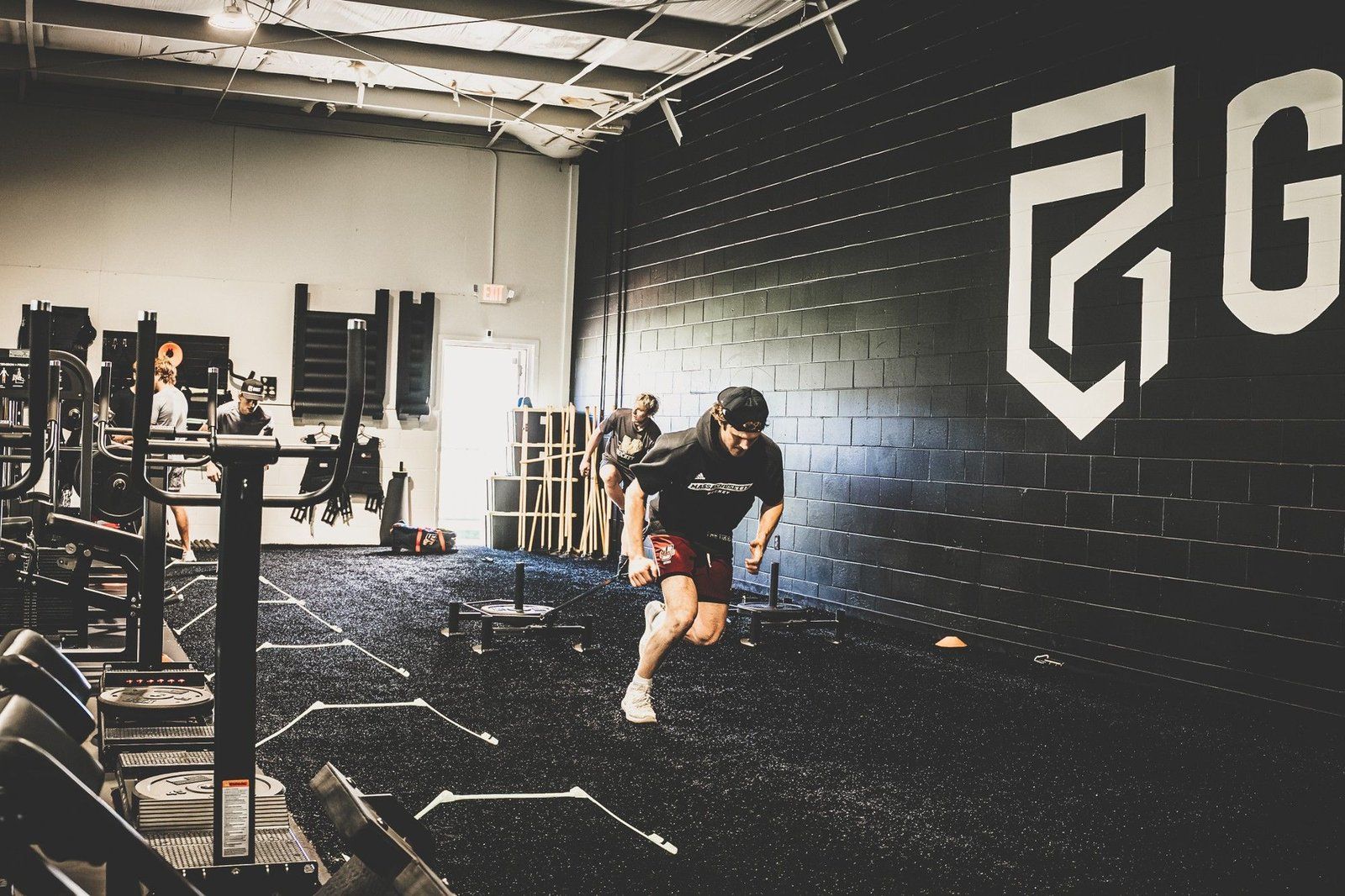
Resisted sprints using a sled or band teach the forward lean and horizontal force application that produce explosive first steps. Wall drills and A-skip progressions build the postural and coordination patterns that underlie clean sprint mechanics before adding full-speed running.
Start with technical drills at submaximal speeds before progressing to full acceleration work. Mechanics that break down at speed were never really there to begin with.
Lower-Body Strength Training
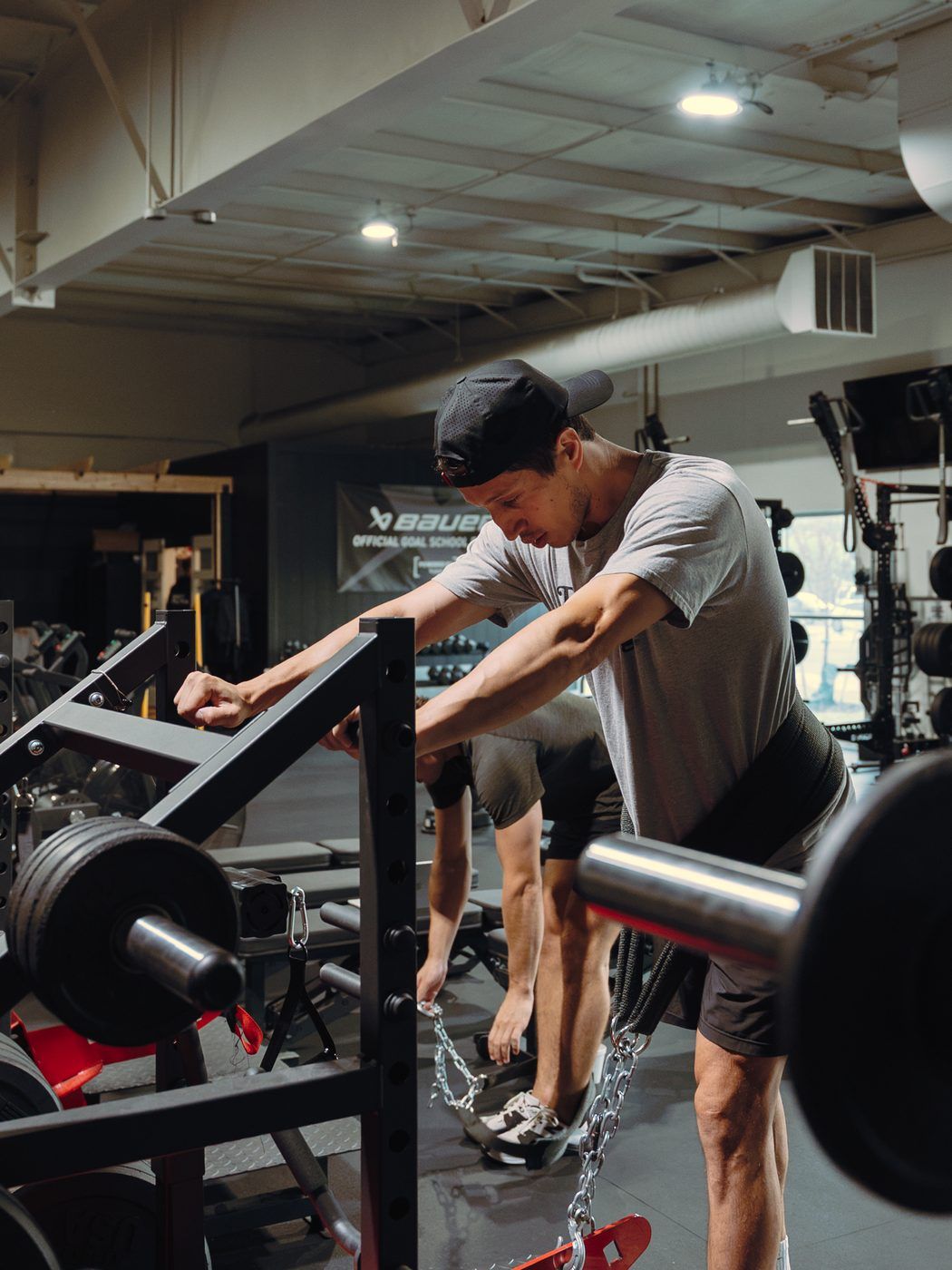
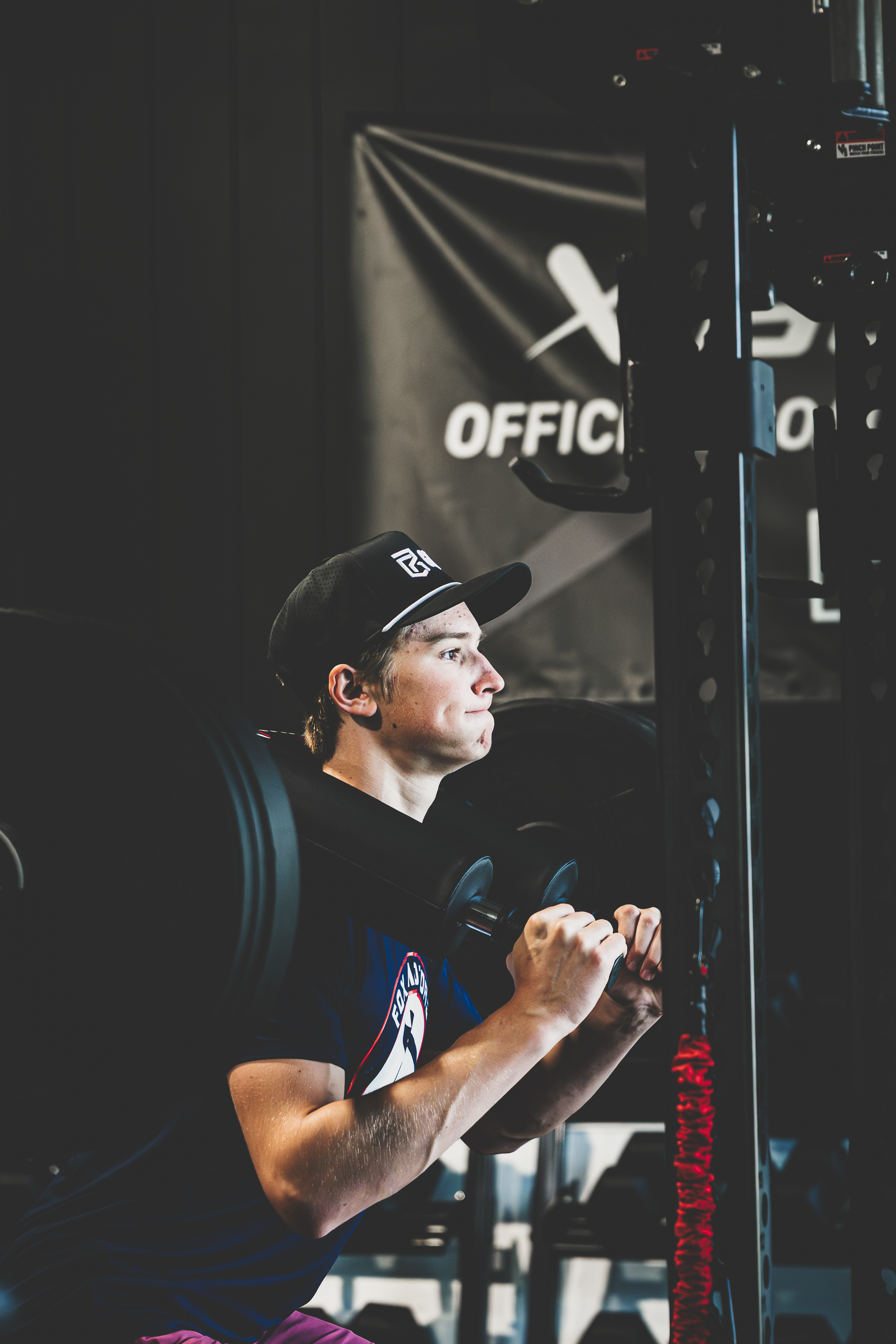
The force production that drives sprint acceleration comes from the same muscle groups that drive skating. Squats, lunges, split squats, and hip hinge variations build the lower-body power that makes better mechanics actually fast rather than just technically correct.
Strength is the foundation. Mechanics determine how efficiently that strength gets applied.
Plyometrics
Bounding, hopping, and lateral plyometric drills develop the explosive, elastic strength that produces quick direction changes, reactive first steps, and the kind of acceleration that cannot be trained with slow, heavy lifts alone.
Lateral bounds and single-leg hops are particularly relevant for hockey because they train power in the frontal plane, the direction that skating acceleration actually occurs in, rather than purely in the sagittal plane that most traditional strength exercises emphasize.
Putting It Together
Skating speed is not developed only on the ice. It is built in the gym, on the track, and in the technical details of how you move off the ice before you ever lace up your skates.
Athletes who address sprint posture, shin angle, arm mechanics, and hip extension off the ice consistently show up to the ice with better first-step quickness, more powerful crossovers, and a stride that holds up under fatigue because it is mechanically sound rather than reliant on effort alone.
This is a core component of the offseason hockey training programs at Ghost Athletica, serving players and goalies across Grand Rapids and West Michigan. If you are looking for a structured program that develops on-ice speed from the ground up, learn more at ghostathletica.com.
Dr. Jamie Phillips, DPT Ghost Athletica | Ghost Goaltending | Grand Rapids Hockey Training Byron Center, Michigan | ghostathletica.com