Vision Training: The Missing Piece in Your Hockey Game Prep
Why training your eyes is just as important as training your edges, and exactly how to start
Dr. Jamie Phillips | Ghost Athletica | Grand Rapids, Michigan
You train your speed. Your strength. Your hands. Your edges.
But when was the last time you trained your eyes?
Vision is one of the most consistently overlooked tools in hockey development, and yet it plays a direct role in nearly every critical decision you make on the ice.
- Tracking a puck through traffic
- Picking up a teammate on the weak side before the play develops
- Reacting to a rebound or deflection in real time
- Recognizing forechecking pressure before it arrives
The best players and goalies do not just see the game better than everyone else. They process it faster. And that starts with training visual function the same way you train movement, deliberately and consistently.
What Is Sports Vision Training?
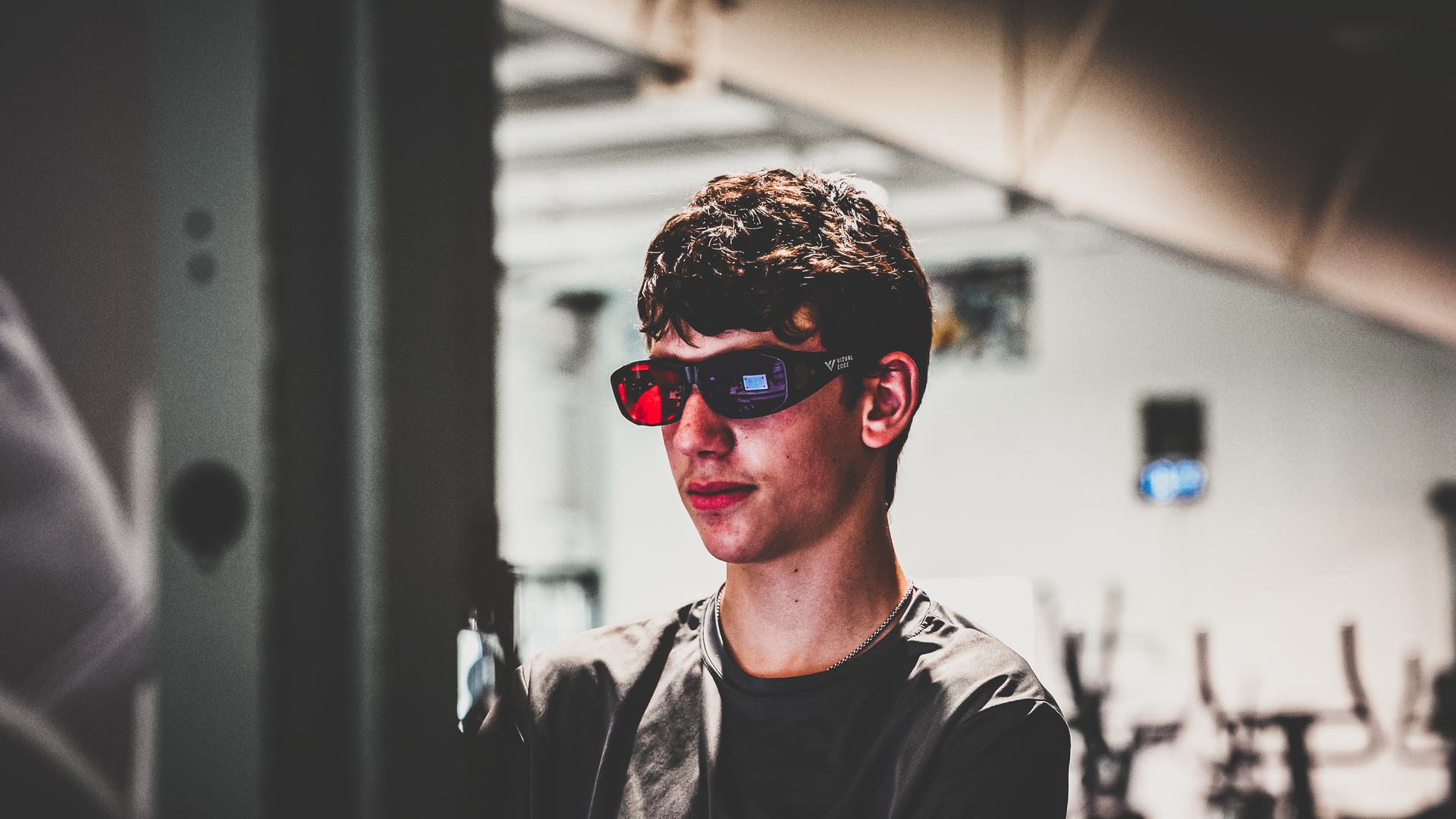
Sports vision training is a structured system of drills and exercises designed to improve how your eyes work with your brain to interpret, track, and respond to visual information during athletic performance.
The specific skills it develops include:
Visual acuity: How clearly and sharply you see the puck, players, and play developing around you.
Peripheral awareness: Your ability to process what is happening outside your direct line of sight, which in hockey is constantly.
Depth perception: Accurately judging distances and spatial relationships at game speed.
Eye tracking and coordination: Keeping your eyes on the right thing at the right moment, particularly through traffic and deflections.
Visual reaction time: The speed at which your visual system detects and responds to new information.
These are not soft skills or nice-to-have extras. They are trainable performance variables that directly affect how you play. Research confirms that targeted visual training improves reaction time, decision-making speed, situational awareness, and sport-specific visual processing.
Four Vision Drills to Add to Your Training Routine
These can be done at home or incorporated into your off-ice prep. None of them require specialized equipment to get started.
Brock String Training
A string with beads spaced at intervals teaches your eyes to improve focus, depth perception, and convergence, which is your eyes' ability to work together to track a single moving object.
Three to five minutes of Brock string work daily can have a meaningful impact on puck-tracking clarity. This is one of the foundational tools used in formal sports vision programs.
Eye Jumps (Saccades)
Pick two fixed points, whether your own hands, wall targets, or objects in the room. Rapidly shift your visual focus between them without moving your head.
This trains eye speed and tracking consistency, which are directly relevant to reading a play developing across the ice or tracking a shot through a screen.
Scanning Drills
Have a partner or coach flash numbers, letters, or colors in your peripheral vision while you maintain focus on a central task such as stickhandling or balancing on one foot.
This mimics the actual cognitive demand of hockey, processing peripheral information while staying locked into your primary task. It is one of the most game-realistic vision training tools you can use off the ice.
Near-Far Focus Switching
Alternate your visual focus between a close object and a distant one in rapid succession. This directly mimics the demand of tracking an incoming puck while simultaneously reading the play developing further up the ice.
Five to ten minutes of structured vision work a few times per week is enough to produce measurable improvements in in-game performance. The barrier to entry is low. The return is significant.
Want Formal Sports Vision Assessment and Training?
If you want to take this beyond home drills and into a genuine clinical sports vision program, I send all of my goalies to Dr. Akerman at Milton Sports Vision.
This is not a paid endorsement. I refer athletes there because working with him has been genuinely valuable, and the results I have seen in the goalies and players who have gone through formal sports vision training speak for themselves. If you are serious about closing the gap between your physical development and your visual processing, a consultation with a sports vision specialist is worth pursuing.
Vision training is not a replacement for your current hockey development work. It is the piece that makes everything else work better. Add it to your prep and you will be surprised how quickly the game starts to slow down.
If you are a hockey player or goaltender in the Grand Rapids area looking to build a complete off-ice performance program that covers strength, recovery, mental performance, and the details most programs miss, Ghost Athletica's hockey training programs are built for exactly that. Learn more at ghostathletica.com.
Dr. Jamie Phillips, DPT Ghost Athletica | Ghost Goaltending | Grand Rapids Hockey Training Byron Center, Michigan | ghostathletica.com