Hockey Performance | Ghost Athletica | Grand Rapids Hockey Training
Rotational Power: The Missing Link in Your On-Ice Explosiveness
Why training your core for rotation, not just stability, is one of the highest-leverage things a hockey player can do
Dr. Jamie Phillips | Ghost Athletica | Grand Rapids, Michigan
Most hockey players train their core by doing crunches or planks.
That is not how the core functions in hockey.
Whether you are ripping a shot from the circle, throwing a stretch pass under pressure, or absorbing contact at the blue line, hockey is a rotational sport. The core is not just a stability structure. It is the engine that transfers power between your lower and upper body. And if that transfer is weak or untrained, you are leaving significant performance on the ice regardless of how strong your legs are.
This is one of the most consistently underdeveloped areas we address in hockey training at Ghost Athletica in Grand Rapids, and the athletes who fill this gap tend to see some of the most noticeable improvements in their on-ice output.
Why Rotational Power Matters, For Players and Goalies
For Skaters
Every powerful shot or hard pass starts with your legs. But the transfer of that force from your lower body into your hands and stick happens through your torso. If that connection is weak or uncoordinated, you lose energy between your base and your blade on every single attempt.
Training rotational power produces:
- Harder, more accurate shots with less visible effort
- Passes with greater velocity and improved directional control
- Better outcomes in puck battles by absorbing and redirecting force through the torso rather than bracing against it
For Goalies
Rotation is present in goaltending constantly, even when it is more subtle than what you see in a skater's shot mechanics.
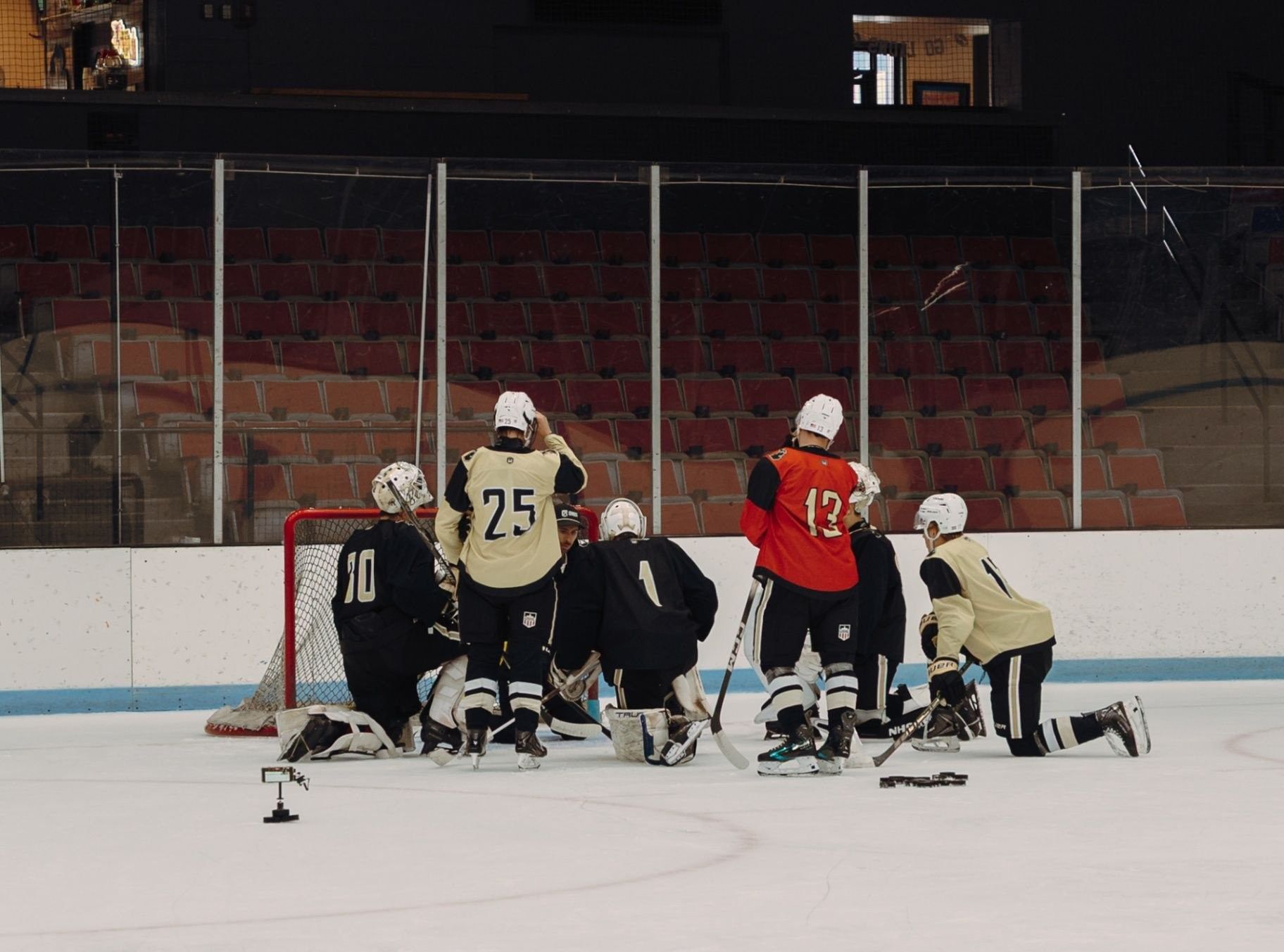
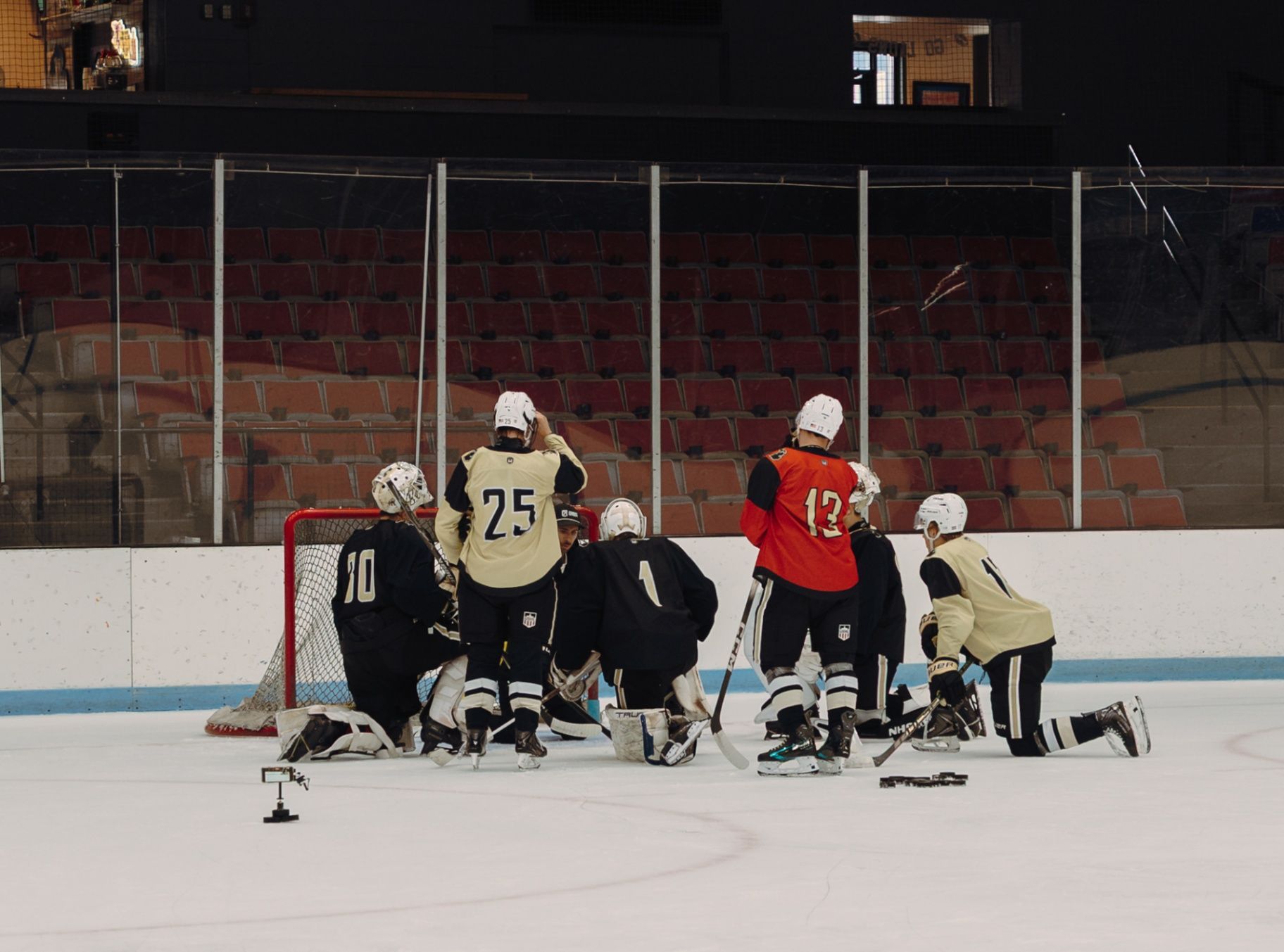
Goalies rely on torso rotation to snap into T-pushes and lateral recoveries with power and timing, to track pucks on wide lateral plays without losing depth or angle, to clear rebounds with controlled force rather than just passive deflection, and to maintain balance and postural integrity under dynamic load during traffic situations.
A goalie with a weak or untrained rotational core does not just lose power. They lose control in the moments that matter most.
There is also an argument that goalies need rotational core training even more than skaters do. The butterfly position significantly reduces the contribution of lower extremity musculature to power development and stabilization. The torso has to pick up more of that load, and if it has not been trained for it, the gap shows up in recovery speed, rebound control, and lateral explosiveness.
What the Research Shows
Studies consistently demonstrate that training rotational strength and power through dynamic, multi-joint movements produces better sports performance outcomes, particularly in high-velocity tasks like shooting, throwing, and swinging.
Hockey-specific research supports the connection between core rotational power and increased shot velocity, as well as improved trunk control during gameplay when athletes are reacting to unpredictable situations rather than executing planned movements.
The Best Ways to Train Rotational Power for Hockey
Medicine Ball Rotational Throws
Medicine ball work is the most direct way to train rotational power because it allows you to move at actual athletic speeds rather than the controlled tempos required in most strength training.
Effective variations include side-to-wall rotational throws, rotational scoop tosses from a split stance, and overhead slams with a rotational component through the finish.
The emphasis should be on speed, fluidity, and full-body involvement from the ground up. The hips initiate, the torso transfers, and the arms finish. Train that sequence deliberately.
Anti-Rotation Core Work
Before you train rotation aggressively, you need to be able to resist it. Anti-rotation work builds the control and stability that makes powerful rotation safe and efficient.
Key exercises include Pallof presses, banded holds in various positions, and split-stance cable chops. These are particularly valuable for athletes who are returning from a layoff, building a base at the start of an offseason block, or dealing with any lower back sensitivity that makes high-velocity rotation training premature.
Split-Stance Power Exercises
These exercises train your ability to transfer force from the ground up in positions that closely mirror the asymmetrical stances of hockey skating and shooting.
Effective options include landmine rotational presses, offset kettlebell lunges, and cable rotations from a split stance. The split stance element is important because it removes the bilateral support that makes traditional core exercises easier and less specific to the demands of the sport.
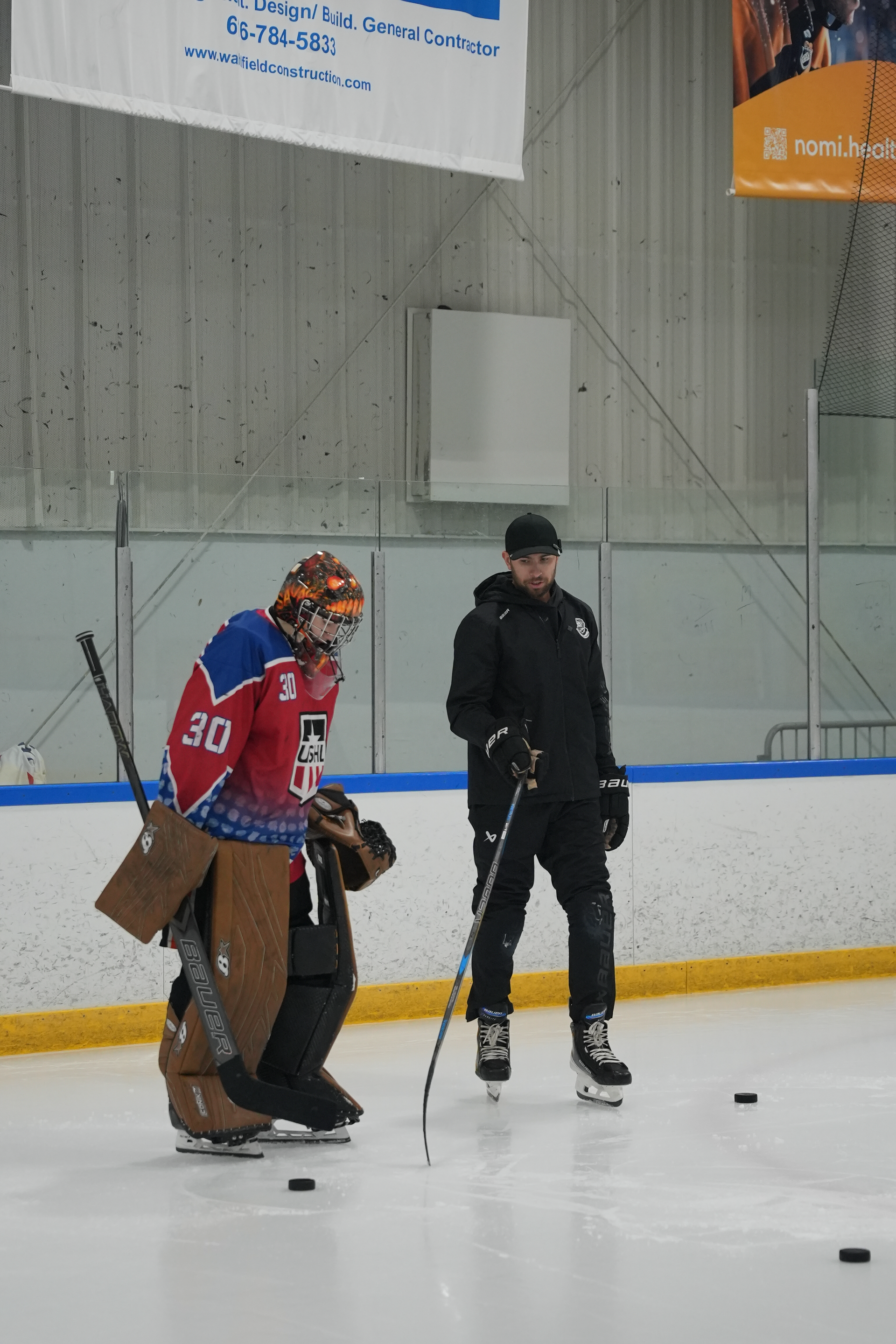
Goalie-Specific Rotational Work
For goalies, the goal is to build rotational power without sacrificing the postural control and alignment that the position demands.
Half-kneeling medicine ball tosses place the athlete in a position that mirrors the hip and trunk relationship of the butterfly while training rotation through the thoracic spine and shoulder girdle. Reactive banded core work builds the ability to rotate quickly in response to unpredictable stimulus rather than on a predetermined sequence. Anti-rotation holds with simultaneous leg movement train the dissociation between lower body and trunk that is foundational to efficient goalie movement.
How to Sequence This in Your Training
Build control before you build speed. Anti-rotation work comes first. Controlled rotational movements at moderate speed come next. High-velocity med ball work and reactive drills come once the foundational control is demonstrated.
This sequencing is not about being conservative for its own sake. It is about making sure the speed and force you are building in rotational training is actually being produced by the right muscles in the right sequence, rather than being borrowed from passive structures like the lower back and hips.
How This Fits Into a Complete Hockey Program
Rotational power is not an advanced add-on for elite athletes. It is a foundational performance quality that every hockey player and goalie should be developing throughout the offseason and maintaining during the competitive season.
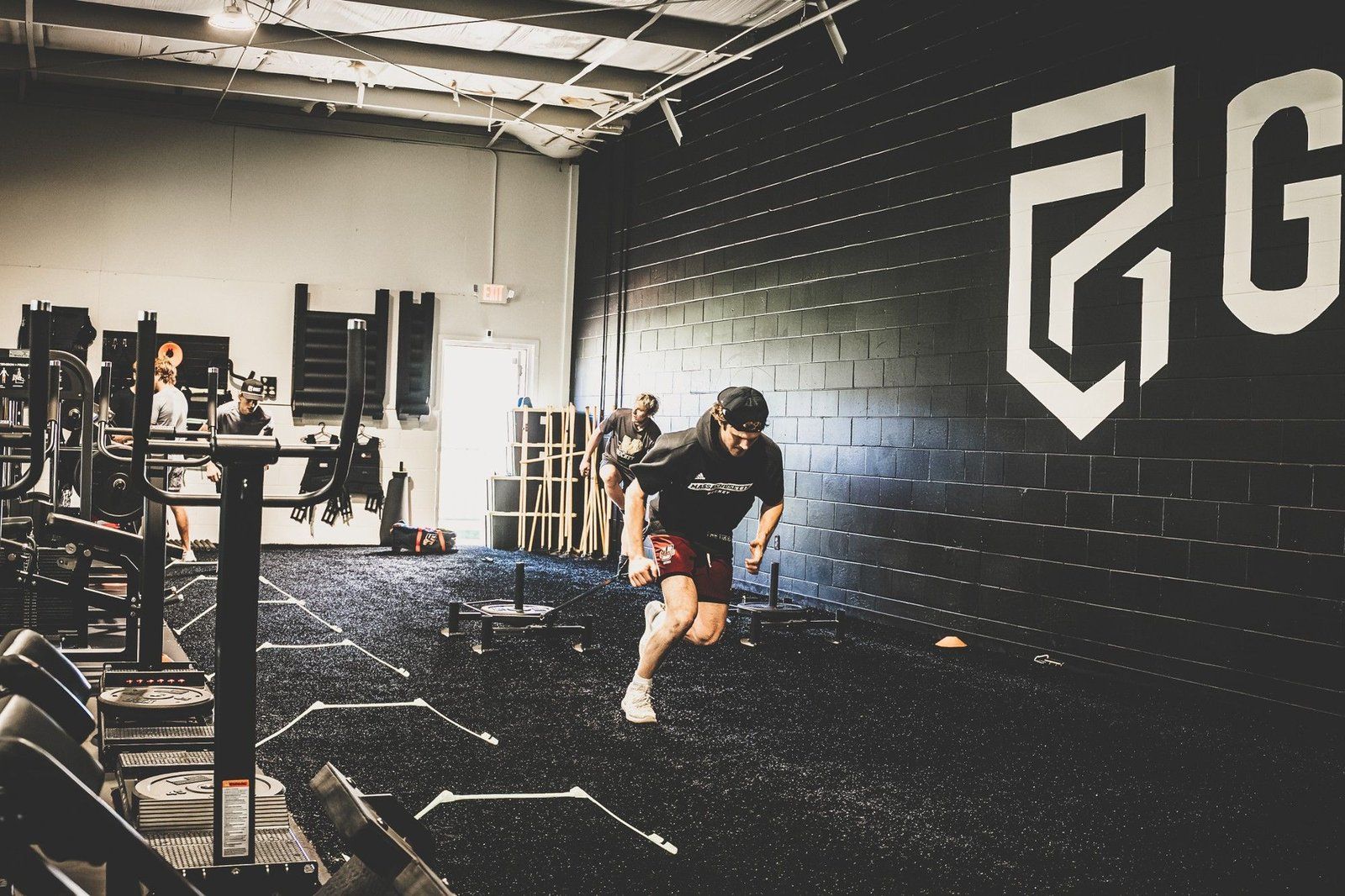
At Ghost Athletica, we incorporate rotational power training into our hockey strength and conditioning programs for players and goalies across the Grand Rapids area because the athletes who train it develop more explosive shots, better body control under contact, and more efficient movement patterns that hold up late in games and late in seasons.
If you are a hockey player or goaltender in West Michigan looking for a structured offseason or in-season program that addresses rotational power alongside the other physical qualities the game demands, learn more at ghostathletica.com.
Dr. Jamie Phillips, DPT Ghost Athletica | Ghost Goaltending | Grand Rapids Hockey Training Byron Center, Michigan | ghostathletica.com