
Dr. Jamie Phillips

high-performance blog

Share

Unlocking the Upper Back: How Thoracic Spine Mobility Boosts Hockey Performance

As a former professional hockey player turned Doctor of Physical Therapy in Grand Rapids, I’ve learned one crucial lesson: a flexible upper back can make all the difference on the ice. In this comprehensive guide, we’ll explore why your thoracic spine (the upper/mid-back) matters so much, how stiff upper-back mobility could be holding you or your players back, and what you can do to unlock your upper back for a stronger, safer game.


Whether you’re a player looking to improve your slapshot, a parent wanting to keep your kid injury-free, or a coach aiming to optimize your team’s training, this article will shed light on the “Ghost Rehab” approach to thoracic mobility. We’ll cover what the thoracic spine is, common mobility limitations in hockey athletes, the impacts of poor mobility on shooting and skating posture, links between upper-back stiffness and shoulder or low back pain, actionable ways to assess and improve mobility, and the value of working with a sports-specific PT right here in Grand Rapids. Let’s dive in!


What Is the Thoracic Spine and Why Does Upper Back Mobility Matter?


The thoracic spine is the middle section of your spine – essentially your upper and mid-back, running from the base of your neck down to about the bottom of your ribcage . It’s made up of 12 vertebrae (T1 through T12) that attach to your ribs and allow your torso to twist, bend, and extend. In simpler terms, if you imagine your spine as three segments, the thoracic region is the part that gives you the ability to rotate your trunk and arch your upper back. (Internal graphic: a labeled anatomical image of the spine highlighting the thoracic region could be placed here to show the upper back area.)


Unlike the neck (cervical spine) which is very mobile, or the low back (lumbar spine) which is built more for stability, the thoracic spine is designed for mobility. In fact, roughly 80% of the rotation in your trunk comes from your thoracic spine . Think about that – when you twist your torso to take a hard shot or to dodge a check, the majority of that rotational power should originate from your upper back. Hockey is a highly rotational, multi-planar sport, so if your thoracic spine isn’t moving well, you’re missing out on a huge chunk of potential movement.

Mobility in this area matters because it affects how effectively you can perform key hockey actions. A mobile thoracic spine allows you to rotate farther and faster when shooting or passing, to maintain an athletic upright posture while skating, and to absorb or deliver hits safely by moving through the upper back instead of overstressing other areas. It also helps you breathe better on the ice – a less stiff upper back lets your ribcage expand more for improved airflow during those intense shifts. In short, the thoracic spine is a critical link in the kinetic chain of your body. If that link is stuck, the chain reaction of movement and force transfer in hockey won’t be as strong or as smooth as it could be.


Common Thoracic Mobility Issues in Hockey Players


If you’ve ever heard of “hockey posture,” you know it’s not exactly synonymous with perfect posture. Hockey players of all ages often develop a characteristic stance and habit that includes a rounded upper back and forward-leaning posture. There are a few reasons for this common thoracic mobility limitation in hockey athletes:

  • On-Ice Positioning: Skating requires a forward-flexed stance – players crouch down low, leaning over the puck. Over time, spending hours in this bent-over position leads to an exaggerated upper-back curve (thoracic kyphosis) and tightness in the chest and shoulders . Essentially, hockey players end up “hunched” much like someone who sits at a computer all day, which can cause the thoracic spine to lose extension mobility (the ability to straighten or arch back).
  • Muscle Imbalances: Hockey training and play often emphasize strong legs and powerful upper-body muscles, but sometimes neglect counterbalancing mobility and postural strength. For example, players might do lots of bench press and push-ups for shot power, building the chest and front shoulders, but if they don’t equally strengthen their upper-back muscles and work on flexibility, a muscle imbalance occurs. The result is tight pectorals and weak mid-back muscles, which pull the shoulders forward and stiffen the upper spine (a classic “upper crossed syndrome” posture) .
  • Lifestyle and Habit: Many hockey players, especially youth and student-athletes, spend a lot of time off the ice sitting – in class, doing homework, playing video games, etc. Prolonged sitting with slouched posture reinforces that rounded thoracic position. Even goalies, who have unique stance demands, often hunch over when off the ice. By the time a player hits the ice for practice, their upper back may already be in a stiff, flexed state.
  • Protective Gear and Repetition: The gear (pads, tight jerseys) and repetitive motions can also play a minor role. While necessary for safety, equipment can slightly restrict full movement, and doing the same skating motion or shooting drills thousands of times can cause certain ranges of motion to tighten up if not counteracted with mobility work.

Over years of playing, I’ve seen these factors combine to create athletes with impressive lower-body power but surprisingly limited upper-back mobility. As a former pro player, I can admit I wasn’t doing thoracic mobility drills in my younger days – and I felt the difference. I’d often finish a game with a burning feeling between the shoulder blades or a stiff neck, classic signs that my upper back was locked up and other areas were compensating.

The bottom line is that hockey players are prone to a forward-rounded, stiff thoracic spine. This “hockey hunch” might seem like just a posture issue, but it directly affects performance and injury risk, as we’ll discuss next. The good news is that once you recognize it, you can address it.

(Internal graphic suggestion: perhaps an illustration or photo of a player with rounded shoulders vs. a player with a more upright posture, to visualize the difference. A caption might point out the rounded upper back common in hockey.)


How a Stiff Upper Back Hurts Your Shooting and Skating


Poor thoracic mobility isn’t just an aesthetic posture problem – it has real performance consequences on the ice. Two of the biggest areas affected are your shooting (and other rotational skills) and your skating posture/technique.

Reduced Shot Power and Accuracy

When you wind up for a slapshot or snap into a wrister, a significant amount of power comes from the rotation of your torso. Ideally, your upper back and shoulders turn to generate torque while your hips and legs drive into the ice. If your thoracic spine is stiff and cannot rotate or extend well, you’ll have a shorter, restricted wind-up and follow-through. Essentially, you’re trying to shoot with a parking brake on. Research and coaching insights consistently note that a lack of thoracic rotation means missing out on range of motion that could generate more force. In other words, a limited t-spine = a limited shot. A hockey player who is tight through the upper back is “missing range of motion that they could be using to generate more force” in their shot mechanics .

Beyond raw power, shooting with a stiff upper back can throw off your accuracy and technique. You might compensate by overusing your arms or wrists, or by rotating more through the lumbar spine (lower back) and hips. These compensations not only reduce efficiency, but also can strain areas not meant to handle that load. I often tell players: if you want a harder, smoother shot, you need to be able to coil and uncoil through your core – and the thoracic spine is the core of that core, so to speak. In my own experience, early off-season mobility training makes my shot feel “cleaner” and more effortless once I hit the ice, because my upper body rotation is fluid instead of tight. This anecdote is backed up by others; in fact, some pro players report that after focusing on restoring mobility, their shot “feels smoother or cleaner” even before they start heavy strength training .

Here’s a quick test you can try: slump forward and hunch your upper back, then attempt a torso rotation (as if taking a shot) – next, sit up tall or gently arch your upper back and rotate again. You’ll likely notice you can turn much farther when your spine is extended. Kevin Neeld, a well-known strength coach in hockey, points out that an inability to extend the thoracic spine “will limit rotation through this area… visibly limiting your ability to generate rotational power while shooting” . This is a perfect summary – less upper back mobility = less rotation = weaker shot.


Skating Posture, Speed, and Agility

Efficient skating isn’t just about strong legs; your upper body position plays a big role too. Watch an elite skater and you’ll notice they have a slight forward lean but a relatively stable, straight back – not a collapsed hunch. If your thoracic spine is overly rounded and tight, maintaining an optimal skating posture becomes difficult. You may find yourself too hunched over, which can shorten your stride and affect balance. A stiff upper back can also impede how well you counter-rotate your shoulders against your hips during crossovers or quick turns. Good players subtly twist through the torso when changing directions or executing tight turns – if your torso can’t rotate, you’ll rely solely on your legs and might be a bit slower in transitions.


Furthermore, a player with limited upper-back mobility often has trouble keeping their chest up while in a low skating stance. This can lead to excessive forward head position and can fatigue your back muscles faster as they strain to support that posture. It might also affect your vision on the ice; players with a very rounded back tend to hang their head down more, whereas a more upright upper back allows you to keep your head and eyes up (key for awareness and avoiding big hits!).


And let’s not forget goalies – if you’re a goalie, thoracic mobility is gold for you too. A goalie’s save movements (think of quickly rotating the shoulders to glove a top-corner shot or twisting during a scramble) heavily involve the thoracic spine. Goalies also deal with a forward flexed posture in the stance, and if their upper back is rigid, they may end up overusing the low back when dropping into or rising from the butterfly. I’ve worked with goalies here in Grand Rapids who improved their post-save recovery speed (popping back up or moving laterally) once we improved their upper-back flexibility and strength. It allowed them to move more freely rather than feeling “stuck” in a crouch.

In summary, a stiff thoracic spine can rob a skater of stride length and power, slow down rotational skills like shooting or quick turns, and even hamper a goalie’s mobility in the crease. On the flip side, improving thoracic spine mobility can unlock better athleticism – a more powerful shot, a lower yet controlled skating stance, and fluid upper-body movement that complements your footwork. It’s one of those sneaky performance boosters that many hockey players don’t realize they’re missing.


Injury Prevention: Upper Back Mobility, Shoulder Health, and Low Back Pain

Beyond performance, there’s a huge injury prevention angle to thoracic mobility. The way your upper back moves (or doesn’t move) can directly contribute to common hockey injuries, especially in the shoulders and lower back. Let’s break down these connections:


Shoulder Issues and the “Hockey Hunch”

Hockey is notorious for shoulder injuries – separations, dislocations, rotator cuff strains, you name it. While big collisions or falls can injure shoulders, a less obvious contributor is poor posture and mobility in the upper back. When your thoracic spine is stuck in a rounded position, your shoulder blades (scapulae) tilt forward around your ribcage. In this slouched posture, the shoulders themselves sit in a forward, internally rotated position (picture the typical hockey player slouch with shoulders almost pointed forward).

This alignment is problematic for a couple of reasons. First, it alters the mechanics of the shoulder joint and can lead to impingement – essentially the rotator cuff tendons getting pinched, causing pain over time. A tight upper back often goes hand-in-hand with a tight chest and weak upper back muscles, which means the shoulder blade doesn’t glide properly when you raise your arm. Many players with shoulder pain find relief after improving their posture and thoracic mobility because it allows the shoulder blade to move more freely and the ball-and-socket joint to align better.


Second, that rounded posture increases injury risk during contact. As coach Kevin Neeld illustrates, a player with forward-rounded shoulders is at higher risk if hit from the side or behind. Why? Because the shoulder blade isn’t in a strong position against the ribcage, so the force of impact isn’t absorbed by the torso; instead, it’s more directly taken by the shoulder joint and its ligaments . Neeld notes how a hit to a rounded-shoulder player can drive the arm backward in a vulnerable position, whereas a player with a more retracted (pulled back) shoulder posture will better distribute that force across the body . In practical terms, improving your upper back mobility and posture (being able to extend your thoracic spine and pull those shoulder blades back) creates more structural stability to withstand hockey impacts and can reduce the chances of things like shoulder dislocations.

It’s no surprise that part of hockey injury prevention PT in Grand Rapids – or anywhere – for shoulder problems often includes working on thoracic spine mobility and postural strength. By loosening the upper back and strengthening the mid-back muscles (like the rhomboids and lower traps), we set the shoulders in a safer position. I always tell players: your shoulders will thank your upper back for doing its job!


Low Back Pain and Thoracic Stiffness

Lower back pain (LBP) is extremely common among hockey players – some studies estimate around 60–85% of hockey players will experience significant low back pain in their career . It affects everyone from youth players to NHL pros. There are many causes (from disc issues to muscle strains), but a major contributing factor is often poor movement mechanics due to – you guessed it – a stiff thoracic spine and/or hips.

Here’s the chain reaction: If your upper back isn’t mobile enough to allow the rotation or extension a certain movement needs, your body will get that movement from elsewhere to perform the task. Often the “elsewhere” is the lumbar spine (lower back), which isn’t built for large amounts of rotation. Normally, we want the hips and thoracic spine to handle most of the turning, with the low back remaining relatively stable. But if the thoracic segment is like a brick, when you twist (say, winding up for a slapshot or quickly turning to chase a puck), the lower back will twist more to make up the difference. This excessive lumbar rotation and torquing is a recipe for pain and injury. As one hockey training resource put it, if you lack mobility in the hips and thoracic spine – the areas meant to rotate – “you’ll be forced to torque through your lumbar spine” and repeatedly doing so can quickly lead to lower back pain .

Skating posture ties in here too. A very rounded upper back can tilt your pelvis and increase the arch in your lower back when you’re bent over, placing extra strain on the lumbar spine throughout each stride . Over time, this contributes to overuse injuries. Many players with chronic low back issues have stiff upper backs; improving thoracic extension (being able to straighten the upper back more) often reduces the constant stress on the lower back during skating.


Let’s visualize: imagine two players taking a slap shot. Player A has great thoracic rotation – as he winds up, his shoulders and chest turn far relative to his hips, storing energy, and then unwind into the shot. His lower back moves only minimally. Player B has a very tight upper back – he can’t rotate through the torso much, so to complete his backswing he unconsciously twists through the lower back and also over-rotates his hips. As he shoots, that extra lumbar twist combined with the force of the shot puts high stress on his spine. Player B is the one more likely to skate off complaining of a twinge in his back.


If this pattern repeats over years, you can see why we have so many hockey players with nagging low back pain or even stress injuries like spondylolysis (stress fractures in the spine, which have been found in many young hockey players). The good news is that by addressing thoracic (and hip) mobility, we can often alleviate the strain on the low back. I’ve had players report their back pain diminished greatly once they started a regular routine of upper back mobility drills and core stability work. It’s all about restoring the proper movement pattern: use the hips and upper back for motion, spare the lower back.


In short, ensuring good thoracic spine mobility is like giving your body better shock absorbers and hinges. Your shoulders and low back won’t have to take all the hits – literally and figuratively – when your upper back is doing its job. This is why any upper back rehab in Grand Rapids for hockey athletes (like what we do at Ghost Rehab and Performance) pays keen attention to the thoracic spine. It’s often the missing link in rehab protocols for shoulder and back issues.


How to Assess Your Thoracic Spine Mobility


You might be wondering, “Okay, do I have a thoracic mobility problem?” Assessing your thoracic spine mobility can be relatively straightforward with a couple of at-home or on-ice tests. Here are a few simple ways to gauge your upper back flexibility:

  1. Seated Rotation Test: Sit on a chair or on the bench in the locker room, cross your arms over your chest (or hold a hockey stick behind your neck across your shoulders), and keep your hips facing forward. Now rotate your upper body to the right and to the left as far as you can. What to look for: You should ideally see about 45 degrees of rotation to each side (meaning your chest turns roughly halfway toward facing completely sideways). If you can barely turn to, say, 30 degrees or you notice one side is much more limited, that’s a sign of restricted thoracic rotation. Also pay attention to whether your hips or knees start to move – if they do, it means your lower body is trying to help because your upper back might be too stiff to do it alone.
  2. Wall Angel or Wall Slide: Stand with your back flat against a wall, feet a few inches from the wall. Try to press your lower back lightly into the wall (to eliminate excessive arching). Now raise your arms up to shoulder height, bend your elbows, and try to flatten your arms and wrists against the wall in a “W” position. Slowly slide your arms up overhead like making a snow angel, keeping as much of your arms against the wall as possible. What to look for: If your thoracic spine is very stiff, you’ll struggle to keep your arms and upper back on the wall – your lower back might arch or your arms will come off the wall as you raise them. This indicates limited thoracic extension and possibly tight chest/shoulder muscles. It’s a great test for the interplay of shoulder and upper back mobility.
  3. Thoracic Extension Test on Foam Roller: This one doubles as a mobility drill (we’ll talk exercises next) but can be used as a before-and-after check. Lie on your back on the floor with a foam roller positioned horizontally under your upper back (around shoulder blade level). Support your head with your hands and gently try to arch backward over the roller. What to look for: Do you feel a very hard stop, or is it painful? That could indicate significant stiffness. If you repeat this a few times and it gradually eases, that’s a good sign you’re mobilizing the area. If it barely budges, you likely have a mobility limitation.
  4. The “Hunched vs. Straight” Rotation Demo: I mentioned this earlier – it’s more of a demonstration than a formal assessment, but it’s eye-opening. Stand or sit and round your upper back as much as you can (simulate that bad hockey posture). Now try to rotate your shoulders to one side (like a slow-motion shot or a golf swing). Measure in your mind how far you got. Next, reset, stand tall and even slightly arch your upper back (think proud chest). Now rotate again. Most people are noticeably more mobile in the second scenario. If you find no difference between slouched and upright, you might already have good mobility (or conversely, you’re so tight that even upright posture is limited – which is rarer). If you find a big difference, it tells you how much posture and thoracic extension affect your rotation.

If these self-tests raise any red flags – for example, you find a big asymmetry (you rotate much further to one side than the other) or you just feel generally “stuck” – it might be time to work on your mobility (and consider a professional assessment). Coaches and parents, you can also observe your players: do they have that perpetual hunch? Do they complain of back tightness or have a noticeably limited range when shooting or turning their upper body? Those could be clues.


Keep in mind, a formal evaluation by a physical therapist or sports performance specialist will give the most detailed info. Here at Ghost Rehab and Performance, for instance, we use a comprehensive mobility screen for our hockey players, measuring thoracic rotation in degrees and checking posture, among other things. The advantage of a pro assessment is we can differentiate whether it’s truly a joint restriction in the spine, muscular tightness, or some stability issue – and then tailor the plan accordingly. But even these simple tests above can empower you with awareness of your own body.


Exercises to Improve Thoracic Spine Mobility for Hockey Players


Improving your thoracic mobility is absolutely doable with consistent effort – and it doesn’t require any fancy equipment beyond perhaps a foam roller and a stretch band. Here are some of my go-to upper back mobility exercises that I prescribe to hockey players, from youth to adult. (Remember, perform these with good form and without pain. If something hurts, ease off or consult a professional.)


1. Quadruped T-Spine Rotation (All-Fours Rotation): Start on your hands and knees (quadruped position) with hands under shoulders and knees under hips. Place one hand lightly behind your head. Keeping your lower back still and core engaged, rotate your upper back to bring the elbow (of the hand behind your head) up toward the ceiling, then slowly rotate downward trying to reach that elbow toward the opposite arm. Imagine you are opening and closing like a book. Do 5–8 repetitions, then switch sides. Benefit: This drill isolates thoracic rotation while keeping your low back stable. It’s a staple in many hockey training warm-ups to “unlock” the upper back. You can make it harder by holding a light band or weight with the moving arm (to add resistance or assistance as in a banded rotation).


2. “Open Book” Stretch (Side-Lying Thoracic Rotation 90/90): Lie on your side with hips and knees bent 90 degrees (knees stacked). Extend your arms in front of you, palms together. Keeping your knees touching the floor (you can put a rolled towel between your knees to help), rotate your top arm and upper back to open up toward the other side, as if opening a book. Try to gently press the top shoulder toward the ground (you may not touch it, and that’s okay) while keeping your low back still and knees down. You’ll feel a stretch through your chest and mid-back. Hold for a second at the end range, then return to start and repeat 6–10 reps each side. Benefit: This classic stretch is excellent for improving rotational flexibility. It addresses the tight chest muscles and lets the upper spine twist. You’ll often feel a great stretch between the shoulder blades. Over time, you’ll see that you can drop that shoulder closer to the floor as mobility improves.


3. Thoracic Extension on Foam Roller: Take a foam roller and place it perpendicular to your spine (horizontally under your upper back). Lie on it and cradle your hands behind your head (to support your neck). Starting with the roller around the bottom of your ribcage area, gently extend back over the roller – as if trying to arch your upper back over it. Do small motions, move up a little higher on the back, and repeat. Don’t crank on your neck – focus on the upper back bending. You might get a few pops or cracks (that’s fine as long as it’s not painful). Spend a minute or two working different segments of the thoracic spine. Benefit: This exercise helps improve thoracic extension (counteracting that forward hunch). It’s like an antidote to slouching. Improving extension will also help your rotation (since the spine often needs to extend a bit to rotate fully). Many hockey players love using the foam roller after practices and games to relieve that tight upper back feeling – it’s both a mobilizer and a self-massage tool.

4. Cat-Cow (Segmented): This yoga staple can be tweaked to really target the thoracic region. On hands and knees, slowly go from an arched back (cow position) to a rounded back (cat position). The key is to do it segment by segment. Initiate the movement from your upper back: when arching, imagine leading with your chest/breastbone moving forward and up, and when rounding, imagine just the area between your shoulder blades pushing toward the ceiling. Do 10 slow cycles. Benefit: By focusing on the upper back, you encourage each vertebra to move. This improves overall spinal mobility and also gives a nice stretch to the back and shoulder muscles. It’s a gentle way to get things moving before deeper stretches.


5. Wall Thoracic Rotations (Standing Wall Openings): Stand sideways a couple of feet from a wall in a partial squat or athletic stance. Keep the foot closer to the wall forward and other foot back for a staggered stance (mimicking a hockey stride position). Hold your hands together straight in front of you, then rotate your torso and reach the far hand toward the wall behind you, following your hand with your eyes. If possible, touch the wall behind with your fingertips. Your hips can turn a bit, but try to keep the movement mostly in your trunk. This can also be done in a half-kneeling stance. Do 6–8 reps each side. Benefit: This dynamic drill is great for warming up before games. It ties together balance and rotation, and it’s particularly useful for simulating how you need to rotate in skating or shooting while maintaining balance through your legs.

These exercises are just a starting point. There are many more (like thread-the-needle, lumbar-locked rotations, etc.), and variations with bands or weights to progress the mobility into controlled strength. The key is consistency: doing a few thoracic mobility drills daily or at least in every warm-up will yield the best results. Mobility is best improved with frequent “micro-doses” rather than occasional marathon stretching sessions . In practice, that could mean 5-10 minutes of upper-back focused stretches each day or every other day.

Also, don’t forget to work on what’s around the thoracic spine: that means your shoulder blade muscles (strengthen those with rowing exercises, “Y-T-W” exercises for scapular control, etc.) and your core muscles, especially the obliques which help with controlled rotation. A strong core will help you use your new mobility in a safe, powerful way. And hip mobility, though a topic of its own, goes hand in hand with thoracic mobility – athletes with loose hips and upper backs usually spare their lower backs a lot of grief.


Finally, make it hockey-specific when you can. After or even during your mobility drills, do some hockey movements that take advantage of it. For example, after doing open books and foam rolling, grab a stick and do some mock shooting movements or trunk rotations so your body learns to use that new range in a coordinated manner. In sessions at our clinic, we might finish with some medicine ball rotational throws or resisted cable rotations, which bridges the gap between mobility and functional hockey motion. This way, when you’re back on the ice, your body knows how to incorporate that improved flexibility directly into your slapshot, one-timer, or skating stride.


Hockey Physical Therapy in Grand Rapids: Why Work with a Sports PT?


By now, you can tell that thoracic spine mobility has a lot of moving parts (pun intended!). You can certainly make great progress on your own with the right exercises, but sometimes having an expert guide can accelerate the process and ensure you’re doing what’s best for your body. That’s where working with a hockey-specific physical therapist comes in.


As someone who has lived the sport and now rehabs others, I firmly believe that specialized hockey physical therapy in Grand Rapids can be a game-changer for players serious about their performance and health. Here’s why teaming up with a sports-specific PT – especially a cash-based sports PT in Grand Rapids like Ghost Rehab and Performance – is so valuable:


  • Expert Eyes on Your Movement: A PT who understands hockey can assess your mobility, strength, and technique in a way that translates directly to on-ice performance. We know what a proper skating stride and shooting form should look like, and we can spot where a limitation (like a stiff upper back) is affecting those skills. By doing a thorough evaluation, including tools like video analysis or movement screens, we pinpoint the root causes of any issues. For example, if you come in with shoulder pain or decreased shot power, we might discover the true culprit is poor thoracic rotation. That kind of insight comes from experience in hockey biomechanics.
  • Individualized, Sport-Specific Plan: Working with a sports PT means your upper back rehab in Grand Rapids isn’t going to be a generic list of stretches printed off the internet. It will be tailored to you. If your T-spine is especially tight in one direction, we’ll focus there. If you’re a goalie vs a forward, we might emphasize slightly different drills (a goalie might need more work on extension and rotation in butterfly recovery positions, for instance). Because Ghost Rehab and Performance is a cash-based practice, we’re not constrained by short insurance-driven sessions or cookie-cutter protocols. We can devote the time to blending manual therapy (like hands-on joint mobilizations or soft tissue work to loosen those thoracic segments) with corrective exercises, then functional hockey drills. It’s a holistic approach – we treat the mobility issue and integrate it into your shooting, skating, and daily routine.
  • Quick Access and Ongoing Support: In Michigan, you generally have direct access to physical therapy – meaning you don’t need a physician referral to see us. In a cash-based model, you can often get in quickly and start work right away on issues like this, rather than waiting weeks. This is huge if you’re in-season and need to address a problem promptly. Plus, a good sports PT will communicate with your coaches or trainers as needed and adjust your plan around your team schedule. Our goal is to keep you on the ice while we fix what needs fixing, whenever possible. We also serve as a resource for hockey injury prevention overall – consider us your guide not just for rehab, but for warm-up routines, recovery strategies, and performance optimization. Ghost Rehab and Performance, for example, prides itself on being “West Michigan’s premier hockey-specific performance physical therapy” (as many of our clients have called us). That means we’re as much about preventing the next injury and boosting performance as we are about rehabbing current aches.
  • Hockey Culture and Trust: There’s something to be said about working with a clinician who “gets it” – who has blocked shots with their body, felt that third-period fatigue, or gone through a playoff grind. As a former pro, I speak the language of the sport. For younger athletes, that often helps them buy into the process more; they know I’m not just a PT tossing out exercises, but someone who has been in their skates. For parents and coaches, it gives confidence that the recommendations won’t inadvertently hurt performance – everything is geared to make them better on the ice. We’re going to incorporate things like stick handling, shooting drills, or on-ice movement into therapy when appropriate. In fact, I’ve even done on-ice sessions with some local players to directly work on translating improved mobility to skating technique. That level of sport specificity is hard to get in a general clinic.
  • Long-Term Athletic Development: Perhaps most importantly, addressing thoracic mobility (and other issues) with a sports PT sets players up for long careers. We think in terms of longevity. For youth players in Grand Rapids, learning how to take care of their bodies now – how to warm up properly, how to do mobility work, how to recognize an oncoming injury – means they’ll have fewer serious injuries as they progress to high school, juniors, or college play. For adult rec players, it means enjoying the sport without constant pain and avoiding those surgeries that take you out of the game (or the office) for months. A sports PT can design a maintenance program that fits into your season and off-season, almost like having a personal coach for your physical health. This proactive approach is a hallmark of performance physical therapy.

In the context of thoracic spine mobility, a hockey injury prevention PT in Grand Rapids will ensure that improving your upper back movement is part of a bigger plan: one that balances your entire body’s mobility, stability, strength, and technique. We don’t view the t-spine in isolation. For example, if we increase your rotation, we’ll also train your core to control that new motion (to make sure you’re stable and powerful in that range). We’ll check your hip mobility to complement the t-spine work, so your whole torso-hip unit is working optimally. And we’ll continuously loop back to how you’re performing on the ice – are shots getting harder, is your back pain decreasing, do you feel more upright and strong in your stance? Those functional outcomes are our north star.


Finally, because we are a cash-based sports PT clinic in Grand Rapids, we operate with a lot of flexibility and personalization. Sessions can be longer, one-on-one, and focused on whatever will help you the most that day – maybe it’s an hour of manual therapy and guided drills, or maybe it’s a trip to the rink to evaluate your skating form. This model is all about value: you get highly specialized care that’s worth every penny in terms of keeping you on the ice and playing your best. We’ve had players tell us they avoided what they thought would be season-ending issues simply by coming in early for an assessment and nipping a mobility problem in the bud.

In short, working with a sports-specific PT is like adding an expert teammate to your roster – one whose goal is to optimize you. If you’re serious about your hockey performance or if you’ve been frustrated by injuries, it might be time to enlist that help. The hockey physical therapy Grand Rapids offers through Ghost Rehab and Performance is rooted in firsthand hockey experience and proven rehab science. It’s a winning combo for our local athletes.


Unlock Your Upper Back and Elevate Your Game


By now, you should have a solid understanding that thoracic spine mobility isn’t just a footnote in hockey training – it’s a key chapter in the story of athletic success and durability. Unlocking your upper back can lead to a harder shot, more agile skating, and a body that stays injury-free through the long Michigan hockey season. It’s one of those areas where a little focused effort yields big returns on the ice.

To recap briefly: The thoracic spine (upper back) is built to move, and hockey demands a lot of movement from it – about 80% of your trunk rotation, to be exact . Yet, hockey players often end up tight and limited there due to the nature of the sport (and lifestyle factors), developing the classic rounded “hockey posture.” This stiffness can sap power from shots, make your skating less efficient, and contribute to shoulder injuries and low back pain by causing your body to compensate in risky ways . The good news is you can improve it. Through targeted exercises and possibly guidance from a knowledgeable physical therapist, you can restore mobility to your upper back and integrate it into your game.


As a former player who has felt the difference and a PT who now helps others achieve it, I encourage you to take action. Start incorporating those T-spine drills into your warm-ups. Be mindful of your posture during the day – ditch the slouch outside the rink so your body isn’t stuck in it on the rink. If you’re dealing with nagging pain or you’re not sure where to start, consider reaching out to a specialist. Sometimes a professional assessment and a few sessions of personalized coaching are all it takes to set you on the right path.

Remember, hockey is a sport of details and marginal gains. Gaining an extra few degrees of rotation in your upper back or an extra bit of extension in your posture might not seem dramatic, but it can be the hidden advantage that improves your shot release or keeps you balanced through a big hit. In a game of inches and split-seconds, that matters!


Your upper back mobility could be the missing link in unlocking your full potential on the ice. Don’t let it hold you back (literally). By unlocking the thoracic spine, you’re not just preventing pain – you’re actively boosting your performance and prolonging your playing years. That’s a win-win for any hockey player, parent, or coach.

If you’re in the Grand Rapids area and need help with your mobility or any hockey-related injury, feel free to reach out to Ghost Rehab, We’re here to help our West Michigan hockey family stay strong, stay mobile, and stay in the game. After all, as we like to say, “strong core, mobile spine, better hockey.” Now go unlock that upper back and light up the ice!


References

  1. Neeld K. Does Your Shot Feel Off? It Might Be Your Upper Back. KevinNeeld.com. https://www.kevinneeld.com/does-your-shot-feel-off-it-might-be-your-upper-back/. Published July 2, 2019.
  2. Hibbs AE, Thompson KG, French DN, Wrigley A, Spears IR. Optimizing performance by improving core stability and core strength. Sports Med. 2008;38(12):995-1008. doi:10.2165/00007256-200838120-00004
  3. Borstad JD, Ludewig PM. The effect of long duration stretching on muscle extensibility and joint passive stiffness. Eur J Appl Physiol. 2005;94(5-6):546-551. doi:10.1007/s00421-005-1344-3
  4. Tyler TF, Zook LA, Brittis DA, Gleim GW. Clinical and biomechanical evidence of altered hip mechanics in athletes with labral pathology. Am J Sports Med. 2006;34(3):405-410. doi:10.1177/0363546505280423
  5. Evans K, Refshauge KM, Adams R. Predictors of low back pain in young elite golfers: a preliminary study. Phys Ther Sport. 2008;9(4):166-172. doi:10.1016/j.ptsp.2008.07.001
  6. Laudner KG, Moline MT, Meister K. The relationship between forward scapular posture and posterior shoulder tightness among baseball and softball players. Am J Sports Med. 2013;41(11):2635-2639. doi:10.1177/0363546513496548
  7. McGill SM. Low Back Disorders: Evidence-Based Prevention and Rehabilitation. 3rd ed. Human Kinetics; 2015.
  8. Ludewig PM, Cook TM. Alterations in shoulder kinematics and associated muscle activity in people with symptoms of shoulder impingement. Phys Ther. 2000;80(3):276-291. doi:10.1093/ptj/80.3.276
  9. Willardson JM. Core stability training: applications to sports conditioning programs. J Strength Cond Res. 2007;21(3):979-985. doi:10.1519/R-20285.1


New Paragraph


By IIC2FRhivRRLOxIPEdhpmzNHnGG3 May 22, 2026
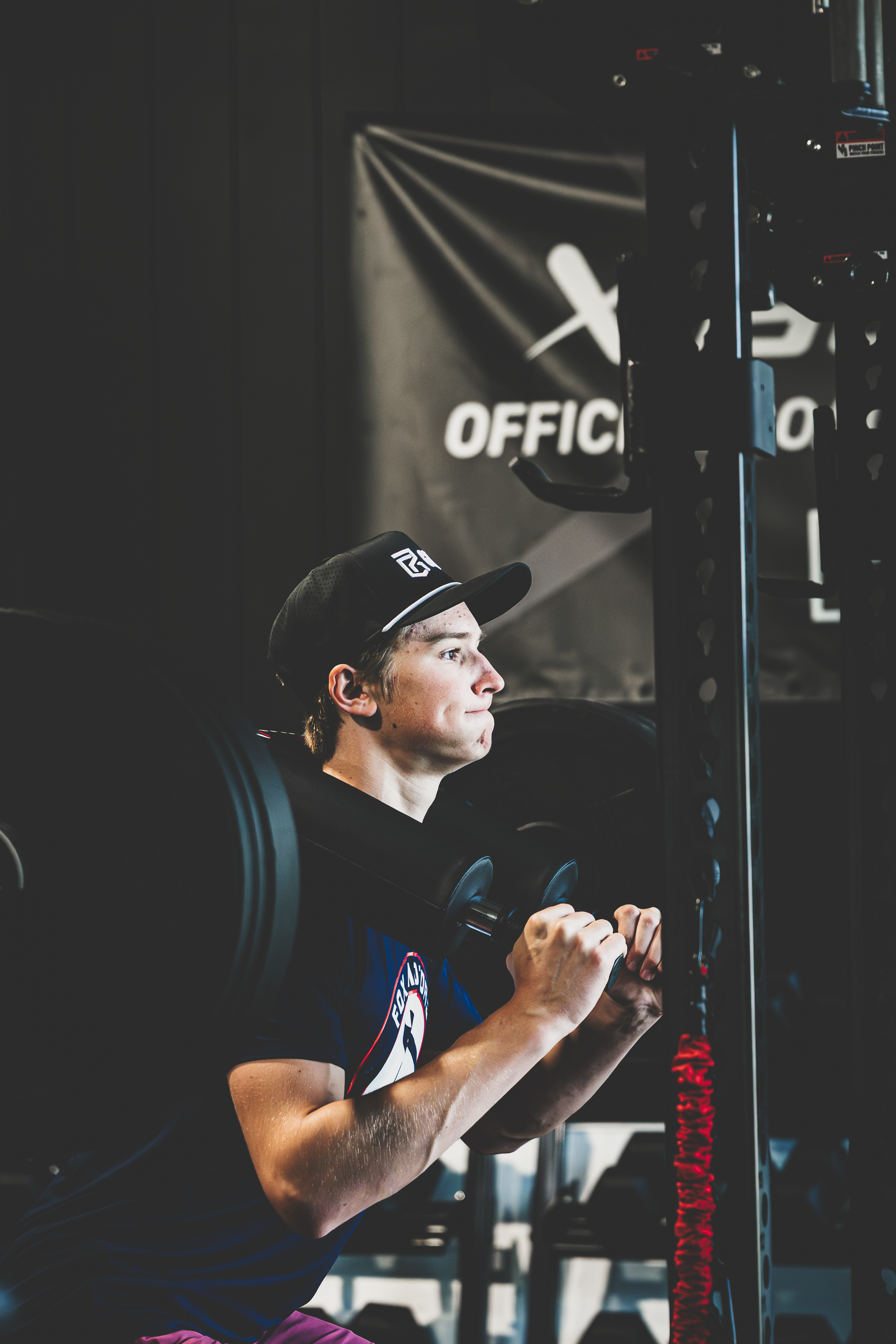
The complete off-ice hockey training guide: strength, conditioning, mobility, and skating-specific drills for serious hockey players. Built by Ghost Athletica coaches in West Michigan.
By IIC2FRhivRRLOxIPEdhpmzNHnGG3 May 22, 2026
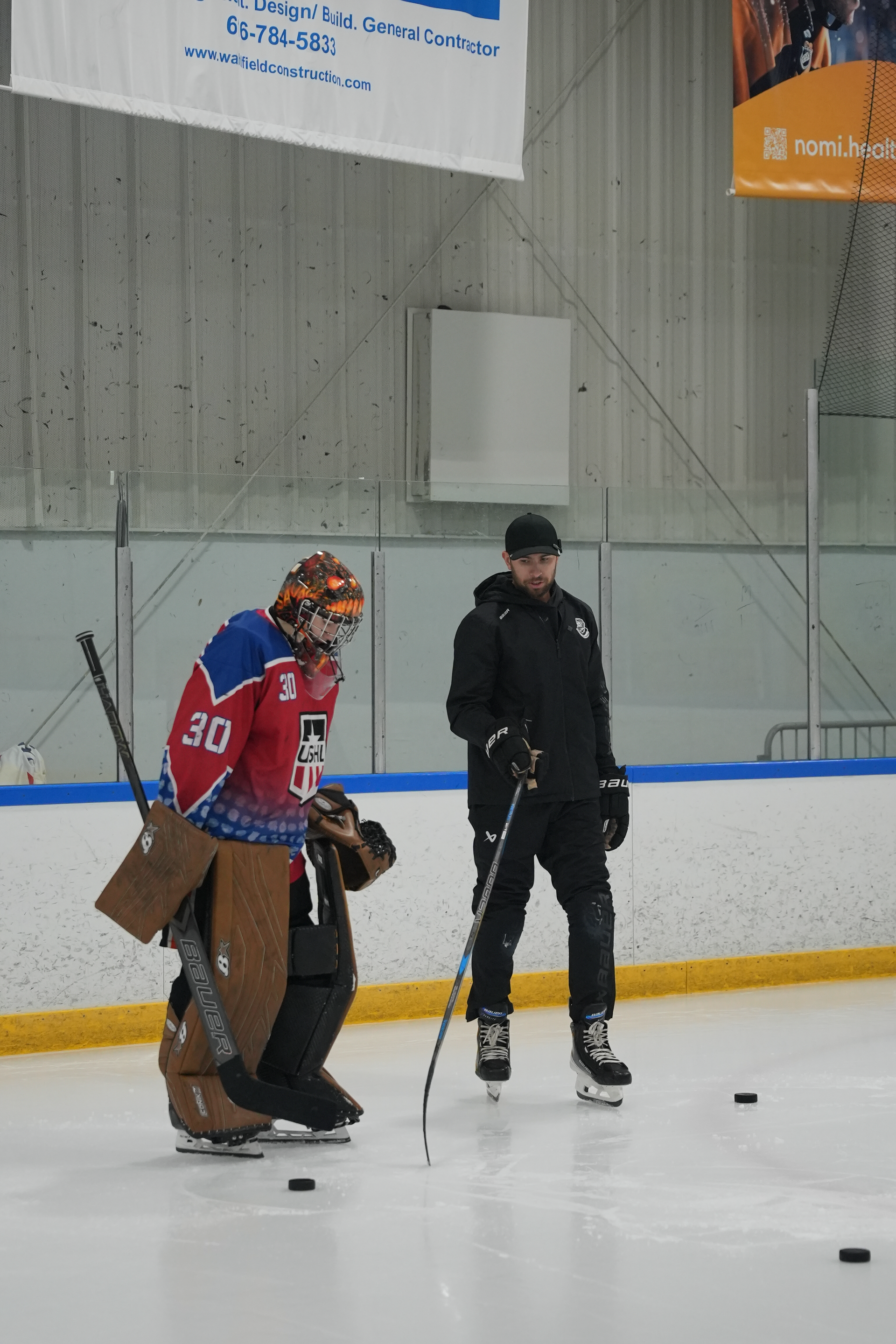
The complete hockey goalie development guide: positioning, butterfly mechanics, skating, rebound control, and the mental game. Ghost Athletica's framework for building elite-level goalies.
By IIC2FRhivRRLOxIPEdhpmzNHnGG3 May 22, 2026
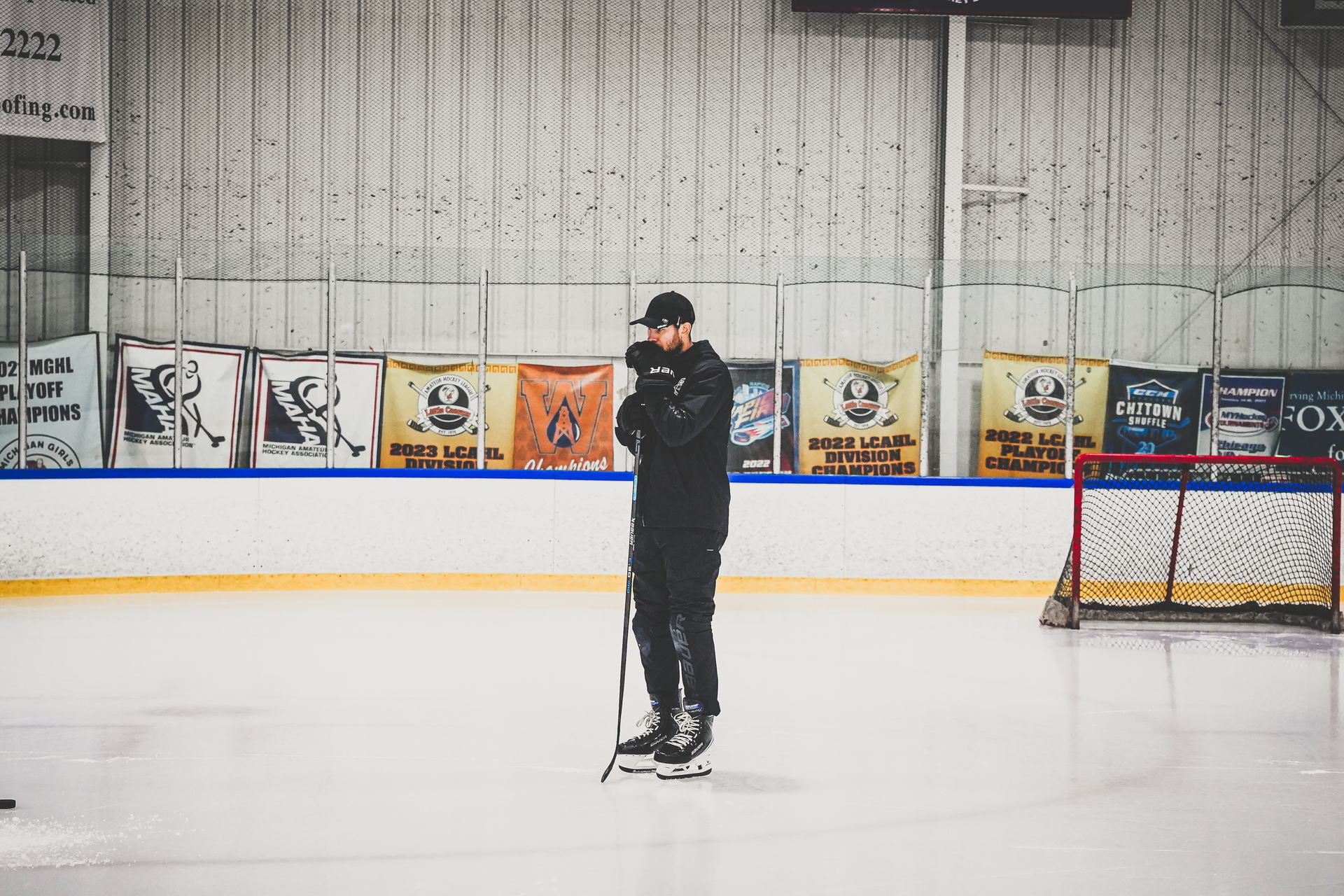
What elite hockey goalies do between games: daily hip mobility, goalie-specific strength training, reaction drills, and recovery protocols. Ghost Athletica's complete off-ice goalie program.
By IIC2FRhivRRLOxIPEdhpmzNHnGG3 May 22, 2026
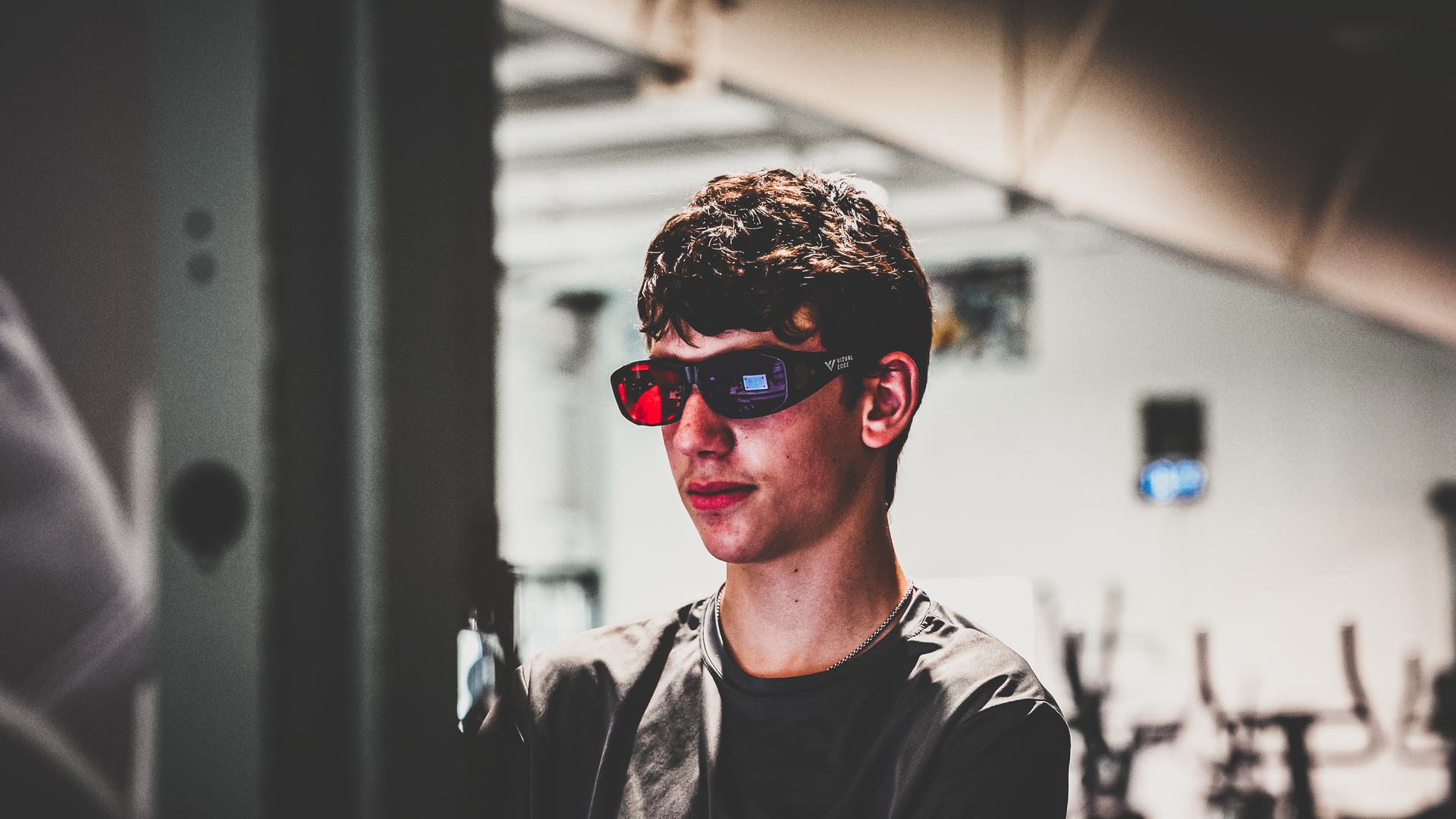
What is hockey vision training and why does it matter? Ghost Athletica's complete guide to cognitive performance training for competitive hockey players — puck tracking, pattern recognition, and decision speed.
May 9, 2026
Hockey Performance | Ghost Athletica | Grand Rapids Hockey Training Should Hockey Players and Goalies Be Doing HIIT? The pros and cons of high-intensity interval training for hockey athletes, and how to use it intelligently Dr. Jamie Phillips | Ghost Athletica | Grand Rapids, Michigan High-intensity interval training is everywhere right now. Short, intense bursts of work followed by controlled recovery periods. It is tough, time-efficient, and backed by solid research across multiple sports and populations. But here is the question that actually matters for hockey players and goalies: is HIIT making you a better hockey athlete? The honest answer is that it depends. Like every tool in training, context matters enormously. Used well, HIIT has a meaningful place in a hockey development program. Used poorly, it is a fast track to accumulated fatigue, diminished sharpness, and compromised performance on the ice. Let's break it down. What HIIT Actually Is HIIT is built around short periods of maximum or near-maximum effort followed by controlled recovery. Think sprinting hard for 20 seconds, walking for 40 seconds, and repeating that cycle for multiple rounds. That structure probably sounds familiar. Hockey is a stop-and-start sport built around high-output shifts followed by bench recovery. On the surface, HIIT seems like a natural fit. But surface-level similarity does not mean it is always the right tool, particularly when you account for the specific physical demands of hockey and the recovery burden that on-ice training already places on athletes. Where HIIT Works for Hockey Athletes It Mirrors Game-Like Conditioning Hockey shifts are high-output bursts followed by recovery periods on the bench. HIIT trains your cardiovascular and metabolic systems to recover quickly between intense efforts, which is exactly the physiological demand of a hockey game. It Builds Both Aerobic and Anaerobic Capacity Well-programmed HIIT develops both the aerobic engine that supports sustained performance across a full game and the anaerobic capacity that powers explosive, short-duration efforts like sprints to pucks, hard forechecks, and crease recoveries. It Is Time-Efficient Hockey athletes are managing practices, strength training, skill sessions, school, and everything else that comes with being a student athlete. HIIT produces a meaningful conditioning return in a fraction of the time that traditional steady-state cardio requires. It Builds Mental Toughness Pushing through high-effort intervals when your body wants to stop is a genuine mental training stimulus. The ability to maintain output and composure under physical discomfort transfers directly to late-game, high-pressure situations on the ice. Where HIIT Goes Wrong for Hockey Athletes Too Much HIIT Compromises Recovery and Sharpness Hockey athletes are already accumulating significant training load through on-ice practices, strength sessions, and games. Layering in excessive high-output interval work on top of that can push athletes into a state of chronic fatigue that impairs the very qualities, sharpness, reaction speed, and explosive power, that HIIT is supposed to develop. More high-intensity work is not always better. The goal is to be explosive and precise, not to be the most fatigued person in the building. Goalies Need a Different Application For goalies specifically, the HIIT application needs to reflect the actual movement demands of the position. General sprint-based HIIT does not translate as directly to goaltending performance as short, powerful, position-specific efforts do. Goalie-appropriate high-intensity work looks more like resisted lateral shuffles, quick crease movement patterns, low-volume jump work, and short explosive push sequences with full recovery built in between efforts. The intensity is genuine. The movement patterns are relevant. The recovery is not compromised. HIIT for Its Own Sake Is a Waste Performing high-intensity interval training simply because it feels hard or because it is trending is not a training strategy. It is effort without direction. HIIT needs to be programmed intelligently within the context of your full training load, your position, and where you are in the training year. Random hard work is not the same as smart hard work. How to Use HIIT Intelligently in Your Hockey Training Timing within the training year: Use HIIT primarily during the offseason and early preseason when building aerobic and anaerobic base capacity is the primary objective. Reduce volume and intensity as the competitive season approaches and in-season, where the priority shifts to maintaining sharpness rather than building new capacity. Interval structure: Match your work-to-rest ratios to actual game pace. Work intervals of 20 to 40 seconds with 1:1 or 1:2 work-to-rest ratios are a practical starting point for hockey-specific conditioning work. Recovery awareness: If your on-ice performance is declining, your reaction time is slower, or you are carrying persistent fatigue between sessions, your total high-intensity training load is likely too high. Reducing HIIT volume is often the fastest fix. Position-specific application: Skaters and goalies have different movement demands and different conditioning needs. HIIT programming should reflect that distinction rather than applying a generic template to both. The Bottom Line HIIT is not inherently good or bad for hockey athletes. It is a tool. When it fits the goal, the position, and the training context, it produces real on-ice conditioning benefits. When it is used indiscriminately because it is hard or trendy, it costs recovery and sharpness without producing proportional gains. Train smart, not just hard. The goal is to be a better hockey player, not to accumulate the most fatigue. At Ghost Athletica, conditioning programming for hockey players and goalies across the Grand Rapids area is built around intelligent periodization that matches training stimulus to training goals at each phase of the year. If you are looking for a structured offseason or in-season program that takes the guesswork out of this, learn more at ghostathletica.com. Dr. Jamie Phillips, DPT Ghost Athletica | Ghost Goaltending | Grand Rapids Hockey Training Byron Center, Michigan | ghostathletica.com
May 9, 2026
Hockey Performance | Ghost Athletica | Grand Rapids Hockey Training Hydration Might Be the Performance Edge You Are Missing Why staying hydrated matters more than most hockey athletes realize, and how to build the habits that actually make a difference Dr. Jamie Phillips | Ghost Athletica | Grand Rapids, Michigan When most athletes think about performance, they think about training, nutrition, and sleep. But there is one simple, zero-cost habit that is just as important as any of those, and it is consistently overlooked by hockey players at every level. Hydration. And this is not about chugging water on the bench between shifts. It is about building hydration habits that support energy, focus, and muscle function from the moment you wake up to the final buzzer. Why Hydration Is a Performance Variable, Not Just a Health Tip Your body is approximately 60 percent water. That water regulates everything from body temperature to muscle contractions to cognitive function. Even a modest drop in hydration status, as little as two percent of body weight, can produce measurable performance decrements that show up directly on the ice. Slower Reaction Time Dehydration impairs cognitive function in ways that are directly relevant to hockey. Slower decision-making, decreased focus, and reduced puck tracking accuracy are all documented consequences of even mild dehydration. For a position player, that means being a step slow in the neutral zone at exactly the wrong moment. For a goalie, it means processing the play a fraction of a second behind. Slower reaction time in the neutral zone does not just cost you a puck battle. It is how athletes end up in concussion rehabilitation. Hydration is a protective factor, not just a performance one. Increased Fatigue Water plays a central role in oxygen delivery and nutrient transport to working muscles. When you are dehydrated, your cardiovascular system has to work harder to maintain the same output, which accelerates the onset of fatigue and reduces your ability to sustain high-intensity effort across a full game. Muscle Cramps and Tightness Fluid balance directly affects nerve signaling and muscle contraction mechanics. Explosive skating movements, lateral edge pushes, and butterfly recoveries all become mechanically compromised when your body is not properly hydrated. Cramps that appear in the third period are frequently the result of hydration deficits that built up over hours, not minutes. The Timing of Hydration Matters as Much as the Volume Waiting until you are thirsty is too late. Thirst is a lagging indicator of dehydration, meaning by the time you feel it, you are already in a performance deficit. Build hydration into your schedule proactively rather than reactively. Morning: Start your day with 8 to 12 ounces of water immediately upon waking. Sleep is a dehydrating process. Beginning the day already behind is a common and easily correctable mistake. Pre-activity: Drink 16 to 20 ounces of water two to three hours before games or training sessions, followed by another 8 ounces approximately 20 to 30 minutes before you start. This ensures you begin activity in a fully hydrated state rather than trying to catch up during warm-ups. During activity: Sip water or a sports drink every 15 to 20 minutes throughout intense practices and games. Do not wait for a scheduled break or for thirst to prompt you. Post-activity: Rehydrate with 16 to 24 ounces of fluid per pound of body weight lost during the session. Athletes who want precise data on this can weigh themselves immediately before and after intense sessions. The difference is almost entirely water weight and gives you a concrete rehydration target. What About Sports Drinks? For most training sessions lasting under an hour, water is sufficient. For hard training sessions or games lasting 60 minutes or more, electrolyte and carbohydrate-containing sports drinks provide meaningful additional support. They replenish sodium and potassium lost through sweat, maintain blood glucose levels during extended effort, and support the muscle contraction and nerve signaling that water alone cannot fully address during prolonged high-intensity activity. When selecting a sports drink, look for approximately 6 to 8 percent carbohydrate concentration and 200 to 400 milligrams of sodium per serving for optimal absorption and effectiveness. Signs You Are Already Dehydrated If any of these are regularly present, hydration deserves more intentional attention in your daily routine: Headaches or light-headedness, particularly in the afternoon or after training Muscle cramps during or after activity Dry or sticky mouth Decreased energy that does not match your training load Dark yellow urine, which is one of the most accessible and reliable real-time hydration indicators available Building Hydration as a Daily Habit The athletes who are consistently well-hydrated are not the ones who drink a lot of water on game day. They are the ones who have built hydration into their daily routine as a non-negotiable habit, the same way they approach their training schedule and their sleep. Water before coffee in the morning. A bottle with every meal. Consistent sipping throughout the afternoon rather than large volumes right before activity. These are small habits that compound into a meaningful and measurable performance advantage over the course of a season. At Ghost Athletica, hydration is addressed as part of the broader nutrition and recovery programming we provide for hockey players and goalies across the Grand Rapids area. The foundational performance habits, sleep, nutrition, hydration, and recovery, are the infrastructure that makes everything else in your training work the way it is supposed to. If you are a hockey player or goaltender in West Michigan looking for a complete development program that builds these habits alongside your physical and technical training, Ghost Athletica's hockey training programs are built around exactly that. Learn more at ghostathletica.com. Dr. Jamie Phillips, DPT Ghost Athletica | Ghost Goaltending | Grand Rapids Hockey Training Byron Center, Michigan | ghostathletica.com
May 9, 2026
Hockey Nutrition | Ghost Athletica | Grand Rapids Hockey Training Pre-Game Nutrition: What to Eat Before a Hockey Game Smart pre-game fueling means lasting energy, sharper focus, and better performance from warm-up to the final buzzer Dr. Jamie Phillips | Ghost Athletica | Grand Rapids, Michigan What you eat before a game matters just as much as how you train for it. If you are skipping meals, relying on energy drinks, or grabbing fast food on the way to the rink, you are not fueling performance. You are feeding fatigue. And you will feel the difference in the second and third periods when it matters most. Let's talk about smart pre-game nutrition, what it is, why it works, and how to build meals that keep you sharp from warm-up to the final buzzer. Why Pre-Game Nutrition Matters for Hockey Performance Your muscles store energy in the form of glycogen. This fuel comes primarily from carbohydrates, and it powers your skating speed, shooting power, and decision-making capacity on the ice. Here is the part most athletes get wrong: You do not top off glycogen stores with a quick snack right before puck drop. You build them through the meals you eat in the 24 to 48 hours leading up to the game. Your pre-game meal plays a critical supporting role in stabilizing blood sugar, sustaining energy output, and keeping your brain sharp through the entire game, but it works on top of the nutritional foundation you have already built, not instead of it. Your pre-game meal has four specific jobs: top off muscle glycogen stores with quality carbohydrates, provide steady energy without causing bloating or blood sugar crashes, support mental focus and motor control through balanced fuel, and avoid any gastrointestinal distress from heavy, greasy, or unfamiliar foods. What to Eat and When Two and a Half to Three Hours Before Game Time This is your primary pre-game meal window. Eat a complete, balanced meal built around these components: Complex carbohydrates to top off glycogen stores: sweet potato, brown rice, oats, or whole grain pasta are all excellent choices that provide sustained energy without spiking and crashing blood sugar. Lean protein to support muscle function and satiety without adding significant digestive burden: grilled chicken, turkey, eggs, or tofu all work well in this window. Minimal fat to keep digestion moving efficiently. A small amount of healthy fat from olive oil or avocado is fine, but high-fat foods slow gastric emptying and can cause heaviness and discomfort during play. Easy-to-digest vegetables or fruit to round out the meal without adding significant fiber load that could cause GI discomfort during a game. A reliable and practical example: grilled chicken, sweet potato, sauteed spinach, and a banana. Simple, complete, and proven to work. One Hour Before Game Time If you need a small top-up, keep it simple and carbohydrate-focused. A banana, a granola bar, a slice of toast with honey, or an applesauce pouch are all appropriate options at this window. The goal is a modest blood sugar top-off, not a full meal. At this point in your pre-game timeline, avoid fried foods, high-fat meals, carbonated beverages, sugary drinks, and energy drinks with excessive caffeine. These either slow digestion, spike and crash blood sugar, or create gastrointestinal discomfort that will show up during warm-ups or early in the game. Do Not Forget Hydration Your nutritional choices do not function properly in a dehydrated state. Sip water consistently throughout the day leading up to your game and arrive at the rink already well-hydrated rather than trying to catch up in the locker room before puck drop. Hydration is its own conversation and one we address separately in our nutrition programming at Ghost Athletica, but it is worth restating here: the food choices above work in conjunction with adequate hydration, not independently of it. What Happens When You Do Not Fuel Properly The consequences of poor pre-game nutrition are predictable and show up at the worst possible times: You hit a wall in the second or third period when your glycogen stores run out Your focus and decision-making fade under pressure exactly when they need to be sharpest Your muscles fatigue faster and recover slower between shifts You are more vulnerable to cramping and loss of sharpness in high-intensity moments late in games Pre-game fueling is not a ritual or a superstition. It is a performance decision with direct and measurable consequences on the ice. How This Fits Into Complete Hockey Development Nutrition is one of the most accessible and most consistently underutilized performance variables in hockey development. Athletes who train hard and eat poorly are leaving a significant portion of their training adaptation unrealized. At Ghost Athletica, nutrition programming is an integrated component of our hockey training approach for players and goalies across the Grand Rapids area. Lauren, our nutrition and recovery coach, works with athletes to build practical, sustainable fueling strategies that support training, competition, and recovery without making eating feel complicated or overwhelming. If you are a hockey player or goaltender in West Michigan looking for a training program that addresses nutrition alongside strength, conditioning, and technical development, Ghost Athletica's hockey training programs cover all of it. Learn more at ghostathletica.com.  Dr. Jamie Phillips, DPT Ghost Athletica | Ghost Goaltending | Grand Rapids Hockey Training Byron Center, Michigan | ghostathletica.com
May 8, 2026
Hockey Performance | Ghost Athletica | Grand Rapids Hockey Training The Number One Performance Booster Most Hockey Athletes Ignore Why prioritizing sleep will transform your game more than almost any other single change you can make Dr. Jamie Phillips | Ghost Athletica | Grand Rapids, Michigan You track your workouts. You dial in your nutrition. You show up to practice focused and ready to work. But if you are not making sleep a genuine priority, you are leaving more progress on the table than almost any other variable in your development. Sleep is not just rest. It is recovery, skill consolidation, hormone regulation, and injury prevention compressed into one non-negotiable daily requirement. And yet most hockey athletes, from youth players in Grand Rapids through junior and college programs, still treat it like an afterthought. Let's fix that. Why Sleep Is the Most Underrated Performance Tool in Hockey Sleep is when your body does its actual work. Not the training. Not the drills. The training is the stimulus. Sleep is where the adaptation happens. During deep sleep your body repairs muscle tissue damaged during training sessions, regulates the hormones responsible for growth and recovery, processes and consolidates the movement patterns practiced during the day, and restores brain function so that reaction time, decision-making, and focus are sharp the next time you step on the ice. Sleep is one of the few genuinely legal performance enhancers available to every athlete at every level, at zero cost. The athletes who treat it as a training variable rather than a passive activity have a measurable advantage over those who do not. What the Research Shows Youth athletes should be getting 8 to 10 hours of sleep per night. Consistently falling short of that threshold is associated with increased injury risk, slower reaction times, and reduced game-day performance output. Research on athletes who deliberately extended their sleep showed improvements across sprint speed, shooting accuracy, and sustained focus during competition. These are not marginal gains. They are the kind of performance variables coaches notice and scouts measure. Chronic sleep deprivation produces reduced muscle recovery capacity, elevated systemic inflammation, and accumulated mental fatigue that compromises performance in ways that are genuinely difficult to compensate for through any other means. You cannot out-supplement, out-train, or out-will inadequate sleep. It is foundational, and everything else you do for your development is less effective without it. What Happens When You Do Not Sleep Enough The downstream effects of consistent sleep deprivation are concrete and compounding: Slower decision-making and reduced processing speed under game pressure Elevated risk of muscle strains and overuse injuries as movement mechanics degrade under fatigue Poor concentration and focus during practices and games Reduced muscle recovery capacity, leading to greater soreness and accumulated fatigue across a training week Compromised immune function, meaning you get sick more often and miss more development time Missing sleep is not a minor inconvenience. It is a performance variable with measurable negative consequences that accumulate across days, weeks, and seasons. Practical Habits That Actually Improve Sleep Quality Build a Consistent Schedule Go to bed and wake up at the same time every day, including weekends and off-days. Your circadian rhythm responds to consistency. An inconsistent sleep schedule, even if total hours are adequate, undermines sleep quality significantly. Power Down Screens Early Cut screen exposure 30 to 60 minutes before bed. Blue light from phones, tablets, and televisions suppresses melatonin production and delays sleep onset. This is one of the simplest and most impactful changes most athletes can make immediately. Optimize Your Sleep Environment Keep your room around 65 degrees Fahrenheit, dark, and quiet. Blackout curtains and white noise are worthwhile investments for athletes who are serious about sleep quality. Your bedroom environment directly affects how deeply and consistently you sleep. Manage Pre-Bed Nutrition Both overeating and going to bed genuinely hungry can disrupt sleep quality and continuity. A light snack combining protein and carbohydrates before bed can support overnight muscle recovery without overloading your digestive system during sleep. Treat Sleep Like a Training Session Schedule your sleep the same way you schedule your lifts and your ice time. Build your evening routine around your sleep window rather than fitting sleep into whatever time is left after everything else. Athletes who approach sleep with the same intentionality they bring to training see markedly better results from both. Sleep as a Component of Complete Hockey Development At Ghost Athletica, sleep is not a footnote in our hockey training programs. It is a foundational recovery variable that we address directly with the athletes we work with across Grand Rapids and West Michigan, because no training program, regardless of how well designed it is, produces its full intended results in an athlete who is chronically sleep-deprived. The physical training creates the stimulus. The nutrition provides the building blocks. The sleep is where the adaptation is actually built. All three are required. None of them are optional. If you are a hockey player or goaltender in the Grand Rapids area looking for a complete development program that addresses training, recovery, nutrition, and the performance habits that tie everything together, Ghost Athletica's hockey training programs are built for exactly that. Learn more at ghostathletica.com. Dr. Jamie Phillips, DPT Ghost Athletica | Ghost Goaltending | Grand Rapids Hockey Training Byron Center, Michigan | ghostathletica.com
May 8, 2026
Hockey Performance | Ghost Athletica | Grand Rapids Hockey Training Train Hard, Recover Harder: Why Rest Days Are Not Optional Rest is not laziness. It is where the real progress from your training actually happens. Dr. Jamie Phillips | Ghost Athletica | Grand Rapids, Michigan You have probably heard the saying: "No days off." Sounds gritty. Sounds like the mentality of a serious athlete. But it is not how your body actually works. And for hockey players who follow that philosophy without understanding its limits, the cost shows up eventually as burnout, injury, and performance drops that take weeks or months to reverse. Here is the truth that the grind culture version of athletic development consistently leaves out: if you are not recovering, you are not improving. What Actually Happens When You Train When you lift, skate, sprint, or perform any form of high-intensity training, you are not getting stronger in that moment. You are breaking your body down. Muscles experience micro-level damage. Metabolic byproducts accumulate. Your central nervous system absorbs significant stress. Your energy systems get taxed. The improvement happens during rest. Recovery is when your body rebuilds the damaged tissue stronger, repairs the neural fatigue, and consolidates the adaptations that the training stimulus initiated. Skip recovery, and you never fully receive the benefit of the work you already did. You just accumulate more breakdown on top of incomplete repair. This is the physiological reality that "no days off" culture ignores, and it is why athletes who train intelligently with built-in recovery consistently outperform athletes who simply train more. Signs You Might Be Overtraining These are worth taking seriously if they sound familiar: Slower reaction times during practice or games despite consistent effort Decreased energy levels or unexplained mood swings across the week Plateaued strength or speed despite continued training Poor sleep quality or disrupted appetite without an obvious external cause Nagging injuries, persistent tightness, or soreness that does not resolve with normal rest If several of these are present simultaneously, the issue is likely not insufficient effort. It is insufficient recovery. Adding more training volume to that situation makes it worse, not better. The Science of Why Recovery Produces Performance Muscle Repair and Growth Recovery days are when your body rebuilds damaged muscle tissue into something stronger and more resilient than what existed before the training session. Without adequate rest between sessions, you remain in a state of partial breakdown rather than completing the adaptation cycle that produces real strength gains. Nervous System Reset High-intensity training, including maximum effort lifts, explosive skating work, and plyometric training, places significant stress on your central nervous system. A taxed CNS produces slower reaction times, reduced force output, and diminished sharpness on the ice. Recovery time is not optional for CNS restoration. It is the only mechanism that produces it. Injury Prevention Most overuse injuries in hockey do not result from a single bad rep or one bad practice. They accumulate gradually as fatigue compromises movement mechanics, posture breaks down, and structures that were not designed to absorb primary load are forced to do so repeatedly. Adequate recovery is the most effective structural protection against that pattern. Mental Recovery Your mind requires rest with the same urgency your body does. Consistent recovery days reduce burnout risk, restore motivation and competitive drive, and maintain the mental engagement that allows you to train and compete with genuine intention rather than going through fatigued motions. What a Smart Recovery Plan Actually Looks Like Effective recovery does not require sitting on the couch doing nothing. In most cases, active recovery produces better outcomes than complete inactivity. Here is how to structure it intelligently: Frequency: One to two full rest or low-intensity recovery days per week, adjusted based on training load, game schedule, and how your body is responding. Active recovery content: Mobility work, targeted stretching, and soft tissue care through foam rolling or massage. These support circulation, reduce residual tension, and maintain movement quality without adding training stress. Sleep: Seven to nine hours per night, consistently. Sleep is the single most powerful recovery tool available and the one most frequently sacrificed by hockey athletes who claim to take their development seriously. No supplement or recovery modality compensates for chronic sleep deprivation. Nutrition and hydration: Adequate protein intake to support muscle repair, carbohydrate replenishment to restore glycogen, and consistent hydration throughout the day rather than just around training sessions. Recovery modalities: Compression boots, massage guns, and contrast baths can provide a meaningful additional edge when the foundational recovery habits are already in place. These are the last one percent, not the first priority. How Recovery Fits Into the Ghost Athletica Training Philosophy At Ghost Athletica, recovery is programmed into our hockey training programs with the same intentionality as training load, because adaptation does not happen during the work. It happens in the space between it. The athletes we work with across Grand Rapids and West Michigan who make the most consistent progress season over season are not the ones who train the most. They are the ones who train intelligently, recover deliberately, and show up to each session physically and mentally prepared to do quality work. More is not always better. Better is better. If you are a hockey player or goaltender in the Grand Rapids area looking for a structured program that builds recovery into the design rather than treating it as an afterthought, Ghost Athletica's hockey training programs are built around exactly that approach. Learn more at ghostathletica.com. Dr. Jamie Phillips, DPT Ghost Athletica | Ghost Goaltending | Grand Rapids Hockey Training Byron Center, Michigan | ghostathletica.com
May 8, 2026
Here's the cleaned-up, optimized version ready to paste: Hockey Nutrition | Ghost Athletica | Grand Rapids Hockey Training Are BCAAs Worth It, Or Just Expensive Flavoured Water? The truth about BCAAs versus EAAs for hockey players, and how to stop spending money on supplement hype Dr. Jamie Phillips | Ghost Athletica | Grand Rapids, Michigan Walk into any supplement store or scroll through Instagram and you will see BCAAs everywhere. Bright labels promising faster recovery, less soreness, and muscle protection for serious athletes. But are branched-chain amino acids actually worth it for hockey players? And how do they stack up against EAAs? Let's break it down so you are making decisions based on evidence rather than marketing. One quick note before we get into it: although I live in the United States now, I grew up in Canada and refuse to spell certain words without a "u." Flavour is one of them, and I will not be taking questions on this. What Are BCAAs and EAAs? BCAAs are three specific amino acids: leucine, isoleucine, and valine. These three are part of the nine essential amino acids your body cannot produce on its own. They play a role in muscle protein synthesis, with leucine in particular acting as a key trigger for the repair and rebuilding process following training. EAAs are all nine essential amino acids, including the three BCAAs. Your body needs all nine to actually complete the process of building or repairing muscle tissue. Without the remaining six, the process cannot be finished effectively. That distinction is the foundation of everything else in this conversation. Where BCAAs Actually Have Value They may reduce perceived soreness. Some research indicates that BCAAs can modestly reduce delayed onset muscle soreness when taken before or after training sessions. The effect is real but modest. They offer some protection during fasted training. If you train in a fasted state or have had significantly less protein than usual on a given day, BCAAs may help protect against muscle protein breakdown during the session. This is situational and context-dependent rather than universally applicable. They are convenient. For hockey athletes who are genuinely struggling to hit adequate daily protein targets, BCAAs can fill a small gap in a pinch. Where BCAAs Fall Short They cannot complete the recovery process. Muscle protein synthesis requires all nine essential amino acids, not just three. BCAAs can initiate the signaling process for muscle repair, but without the remaining six essential amino acids present, the process cannot be completed. A useful analogy: turning the ignition on a car with no fuel in the tank. The signal is there. The output is not. They are redundant if your protein intake is already adequate. If you are consistently hitting 1.6 to 2.2 grams of protein per kilogram of body weight through whole foods and quality protein supplements, BCAAs will not add anything meaningful to your recovery or performance. They are not a substitute for a complete protein source. A serving of BCAAs consumed during a training session will not produce the recovery response that 25 grams of quality whey protein will. These are not equivalent tools. So Are BCAAs Worth It for Hockey Players? For most hockey athletes who are eating three or more balanced meals per day, using a quality protein supplement, and hitting 100 to 160 grams of protein daily, BCAAs are not a necessary purchase. Your money and attention are better directed toward: Whey protein post-workout , which provides all nine essential amino acids in a fast-absorbing format that directly supports the recovery process. EAAs during long, fasted, or high-volume training sessions , which give you the complete amino acid profile rather than just three of the nine your body needs. High-quality whole food protein sources built consistently into your daily nutrition, which remain the most effective and cost-efficient recovery tool available to any athlete. If you are training hard and consistently under-fueled, or going long stretches without adequate protein intake, a BCAA or EAA supplement might provide a small, situational advantage. But it is addressing a symptom rather than the root cause, which is inadequate daily nutrition. The Hierarchy That Actually Matters Before purchasing any amino acid supplement, work through this checklist honestly: Is your daily protein intake consistently meeting your body weight-based targets? Are you eating three or more quality meals per day built around real food protein sources? Are you using a complete protein supplement if whole food intake alone is not sufficient? If the answer to any of these is no, no supplement powder is going to bridge that gap meaningfully. Build the nutritional habits first. Then, if there is a specific and genuine use case, evaluate supplementation on top of that foundation. This is the approach our nutrition programming at Ghost Athletica takes with hockey athletes across the Grand Rapids area. Lauren, our nutrition and recovery coach, builds athlete nutrition plans around food-first principles before considering supplementation, because that sequencing is what actually produces results. If you are a hockey player or goaltender in West Michigan looking for a training program that addresses nutrition alongside strength, conditioning, and skill development, Ghost Athletica's hockey training programs cover all of it. Learn more at ghostathletica.com. Dr. Jamie Phillips, DPT Ghost Athletica | Ghost Goaltending | Grand Rapids Hockey Training Byron Center, Michigan | ghostathletica.com